
In the shadow of Samsung and K-pop, ancient spirits still dance to the beat of a shaman’s drum, offering healing, hope, and a connection to Korea’s deepest roots.
Introduction: Where the Spiritual and Modern Collide
Amid the hyper-modern landscape of Seoul, a city of gleaming glass, 5G networks, and relentless progress, there exists another, far older Korea. Here, in rented apartments turned into spirit shrines, or in vibrant outdoor ceremonies, the Gut (굿) thrives. This is Korea’s ancient shamanic ritual, a vibrant, chaotic, and deeply moving performance of faith that has survived centuries of persecution and modernization to remain a surprising, vital force in contemporary Korean life.
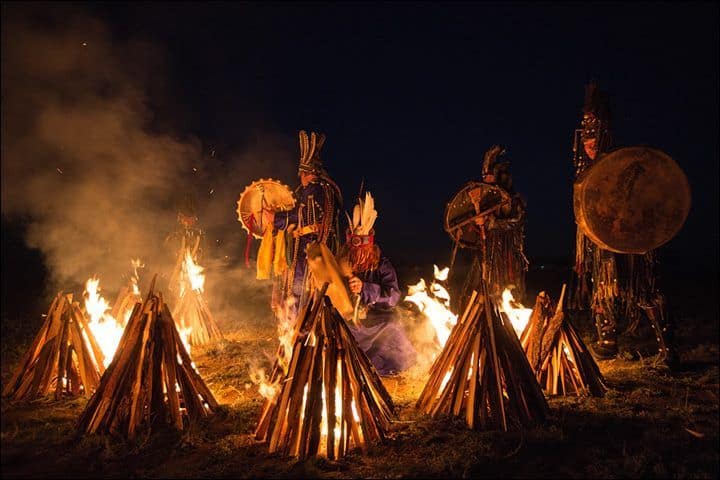
Chapter 1: What is a Gut? More Than an Exorcism
A Gut is not a somber, quiet prayer session. It is a full-sensory spectacle, a negotiated conversation between the living and the spirits. Led by a female shaman, or Mudang (무당), it is part theatre, part therapy, and part communal catharsis.
The Purpose: A Gut is typically performed to achieve a specific goal: to heal a sickness, bless a new business, guide a deceased spirit to the afterlife (Jinogi Gut), or bring good fortune to a family.
The Structure: It follows a loose narrative arc, often beginning with an invocation to the gods, moving through purification, entertaining the spirits, making offerings, and concluding with a resolution and a powerful sense of release.
Chapter 2: The Mudang – The Bridge Between Worlds
The Mudang is the heart of the ritual. She is not a priestess in a temple, but a charismatic, often ordinary-looking woman who carries an extraordinary burden: she is a human bridge between the earthly and the divine.
The Calling (Sinbyeong): Most Mudang do not choose their path; it chooses them. They often speak of Sinbyeong (신병), or “spirit sickness,” a period of intense physical and mental illness that marks their calling. This crisis only ends when they accept their destiny and become initiated.
The Training: A novice apprentice (Sheshim) must spend years learning from a senior Mudang, memorizing countless songs, dances, prayers, and the intricate pantheon of Korean gods and spirits.
The Modern Reality: Today’s Mudang are savvy businesswomen. They have websites, active KakaoTalk channels for scheduling appointments, and some even have reality TV shows, demystifying their profession for a new generation.
Chapter 3: The Pantheon – A Cluttered Spiritual Universe
Korean Shamanism (Muism) is wildly polytheistic. The spirits are not distant deities; they are relatable, flawed, and deeply human.
- The Mountain God (Sansin): An old, bearded man accompanied by a tiger, representing strength and protection.
- The Birth Grandmother (Samsin Halmoni): Governs childbirth and children.
- The General (Janggun): A powerful, often temperamental spirit of a historical military figure.
- Household Deities: Spirits of the kitchen, the roof beam, and the toilet, who must all be appeased.
- The Ancestors: Recently departed family members who may be causing trouble because they are unhappy with their send-off or have unresolved issues.
The Mudang’s skill lies in knowing which spirit is causing the problem and how to negotiate with them, often with offerings of food, money, and entertainment.
Chapter 4: The Ritual Unfolds – A Night of Drums, Dance, and Trance
Attending a Gut is an overwhelming experience. The sights, sounds, and emotions are intense and raw.
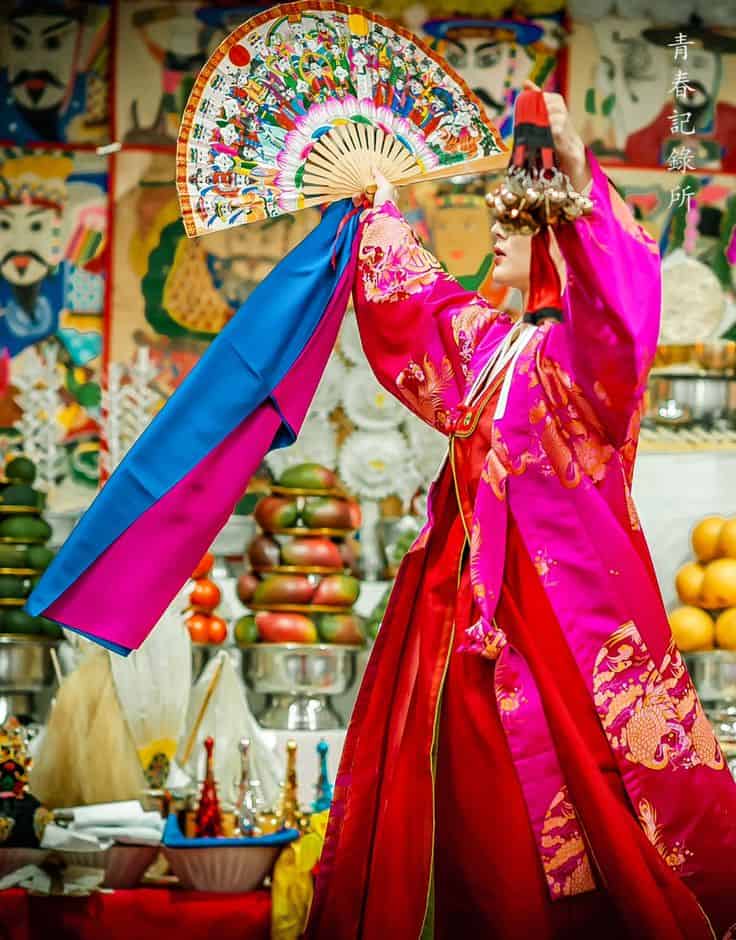
1. The Setup: The space is transformed with a colorful altar (gosari) laden with towers of fruit, rice cakes, pig’s heads, and bottles of alcohol. Dozens of symbolic flags and paper offerings are arranged.
2. The Music: The rhythm is everything. A small band of musicians drives the ceremony forward with the frantic beating of a barrel drum (janggu), the wailing of a two-string fiddle (haegum), and the clear tone of a bamboo flute (danso).
3. The Performance: The Mudang, dressed in vibrant, layered hanbok-like robes, begins to dance, sing, and chant. She changes costumes and props for each different spirit she embodies.
4. The Possession (Gongsu): The climax occurs when a specific spirit descends and possesses the Mudang. Her voice, posture, and mannerisms change completely. She speaks directly to the clients, offering advice, scolding them for their mistakes, or revealing the source of their misfortune.
5. The Catharsis: For the family or individual who commissioned the Gut, this is the moment of truth. It is common to see them weep, laugh, or argue with the spirit through the Mudang. It is a form of spiritual and psychological therapy that can be profoundly healing.
Chapter 5: Why It Endures – Gut in the 21st Century
In one of the world’s most technologically advanced nations, why does this ancient practice persist?
Filling the Emotional Void: In a society with intense academic and corporate pressure, Gut offers immediate, tangible comfort and hope where modern medicine and religion sometimes fail.
The Entertainment CEO’s Gut: It is an open secret that many high-stakes businesses, from entertainment agencies to construction firms, hire Mudang to perform rituals to ensure the success of a new idol group or a building project.
Cultural Reclamation: After being suppressed during the Joseon Dynasty’s Confucian era and later dismissed as superstition, Gut is now being re-evaluated as a unique and valuable part of Korea’s intangible cultural heritage.
Chapter 6: Witnessing a Gut – A Guide for the Curious
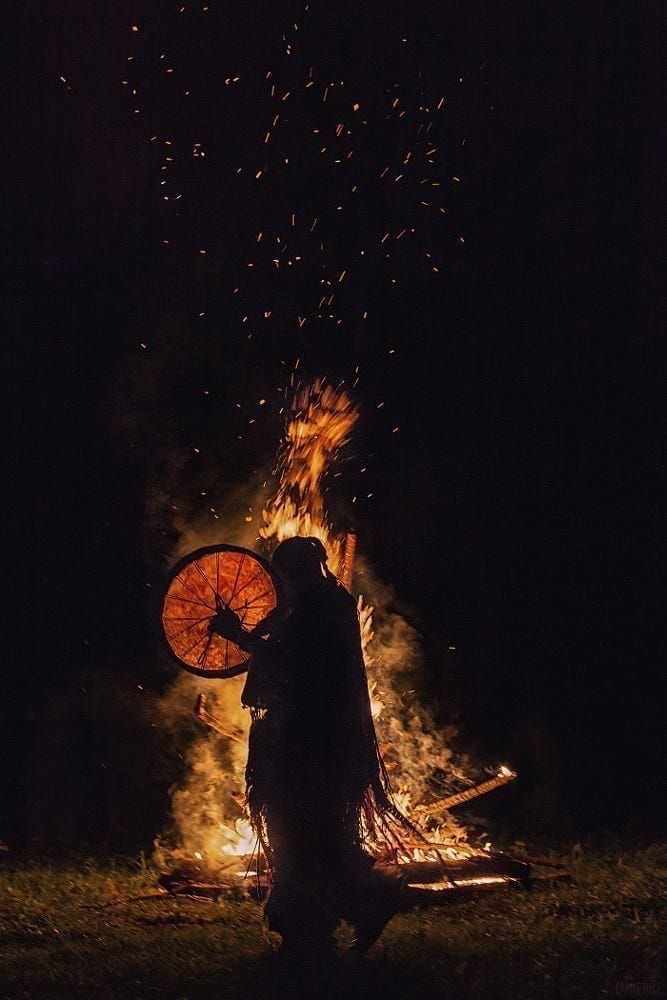
For those seeking to witness this tradition respectfully:
- Where to Go: While private Guts are by invitation, public Guts are sometimes performed during festivals, such as the Seoul Gut at the Namsan Gugakdang or the Yeongdeungpo Gut.
- Etiquette:
- Dress modestly and remove your shoes
- Do not stand in front of the altar or interrupt the ritual.
- Photography is often discouraged, especially during intense moments of trance.
- Observe quietly; this is not a theatrical performance for tourists, but a genuine act of faith for the participants.
- Open Mind: Approach it not as a spectacle, but as a unique window into the Korean psyche, a world where the lines between the living and the dead, the past and the present, are beautifully, chaotically blurred.
Conclusion: The Drumbeat Continues
The enduring power of the Gut lies in its profound humanity. It acknowledges that life is messy, that success and failure feel like they are in the hands of unseen forces, and that sometimes, the only way to move forward is to dance with your demons and your ancestors.
In the rhythmic pounding of the janggu, you can hear the heartbeat of an older, more mystical Korea, a heartbeat that continues to pulse strongly beneath the sleek, modern surface. It is a powerful reminder that for all its futuristic ambitions, Korea’s soul remains deeply connected to the spirits of its mountains, its homes, and its past.
Written by – Trisha Deka
About the Author –

Think of Trisha as your modern-day storyteller for a dynamic culture. She’s got a sharp eye for the moments where tradition and hyper-modernity collide in Korea. One minute, she’s breaking down the latest digital trends from Seoul, and the next, she’s explaining the timeless ritual of a tea ceremony. Her writing is your front-row ticket to understanding not just the “what” of Korean culture, but the “why” that makes it so captivating