
Korean Performing Traditional arts Korean traditional Performing arts consist of rich mix of music, dance and theatre deeply rooted in shamanism, Buddhism, and Confucianism, often categorized into royal court and folk. Gugak refers to Korea’s traditional music and dance. While gugak has existed as long as Koreans have lived in the peninsula, its foundation was established in the early 15th century when King Sejong reorganized the royal court music using Jeongganbo. Korean traditional music is typically classified into several types like legitimate music which is called jeongak. And this was enjoyed by the royalty of Joseon. And folk music including Panson, Sanjo and Japga. Even Jeongjae which is called as their court music and dance performed for the king at celebratory state events. Music and dance connected with shamanic and Buddhist traditions such as beompae. And one of the most famous folk song is Arirang inscribed on UNESCO’s Representative List of the intangible cultural heritage of Humanity in 2012.
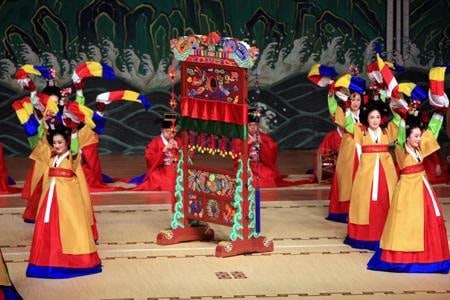
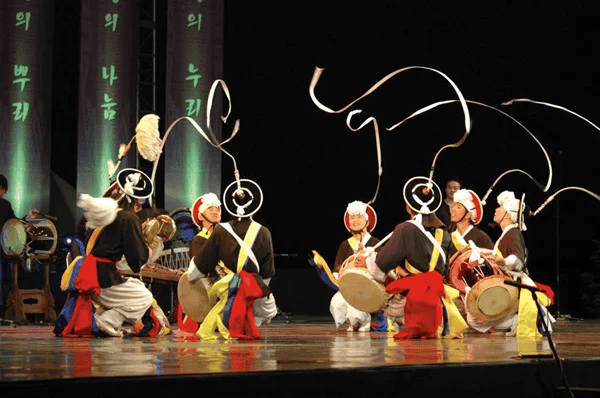
Beside music Korean people have inherited a great variety of folk dance such as Salpurichum, gutchum which is called shamanic ritual dance. And taepyeongmu it is a dance of peace. And Buchaechum it is a fan dance and geommu it is sword dance and seungmu which is a monk’s dance. Most performances are presented in a marketplace or on the fields and involve drumming, dancing and singing all of which are used to create a highly elated atmosphere.
Even Korea has a beautiful Painting culture since ancient times. The art of ancient Korea is represented by the tomb murals of Goguryeo which contain valuable clues to the beliefs of the early Korean people about humanity and the universe, as well as to their artistic sensibilities and techniques. The art had been influenced by China and disseminated to Japan. Korea in the 18th century saw the arrival of two great artists, Kim Hong-do and Sin Yun-bok both whom developed a passionate interest in depicting the daily activities of ordinary people in their work. Calligraphy, which developed in Korea under the influence of China, is the art of handwriting in which the beauty of this lines and forms of characters and the energy contained in brush strokes and subtle shades of ink are appreciated. While calligraphy is an independent genre of art, it has been closely related to ink and wash painting because these forms use similar techniques and tools commonly called the Four Treasures of the study.
Even Korean pottery, which nowadays attracts the highest praise from international collectors in typically divided into three groups. The first one is Cheongja and then Buncheong and last one is Baekja. Today traditional artworks such as paintings, calligraphy works and pottery are widely traded through auctions in galleries and antique shops in Insa-dong, seoul.
Written by – Ranu Sarkar
About the author-
My name Is Ranu Sarkar and I am from West Bengal, India. I am currently a college student and I am studying computer science, Environmental science and Geography. I am learning Korean from King Sejong Institute and I am very much interested in increasing my knowledge about Korean culture, Korean environment and their tradition. And as I am also a writer and writing is my passion so I am doing this internship which will help me to get experience about Korea. and it’s my dream that in future i want to study in Korean university through scholarship