
A single gesture, which may last no more than two seconds, can transcend languages, cultures, and geographical boundaries.
In the K-pop world, such gestures are referred to as point dances. However, what seems to be a simple gesture is actually the result of a remarkable integration of scientific principles, including biomechanical accuracy, neuromuscular synchronization, physics-based force control, and sophisticated motor learning. What appears to be effortless on the dance floor is actually the result of optimal joint loading, center of mass control, energy management, and precision timing in extreme performance environments.
Such gestures are more than mere entertainment.
They illustrate how the human body, when trained to perfection, can create maximum visual effects with minimum mechanical effort.
1. What Is a “Point Dance” — A Scientific Definition
In scientific terms, a point dance is a motor sequence of movement created for maximum recognizability with the least biomechanical burden on the body. It is intended to be short, rhythm-based and repetitive in nature. The executed movements are the same when performed under fatigue, stress, and continuously repeated.
Audiences see point dancing as effortless; however, each of these executed movements is the result of precise control of the body’s joints angles, its center of mass, and the timing of muscle contractions (when they “load” and “fire”) in relation to beats of music.
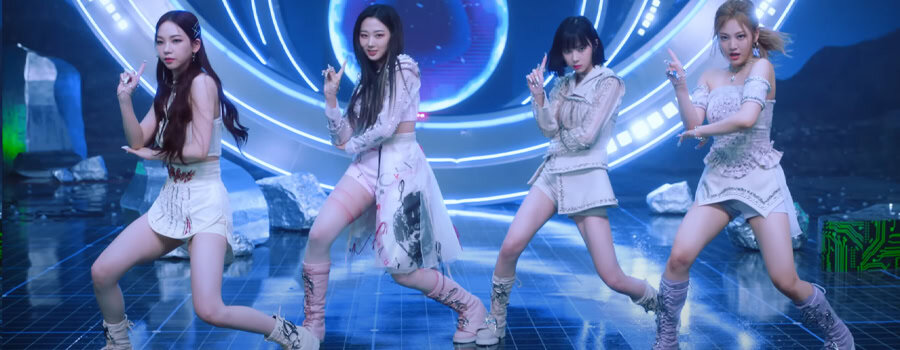
Point dancing is what distinguishes itself from other types of choreography by pure creativity and the councils of efficiency that all dancers share. Point dance method uses minimal travel to body extremities, reduces compressive loads on your joints, and concentrates the viewers’ attention on one action or movement to provide fluidity and continuity of the same repeating motions throughout rehearsals, live broadcasts, worldwide tours, and promotional cycles without losing form or function progressively.
Because of how our brains process movement, when a dancer has their arms pointed in a different direction than their body, it creates a visual signal that an “out of sync” position is actually “in sync” because it creates unity between two different aspects of the same motion on either end. A dancer’s anatomy makes them more sensitive to this point of contact than another person’s anatomy.
In addition to the neural encoding, there are biomechanical principles of how these points are used in sports and rehabilitation to conserve energy, protect the joints, and provide more power from timed rather than force-filled movements.
The tiny, controlled movements created by the upper body (shoulders, wrists) and the lower body (spine, pelvis) create the illusion of greater distance and/or greater size and/or more intensity when the two move in time to a rhythm.
K-pop choreography incorporates elements of both performance and biomechanics.
The same way an Olympic athlete perfects their technique in order to perform well under extreme pressure, K-Pop choreographers condense complex movements down until they are the most efficient, most stable movements possible. Thus, the result is not just a dance move; it will also serve as a repeatable mechanical element that can survive fatigue, minimize injury risk, and be easily replicated globally.
The simplification of point dances within K-Pop is not because they are simple dances; they are simple because they are required to be perfect.
2. Biomechanics of Memorability: Why Simple Movements Win
Movements that conform to human biomechanics remain consistent in memory and lead to successful point dances, as they allow a dancer to maintain control of their center of mass and not allow for unnecessary destabilization, therefore allowing the observer to follow the motion with ease. They also provide visual organization and predictability, through symmetry, and the use of intentional asymmetry (when used in moderation) provide emphasis and identity to the dance. The previously mentioned balance found in point dances is an example of a fundamental principle found in elite sport and rehabilitation; The efficient movement patterns found within point dances are easier to repeat, maintain, and recall under pressure or stress.
The brain processes movement more efficiently when the movement involves natural planes associated with the movement of joints and established motor pathways. Point dances, as per K-pop point dance terminology, consist of a lot of shoulder flexion/extension, controlled hip rotation and elbow-led gestures, which are all found in the activities of daily living (ADL) by humans. Point dances require little cognitive processing; therefore, they reduce the potential for motor errors and create increased activation of mirror neurons in the observer, thus creating the potential for immediate learning and retention. Therefore, while point dances are not necessarily flashy, point dances are memorable because they are biomechanically accurate; they have been designed to be in agreement with how the human body and brain are designed or wired to move.
3. Physics in Motion: Force, Momentum & Timing
The basis of K-Pop’s point dances lies in the precise control of ground reaction force. The ground is an invisible partner in a dance and constantly reacts with the dancer’s body via the contact point of the foot with the floor. When dancing with sharp footwork, the dancer’s objective is to transfer kinetic energy efficiently through the kinetic chain and to create the desired shape or motion through the use of body parts such as ankles, knees, hips, etc. Furthermore, when performing these movements, the dancer tries to align all of these body parts; therefore the dancer can use all available kinetic energy from contact with the floor to transform into an upward force for the performance-related visual effects seen in K-Pop performers. This is similar to how momentum is built up from running mechanics and used in rehabilitative sport sciences.
Another significant aspect of performing sharp footwork with precision is creating and controlling angular velocity and timing. To perform spins, turns and arm swinging with precision requires that the performer initiate the spin or turn from their centre of the body (core); thus, the dancer can generate momentum and deaccelerate it evenly throughout all body segments. Additionally, this will allow the dancer to lower shear force through the dancer’s joints, subsequently reducing the risk of injury. The dancer can also maintain the illusion of speed and clarity when performing point dances.
The final component to properly performing this type of movement is timing. When performing each of the movements of point dance, they occur on the specified timing; therefore, the dancer’s movements create impulse (the product of force and time) at that specific timing. Additionally, the dancer utilizes Short Time Duration (the smallest amount of time possible) to create the illusion of a sharp movement through the muscular systems of the body, as opposed to using large amounts of force to create the same effect.
4. Neuromuscular Precision: Brain–Body Sync
Feedforward control allows point dancing to use programmed movements rather than reactive movements; therefore, movements are pre-programmed before they happen, not modified when they happen in real-time. This system requires excellent proprioceptive awareness, accurate muscle sequencing, and timing between the muscle reaction and the nervous system response to the muscle reaction in the range of milliseconds. Each move in a carefully executed point dance requires the appropriate muscle to fire in the correct order with no redundancy and no delay. Once the movement in a point dance has been launched, there is very little margin for making corrections unlike improvised movement and therefore, point dances can appear to be effortless only when the neuromuscular coordination is extremely precise.

This level of precision enables the performer to experience noticeable errors immediately; therefore, if there is a sequencing error in a shoulder, elbow, or if the performer does not maintain proper core stability, it can be immediately detected that there is something wrong with the entire motor program and the performer’s sense of rhythm and motion appears to be “off.” Neuroscience research and the science of human motor learning indicate that humans are very sensitive to deviations in coordinated movement, especially when the movement(s) occur repeatedly or in conjunction with a beat. Point dance choreography uses this sensitivity; therefore, clean (perfect) execution has the brain creating a sense of harmony and control whereas poor (not perfect) execution creates an immediate sense of disorganization. Thus, point dance choreography represents a live demonstration of elite motor learning, where point dance choreography represents a high degree of brain-to-body synchronization.
5. Injury Prevention Hidden in Choreography
5.1 Controlled Loading of Joints
K-Pop Point Dances are designed to avoid joint loading situations associated with biomechanical risk.
- Limited utilization of end-range of motion (i.e. deep knee valgus, excessive lumbar extension)
- Limited utilization of joint angles in the mid-range, reducing the stress to ligaments and cartilage.
- No prolonged isometric holds, which can lead to fatigue of the muscle.
Performance Insight:
This design allows for high frequency of repetition during the course of rehearsals, broadcasts and tours without cumulative damage to the joints.
5.2 Alternating Load and Micro Recovery Design
K-Pop Point Dances distribute mechanical stress using an alternating load design rather than a continuous high load.
- Upper arm gestures are performed with lower extremity stabilization.
- Lower extremity power movements are performed with lighter and more expressive transitions.
- The design incorporates micro recovery periods between high precision movements.
Physiology Principle:
Short unloading periods allow for restoration of neuromuscular efficiency without diminishing visual intensity.
5.3 Sustainability vs. One-Time Performance
K-Pop Point Dances are designed with a focus on sustainability, unlike stage choreography that emphasizes performance during a single event.
- K-Pop Point Dances will maintain their performance quality throughout many repetitions over weeks.
- K-Pop Point Dances will be able to sustain their performance over various adverse conditions such as sleep deprivation, fatigue from travel and tight schedules.
- K-Pop Point Dances will minimize the risk of overuse injuries common to performing artists while on tour (i.e. to knees, ankles and lumbar spine).
Performance Medicine Fact:
The choreography for K-Pop Point Dances has been designed to promote long-term tissue health rather than short-term spectacle.
5.4 Choreography as Preventive Performance Medicine
From the perspectives of Physical Therapy and Exercise Science. Dance patterns that involve dynamic loading represent different ways of moving body under load, taken from the following principles:
- Injury Prevention in Athletes;
- Neuromuscular re-education; and
- Functional Movement Screens or Assessments; the use of these types of patterns will effectively work with the body to prevent injury while improving overall performance.
Conclusion: K-pop dance does more than just avoid injury, it actively protects the body of the dancer from injury while simultaneously improving accuracy and control.
6. Why the Human Eye Loves Point Dances (Perceptual Science)
The human visual system is designed to recognize the initiation of movement, predict the direction of movement and detect dramatic changes in motion based on motion patterns. When movement is created by a clean start, follows an easily traced linear path, and has a clean end, the human brain’s ability to recognize motion occurs more rapidly in the brain. The movement of a point dance is choreographed so that all the points are generated from joints that can be easily identified (shoulders, elbows, hips), have either a straight or gently curved line for traveling and have a clear conclusion. The viewer experiences less “visual noise” or cognitive load, thus allowing them to read the movement immediately without thinking about it.
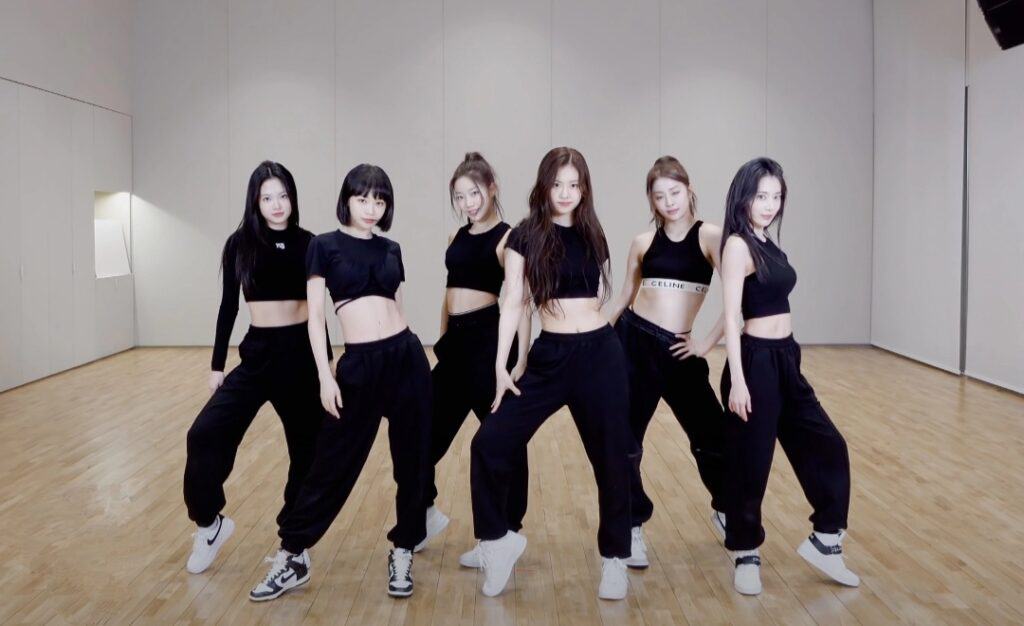
By minimizing “visual noise” and providing a highly clear pattern, the point dance will be more neurologically satisfying to the viewer. The brain is wired to recognize repetitive movement patterns, and once the movement is understood, it will be remembered and have meaning. This is the reason that point dances can travel so easily across cultures and languages; viewers can understand the point dance without needing a cultural reference point. Point dances are seen (not understood) from a perceptual science standpoint and have virality because they have been choreographed to be in harmony with the biological wiring of the eye and brain to interpret movement.
7. K-Pop vs Western Dance Styles: A Biomechanical Comparison
In a large majority of styles found in the American/popular dance tradition (e.g., hip-hop, jazz), dancers are encouraged to use freestyled movement (personal expression) and project energy through the use of freestyle choreography. This type of creativity focuses on performing with emotional spontaneity and stylistic variety; consequently, individual performances may include movements that are slightly different from one another. Biomechanically speaking, these dance styles place a premium on output and expressiveness over standardization and long-term repeatability of movements.
In contrast to the above, Kpop music choreographers create point dances with the concept of ‘precision/synchronization’ and ‘efficiency’ in terms of movement biomechanics. Therefore, the Kpop dancer–for the same choreographic element–is produced with the expectation of executing the choreography exactly the same (i.e., having all dancers in any given performance and in each of the performances be executing precisely the same movements simultaneously). Consequently, each dance movement must have very specific requirements for joint alignment, timing, and force control to ensure that there is no unnecessary movement and that forces acting on the dancer’s body are distributed evenly, and that the rhythmic and geometric patterns in which the movement occurs can be replicated consistently (with minimal risk of injury) by each dancer.
Thus, instead of performing with individuality/originality via improvisation, Kpop point dance prioritizes repetitive excellence: the coordinated use of great creativity in executing the same movement hundreds of times with minimal to zero degradation in motion or health.
Key Insight: While American/popular concert/dance emphasizes individual expression through movement variations, Kpop style point dance is about optimizing and developing the human body’s ability to perform disruptive, synchronized movements consistently; therefore, biomechanical repeatability (as opposed to improvisation) is the foundation of the entire design of Kpop style choreographed dance.
8. Performance Medicine View: Idols as Elite Movers
K-pop idols, as seen through the lens of performance medicine, are not just entertainers — they are elite hybrid movers from a performance medicine standpoint; and thus, they represent an extremely rare convergence of being a dancer, an athlete and a live performer. The training models developed for them focus heavily on movement economy whereby the greatest visual impact can be achieved with the least amount of wasted energy. In addition to choreography, these systems also include load management strategies, conditioning protocols, and periods of recovery, all of which are similar to the systems used within high-performance or elite sports. The precision associated with performing this type of choreography is not only aesthetically pleasing but is also an important injury-preventative measure. By providing proper alignment and correcting movement asymmetries, physical therapists play a vital role in reducing overuse injuries, while sports science provides a basis for monitoring fatigue and determining the optimum timing for recovery. In the context of performance medicine, point dances are not simply choreographic choices but are biomechanically intelligent solutions designed to allow dancers the ability to reproduce the highest level of output through extreme amounts of repetition, travel, and cognitive load.
9. Ethical Perspective: Efficiency and Care Cannot Replace Each Other
While bone and muscle of dancers are biomechanically efficient in executing point dances in performance, efficiency does not equate to less risk because excessive repetition in congested existing schedules and specialization can lead to young dancers being susceptible to severe consequences from overusing their bodies before they have recovered and developing over time cumulative injury from the use of their musculoskeletal systems. A biomechanically optimized or efficient movement will still result in injury to the dancer, unless proper time has elapsed for appropriate recovery, medical supervision is available, and other appropriate developmental milestones have been achieved.
We must, therefore, evaluate K-Pop choreography from both the biomechanical movement perspective and ongoing ethical standards within the industry, especially regarding workload, recovery and long-term health for performers. In order to sustain excellence through dance, very good movement designed smartly must be matched with very good human care.
10. Conclusion: When Physics Becomes Beautiful
In conclusion, K-Pop’s point dances show that human movement achieves perfection not from excess force, complexity, or spectacle, but from an alignment between physics, biomechanics, and the neuromuscular system (intelligence). These short iconic movements showcase exceptional levels of refined motor solutions that were designed to be remembered, easily performed, and reproducible, even when combined with unusual performance requirements. While the global audience perceives K-Pop point dances as effortless entertainment, they represent an example of the application of human sciences to performance: optimal joint loading; precise timing of forces; optimal energy transfer; and optimal synchronisation of performance of the brain and body. Also, the level of sophistication of K-Pop point dances validate that in performance medicine and the global arts industries, the technical efficiency of performance is only ever acceptable when ethically responsible and respectful of the physical care of our fellow human beings. K-Pop point dances provide a standard for demonstrating how our bodies can move in a graceful, smart, and sustainable manner at peak performance levels within the intersection of science and the arts.
WRITTEN BY – ANJALI GUPTA
About the author –
Hi! I’m Anjali Gupta, a healthcare student whose interest in healing and well-being naturally led me toward Korean culture — a place where wellness, balance, and tradition beautifully blend with modern living. I enjoy writing simple, emotional, and meaningful pieces that help readers connect with a culture rather than just learn about it.