
A personal journey through Korea’s Lunar New Year reveals that the most profound traditions aren’t about going back; they’re about moving forward, together.
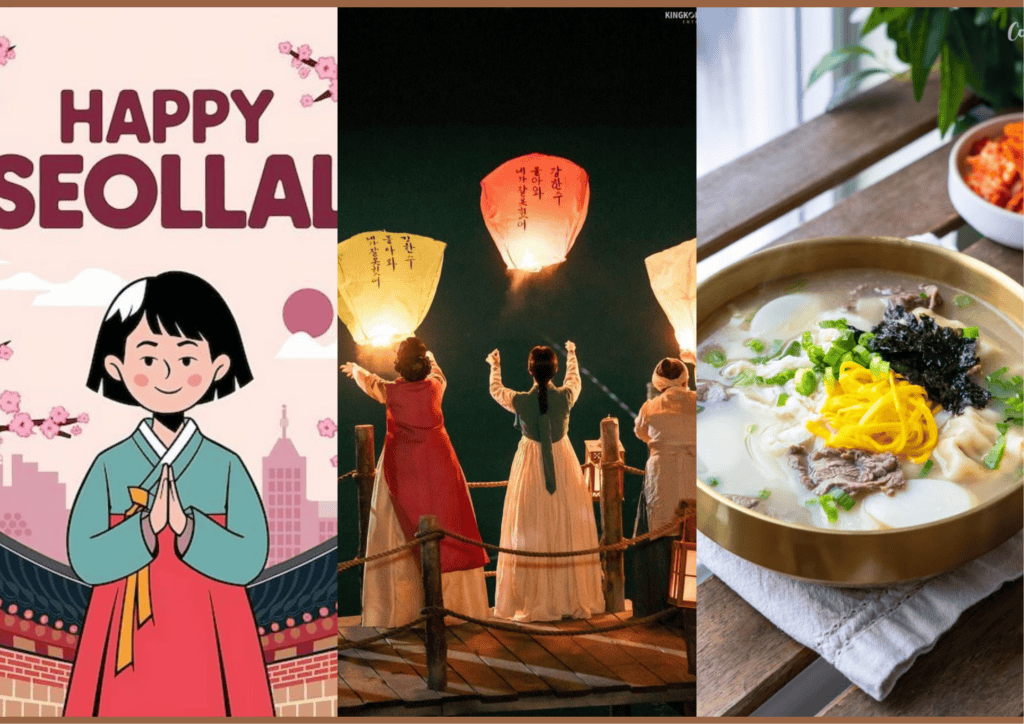
I used to measure my life in deadlines. In content calendars, quarterly reviews, and the relentless scroll of a digital clock. Time was a resource to be spent, a line charging forward. Then I met one of my best friends who is from South Korea back in 2013, and Seollal happened. I will name her Yerin. Yerin’s family moved to Assam, and I got another home to call my own.
For years, I’d seen it as a quaint cultural sidebar, pretty hanbok, a lot of bowing, and phenomenal food. But as an outsider welcomed into a Korean family’s home, I experienced it not as a spectacle, but as a profound recalibration. Seollal, I learned, isn’t just a holiday. It’s a living philosophy about time, connection, and renewal that my fast-forward life had desperately needed. Lessons I learn throughout the years being with her, and as a cultural nerd, something really hit me.
Lesson 1: Time is a Circle, Not a Line
In general, New Year’s Eve on December 31st was about the future resolutions, countdowns, and a clean break. In contrast, Seollal showed me a different geometry. Here, the new year begins by facing the past.

The ritual of Charye (차례), the ancestral rite, was my first teacher. Before a single wish for the future was uttered, the family spent the morning in quiet, meticulous preparation for those who came before. Setting the table with symbolic foods, performing deep, solemn bows, it was an act of active remembrance.
I learned that time isn’t a line we leave behind. It’s a circle we inhabit. The past isn’t a distant country; it’s in the very breath of the present. By honoring our roots with such intention, we don’t chain ourselves to history; we understand where we stand in its long, unbroken story. Starting anew, Seollal taught me, requires knowing what you’re continuing.
Lesson 2: Family is the Place Where You Reset Your Age
The most delightful experience was eating Tteokguk (떡국). “You must finish your bowl,” my friend’s halmeoni (grandmother) insisted, her eyes twinkling. “Otherwise, how will you become a year older?”
In that moment, age wasn’t a biological fact stamped on an ID card. It was a communal event, a shared milestone marked by a simple, white soup. The act of consuming those coin-shaped rice cakes together was how we all collectively stepped into the new year. My birthday, I realized, was my personal clock. But Seollal was our family clock, resetting for everyone in unison.

What i learn is that in an individualistic age, Seollal redefines growth as a collective experience. Our progress is intertwined. We grow older not in isolation, but because we are fed by the same traditions, held by the same community. Family, in this sense, is the ecosystem where our personal time finds its shared meaning.
Lesson 3: Respect is a Physical Language
Sebae (세배), the deep New Year’s bow, felt formal at first. But as I watched generations fold, parents bowing to grandparents, then children bowing to parents, I saw something beautiful. It wasn’t subservience; it was a conversation made of movement.
The younger offering respect with their bodies, the elders offering wisdom and blessings in return, sealed with an envelope of sebaetdon. It was a tangible, graceful transfer of care across generations. There was no vague “Happy New Year” text here. The respect was embodied, visible, and reciprocal.
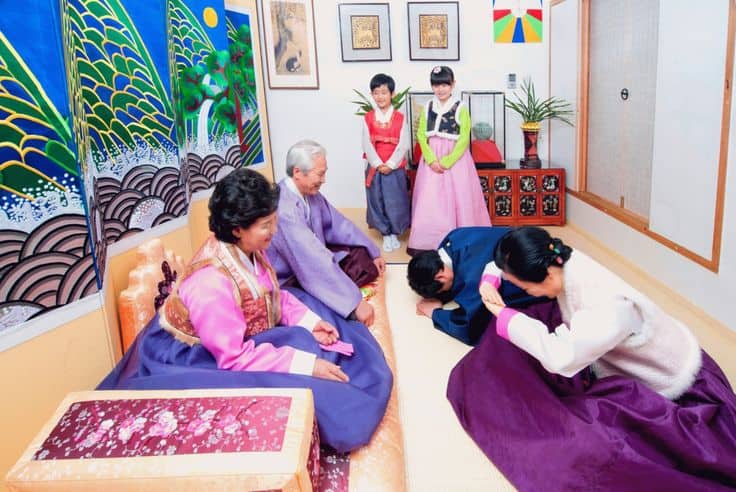
Through this beautiful experience in a world of digital likes and fleeting comments, Seollal insists that deep regard requires presence and physicality. It teaches that hierarchy, when rooted in mutual love and obligation, isn’t about power; it’s about the clear, graceful flow of responsibility and care from one generation to the next.
Lesson 4: Starting Again Requires Letting Go
The kitchen on Seollal morning was a lesson in itself. The making of Jeon (전), those savory pancakes, was chaotic, collaborative, and utterly absorbing. We stood around the stove, dipping zucchini and mushrooms in batter, frying them golden. The sizzle was loud, the oil was hot, and for those hours, there were no phones, no to-do lists.
It was an act of collective creation where the process was the point. The shared labor of making the feast was as important as eating it.
You don’t mentally will yourself into a new beginning. You create it, often with your hands, and always alongside others. The fresh start Seollal promises is built not in abstract resolution, but in the focused, shared, and wonderfully mundane act of preparing food for the people you love. Letting go of the old year happens naturally when you’re fully immersed in building the new day, together.
The Final Bow: Carrying Seollal Forward
When the three days were over, my back ached from bowing, and my heart was full from laughing. I didn’t return to my life with a list of drastic resolutions. Instead, I carried back a new rhythm.
Now, I understand that to move forward with purpose, I must occasionally turn and bow to what brought me here. I see that my time is not mine alone, but is woven into the timelines of those I love. And I know that every new beginning, big or small, is best seasoned with shared effort and a generous plate of something delicious.
Seollal taught me that the future isn’t just ahead, it’s also behind us, within us, and most importantly, between us. And for that lesson, I will always say, “Saehae bok mani badeuseyo(새해 복 많이 받으세요)”.
Written by – Trisha Deka
About the Author –
Think of Trisha as your modern-day storyteller for a dynamic culture. She’s got a sharp eye for the moments where tradition and hyper-modernity collide in Korea. One minute, she’s breaking down the latest digital trends from Seoul, and the next, she’s explaining the timeless ritual of a tea ceremony. Her writing is your front-row ticket to understanding not just the “what” of Korean culture, but the “why” that makes it so captivating.