
RM’s solo work is not linear, moving from one era to the next. It feels more like an archive. A place where thoughts are stored, revisited, questioned and sometimes left with an open ending. The name “rkive” fits because what exists is not a polished narrative but a collection of all moments that felt honest enough to keep. RM’s work reflects the same. Like watching someone look at themselves from the outside.
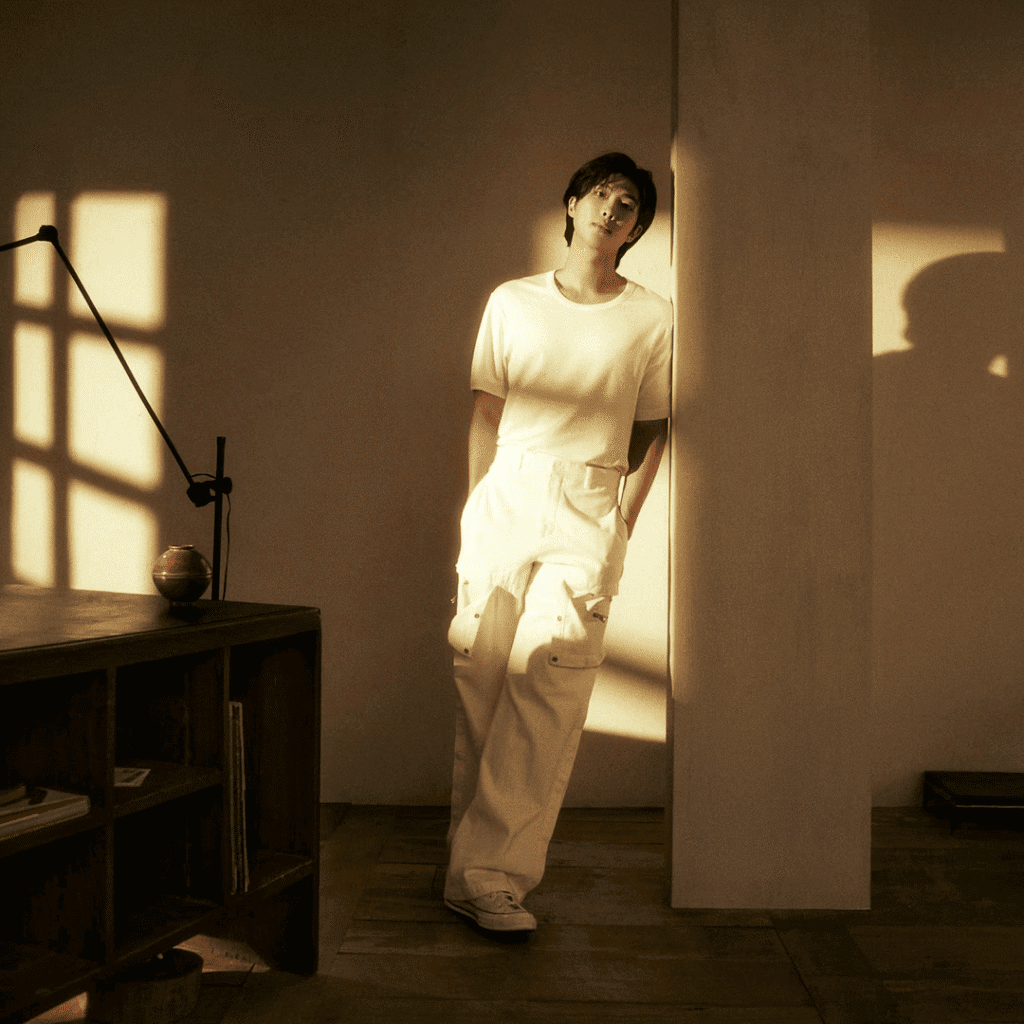
Rap Monster, RM and Kim Namjoon are names that are often spoken about as stages. They are all the same person, but his music suggests something else. Rap Monster seems to have been built for assertion and volume. For proving something early and fast. RM feels more like space between personal intention and public scrutiny. Kim Namjoon is even quieter. He observes, doubts and sits with thoughts longer than his songs allow. His solo projects do not try to collapse all his identities into one, but let them coexist.
Namjoon’s first solo work “RM“, carries the urgency of Rap Monster. The writing is sharp, restless and looks to be heard. “Monster” and “Joke” are fast paced and confrontational. They read like declarations and lyrcially, feel about presence. Even here, listeners can sense some tension between intellect and exhaustion, between wanting to dominate the space and wanting relief from it.
With Mono, the shift is clear. The sounds soften, tempo is slowed down and the need for explanation fades. Tracks like “uhgood,” “moonchild,” and “everythingoes” move with soft, repetitive sounds. Mono does not frame sadness as something to overcome. In this album, weather becomes a metaphor, movement becomes coping and generally focuses on feeling all emotions.
Indigo feels like a conversation, built around acknowledgement. Tracks like “Yun” and “Still LIfe” read as reflections on time, legacy and places RM among artists who shaped him. This album talks about adulthood and clearly exhibits the shift from defining yourself to placing yourself in the world defined around you. RM is no longer asking who he is, but considers where he stands and what he will carry forward.
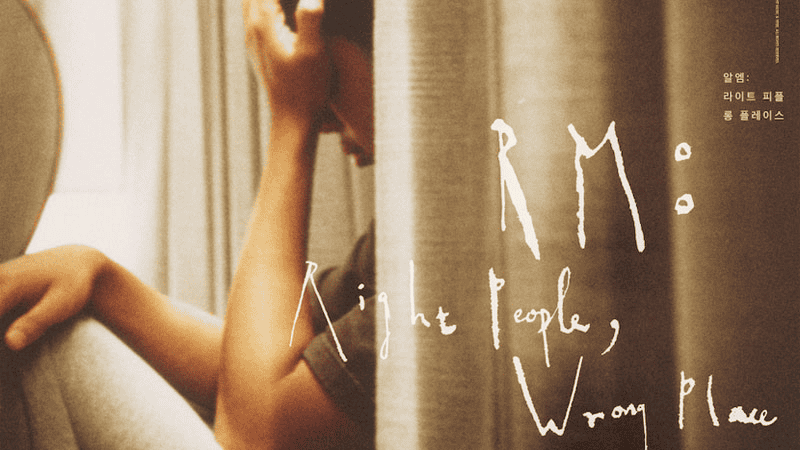
With Right Place, Wrong Person, the archive feels most complete. The production is sharper, and tracks like “Come Back to Me” and “Groin” hold a certain discomfort in sound, but lyrically are certain. In many ways, this feels like the clearest articulation of Kim Namjoon’s voice, not because it answers anything, but because he no longer needs to.
The act of seeing the world through Namjoon teaches you how to notice more. One of RM’s quiet strengths lies in how he looks at things most people pass by and his powerful imageries
In “God Rap,” he says, “I don’t have any religion because I am my own god. Whatever comes, I’ll take it with my own two hands.” He refers to how there is no higher power to defer to, just accountability.
Another way of seeing shows up in Mono, where in “Moonchild”, he says:
야경이란 게 참 잔인하지 않니
Isn’t night scenery a terribly cruel thing?
누구의 가시들이 모여 펼쳐진 장관이
A glorious view made up of someone’s thorns.
City lights are usually portrayed to be romantic. Namjoon questions that image. Instead of beauty, he sees what it costs. The late nights. The exhaustion. The people who cannot sleep or cannot stop working. The view is still beautiful, but its beauty is built on effort and pain together. That perspective shift changes how the image sits with you. Rather than pessimism, it just feels more aware.
He also has a way of personifying things naturally. In “Forever Rain,” the rain becomes a companion.
비가 오면 조금은 나 친구가 있다는 기분이 들어
When it rains, it feels a little as if I do have a friend.
자꾸 내 창문들을 두드려
It keeps knocking on my windows,
잘 지내냐면서 안부를 물어
asking how I’m doing.
RM is often the one people look to first. On the surface, the reasons are easy to list. He is the leader, the speaker. He stands at podiums and carries statements meant to represent more than himself. By extension, he carries the group, and often the company, with him. He is asked to explain, to reassure, to hold the line. Across his solo work, Namjoon does not present answers, make bold statements, or offer comfort through promises of things getting better. He offers honesty about where he is and how he chooses to move through it.
Listening to his discography feels like watching someone navigate life and try to live more deliberately. He writes about effort, trying to be kind, about failing and returning anyway. His music does not talk about goodness as something heroic, but as a daily choice. One that requires attention, one that is hard to make but has to be made again and again. And that idea stays because it teaches quietly. In the way themes resurface, how doubt is never edited out and how growth is allowed to be slow and uncomfortable.
For many listeners, his music becomes less about following an idol and more about keeping a record. Of how trying still counts and of how living well is not about reaching flow state but choosing to take care when it would be easier not to.
Written by – Samhitha Avvari

About the author –
Samhitha is an avid hobbyist, exploring writing, photography and personal blogging through intention and curiosity. She hopes to build a personal archive that reflects her journey, and the way she sees the world. She believes in romanticising the ordinary, maximising life with every experience, in a world that often feels fast. Her creative practice is rooted in capturing casual magic; like the light on a street corner, ducks in the park, a sentence worth remembering. Samhitha is fascinated by the interplay between language shaping identity, connection, and expression, with a particular interest in Korean language and society.