
Walk through any corner of Seoul or Busan, and you’ll notice something impossible to ignore — cafés everywhere. Hidden in alleys, stacked inside tall buildings, glowing softly through glass windows at night. These cafés aren’t just coffee stops; they have quietly reshaped how people live, rest, study, and even experience solitude in Korea’s busiest cities.
In a place where homes are small, schedules are packed, and crowds are constant, cafés became a gentle escape — a way to be alone, yet not lonely.
From Royal Curiosity to Modern Cafe culture
Korea’s café story began more than a century ago,
Coffee entered Korea in the late 19th century and was first enjoyed by King Gojong, who reportedly drank it as both a luxury and comfort.
When King Gojong first tasted coffee he opened a small café inside Deoksugung Palace.At a time when traditional teas dominated Korean life, coffee symbolized modernity, foreign influence, and quiet sophistication — something rare and elite.
The real cultural shift came after the Korean War with the rise of dabang (다방), early tea-and-coffee parlors frequented by artists, writers, and students. These spaces slowly transformed coffee from a royal indulgence into a public habit.
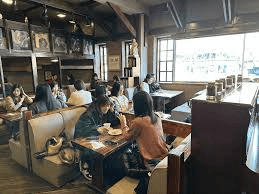
Fast forward to the 1990s and 2000s: chains like Starbucks entered Korea, and cafés transformed again. No longer just places to drink coffee, they became cultural spaces — somewhere between home and work — that welcomed everyone.
Today, Korea has one of the highest café densities in the world. And with each café offering its own identity — minimalist white spaces, cozy wood interiors, floral themes, hanok cafés — people naturally gravitated toward them.
A Third Space in a Fast-Paced City
Korean urban life is intense and tightly packed. Many young people live in compact apartments or goshiwons — just enough space for a bed and desk. Stepping into a café becomes stepping into a wider room, a room that isn’t yours but still feels like home.
Here, solitude is not isolating. You order a latte, open your laptop, and even though you’re alone, you feel surrounded by gentle life — keyboards clicking, cups clinking, soft indie music floating in the background. It’s the perfect blend of privacy and presence.Cafés give people a place to slow down.
You can sit with a laptop, a book, or your thoughts — surrounded by others but without the need to interact.
A Place to Breathe in a Fast-Paced City.
The Rise of “Alone Culture” (혼자 문화)
South Korea has witnessed a cultural shift toward embracing independence. With more people living alone and valuing personal time, the idea of doing things solo — eating, studying, watching movies — has become completely normal. Cafés naturally adapted to this change.
- Single-seat tables
- Quiet zones
- Study cafés open 24/7
- Outlets at every seat
- Fast Wi-Fi for remote work
These designs show that cafés intentionally welcome solitary visitors, making solo time feel safe and accepted.
The Social Media Paradox
Ironically, the quiet solitude inside cafés has grown massively because of social media. Pictures of latte foam, window seats, and peaceful study setups spread across Instagram and TikTok. Korean hashtags like #카페투어 (café tour), #카공족 (people who study in cafés), and #감성카페 (aesthetic café) turned the idea of being alone in a café into something trendy — even admirable.
Here, solitude becomes something people celebrate instead of hide.
Aesthetic Warmth That Feels Like Home
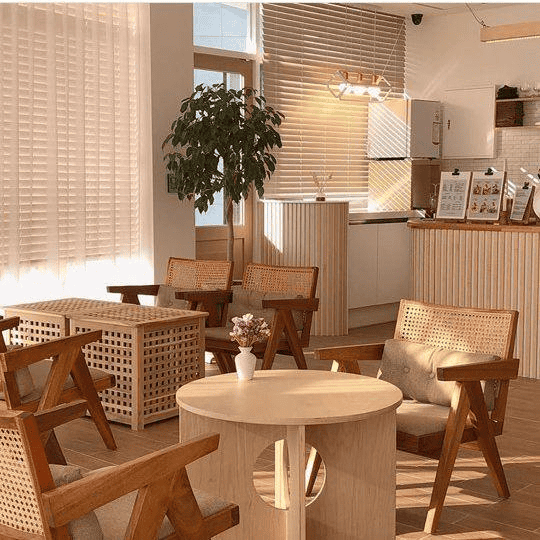
Korean cafés are famous for their themes — vintage, minimalist, botanical, Nordic, even fantasy-inspired. These designs are not just for Instagram. They create emotional comfort. A cozy corner with a soft chair and a warm drink feels like a temporary home, especially in cities where living spaces are small.
Korean cafés are known worldwide for their interiors — soft light, warm wood, plants, thoughtful décor, and calm music. You’ll find minimalist white cafés with sunlit corners, plant-filled calming spaces, hanok cafés inside traditional houses, artistic cafés decorated with books or antiques, and even 2D cafés that look like sketches brought to life.
People come not only for caffeine but for atmosphere — a soothing visual world that rewards stillness. Sitting alone looks completely normal, even stylish. In these cafés, solitude becomes something gentle and beautiful.
Where Solitude Meets Subtle Community
One of the most unique aspects of Korean café culture is how it blends “alone time” with a gentle sense of community. It’s a haven for Students, Artists, and Thinkers
From Hongdae to Busan, cafés have become unofficial libraries and creative studios. The space becomes a shared ecosystem of productivity and creativity.
For many Korean young adults, cafés are where:
- Dreams are planned
- Assignments are finished
- Life decisions are made
Solitude becomes meaningful because the environment encourages reflection.
Students spend hours revising for exams. Freelancers build their careers from window seats. Couples meet for quiet dates. Friends share dessert plates stacked with croffles or tiramisu. And in between all of this, solo visitors feel naturally woven into the rhythm of the space.
You don’t have to talk to anyone to feel part of something.
You just exist — and that is enough.
This “alone together” atmosphere is what makes Korean cafés feel special. They hold space for both personal reflection and soft social belonging.
The Social Side of Solitude
In many countries, sitting alone in a café may invite curiosity or judgment. In Korea, it signals independence, confidence, and a balanced lifestyle. Cafés have normalized solitude by giving people permission to take themselves out, treat themselves, and enjoy their own company.
They have transformed loneliness into peace, independence into pride, and silence into a shared cultural experience.
It may seem contradictory, but Korea has mastered a unique cultural balance:
being alone in public without feeling lonely.
Cafés allow Koreans — especially young adults — to enjoy independence while staying connected to the gentle hum of city life. They create soft boundaries: you’re in your personal bubble, but you’re never truly isolated.
In a fast-moving society, this balance feels almost therapeutic.
Conclusion
Korean cafés didn’t just become popular hangout spots — they changed the emotional rhythm of city life. They created a space where solitude feels social, safe, and satisfying. In a society known for its speed and competitiveness, cafés quietly offer a reminder:
It’s okay to slow down.
It’s okay to be alone.
Sometimes, the most comforting company is yourself — with a warm cup of coffee in a quiet corner of a busy city.
Written By: Ankita Priya
About the author: 안녕하세요(Hello)I’m Ankita — a biology educator who fell in love with Hangul one alphabet at a time and somehow ended up exploring everything that comes with it. From Korean food to fun everyday habits, I adore collecting tiny pieces of Korea and sharing them in the simplest, warmest way possible. Think of this as my little corner where curiosity meets comfort — a soft space on the internet where we discover new flavors, new words, and new stories together. Hopefully, my thoughts nudge you to try something new… maybe a new K-drama today, or a new recipe tomorrow.
Written by: Ankita Priya
About the author: 안녕하세요(Hello)I’m Ankita — a biology educator who fell in love with Hangul one alphabet at a time and somehow ended up exploring everything that comes with it. From Korean food to fun everyday habits, I adore collecting tiny pieces of Korea and sharing them in the simplest, warmest way possible. Think of this as my little corner where curiosity meets comfort — a soft space on the internet where we discover new flavors, new words, and new stories together. Hopefully, my thoughts nudge you to try something new… maybe a new K-drama today, or a new recipe tomorrow.