
Ever seen a tradition so alive it feels like the whole season is breathing with it?
In Korea, that energy shows up every autumn with Kimjang. The beloved ritual where people come together to make kimchi for winter. A celebration filled with not just chili and cabbage but with stories and laughter.
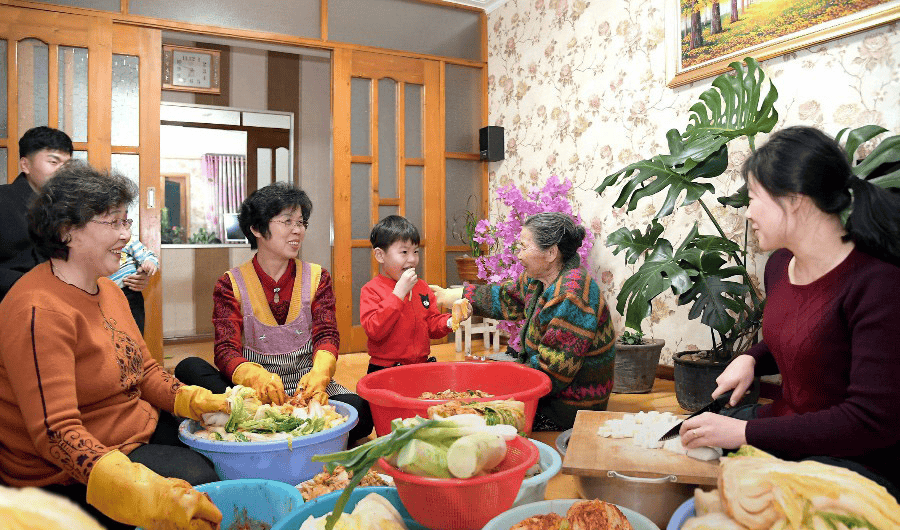
Kimjang is less about making food and more about mixing lives. It represents the spirit of togetherness that defines Korean culture. You will see people working shoulder to shoulder and making something to share. This is what home and comfort look like for so many Koreans. This sense of togetherness runs so deep- that kimjang is officially recognized as a cultural treasure. Capturing the real heart of Korean community life.
These days, the tradition has stretched even further through Kimjang Festivals. Locals and visitors jump in- learning, laughing, and making kimchi side by side. The festivals slow things down and remind everyone what it feels like to really connect.
In this article, we’ll explore about Kimjang and the unique activities at the Kimjang festival.
What Is Kimjang?
Kimchi is a staple Korean dish- traditionally used as a side dish. It consists of salted and fermented vegetables, with some of the most popular ones being cabbage and radish. Koreans take their kimchi so seriously that they celebrate kimchi making preparation as a festival, which is called Kimjang.
During Kimjang, families gather to make a large quantity of kimchi as a community effort to preserve it for the winter months. It has become Korea’s yearly ritual. It all started because winters were tough and fresh veggies were hard to come by. So, families joined forces every fall to prep and preserve food.
But after some time, Kimjang became more than a chore. It turned into a kind of celebration. A way to keep the community close. People not only shared cabbage and spices but also stories and laughter.
Kimjang’s date is not fixed. It is usually celebrated in late autumn when the winter is cool and cabbage is ready to be harvested.
UNESCO Recognition
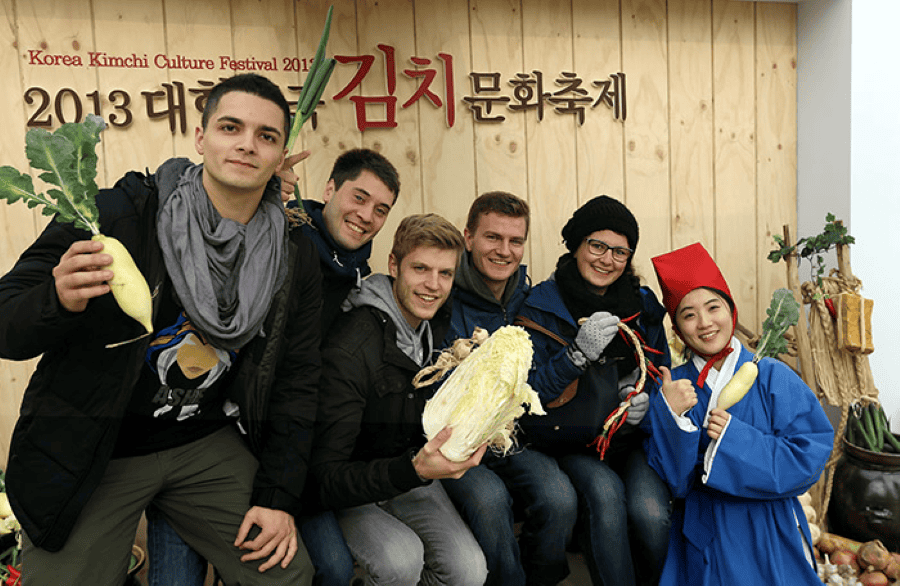
Kimjang isn’t just a Korean thing anymore. In 2013- it was recognized as a UNESCO Intangible Cultural Heritage of Humanity. Highlighting its cultural significance and communal nature.
UNESCO didn’t just praise the taste but also highlighted how Kimjang brings families and neighbourhoods together. Helping in spreading generosity by sharing food. It’s also a way for kids and younger people to stay connected to their roots.
After this recognition- Kimjang really took off abroad. These days, you’ll find Korean cultural centres all over the world putting on their own Kimjang events. People from different backgrounds join in, roll up their sleeves, and get a taste of the tradition.
Popular Kimjang Festivals
Every year, South Korea throws some pretty big Kimjang festivals, and honestly, they’re a huge deal. Thousands of people show up to make kimchi together.
Seoul Kimchi Festival
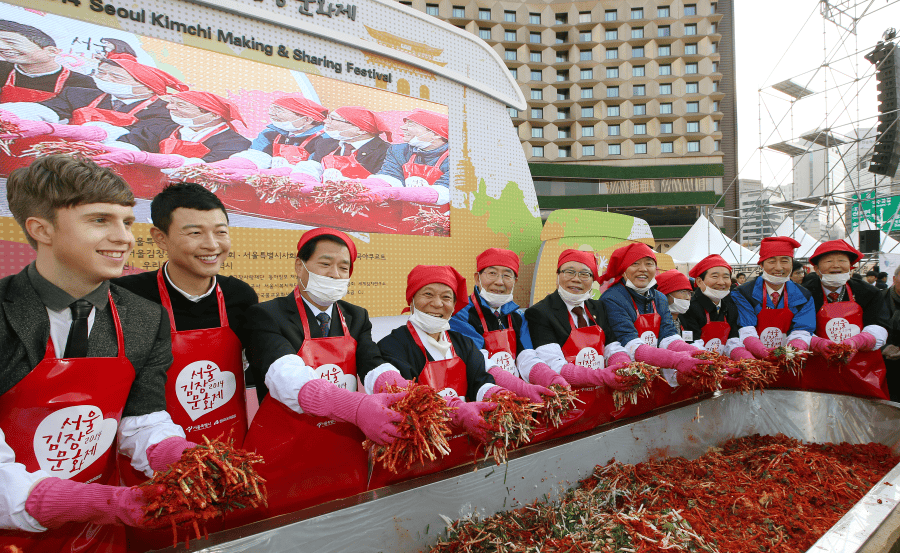
Celebrated in the capital, the scale of this festival is massive. Crowds from all over the world come together to make mountains of kimchi. The main highlight of this festival is the large scale charity event, which is organized to help people in need. The festival also has various fun activities like- food tasting events, live cultural performances, and workshops for children who want to try making kimchi.
Gwangju Kimchi Festival
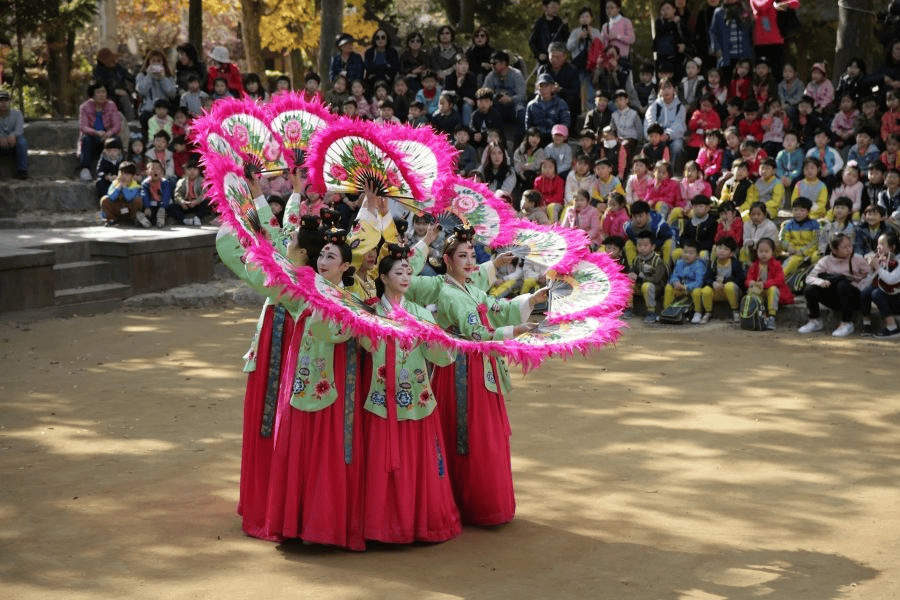
Down in South Jeolla Province- the Gwangju festival brings out the region’s flavors. You can wander through interactive exhibits and shop at kimchi markets to check out funky kimchi inspired art. Cooking contests and performances keep the party going. Making it a lively and fun experience. You really get a sense of what makes Gwangju’s kimchi stand out.
What People Do During Kimjang Festivals?
Although plenty of families still make kimchi at home but more and more people join Kimjang festivals, which have turned into big and joyful cultural gatherings. Perfect for- families, tourists or anyone looking for a real taste of Korean culture.
Here’s what you’ll usually find:
- Kimchi Making Workshops
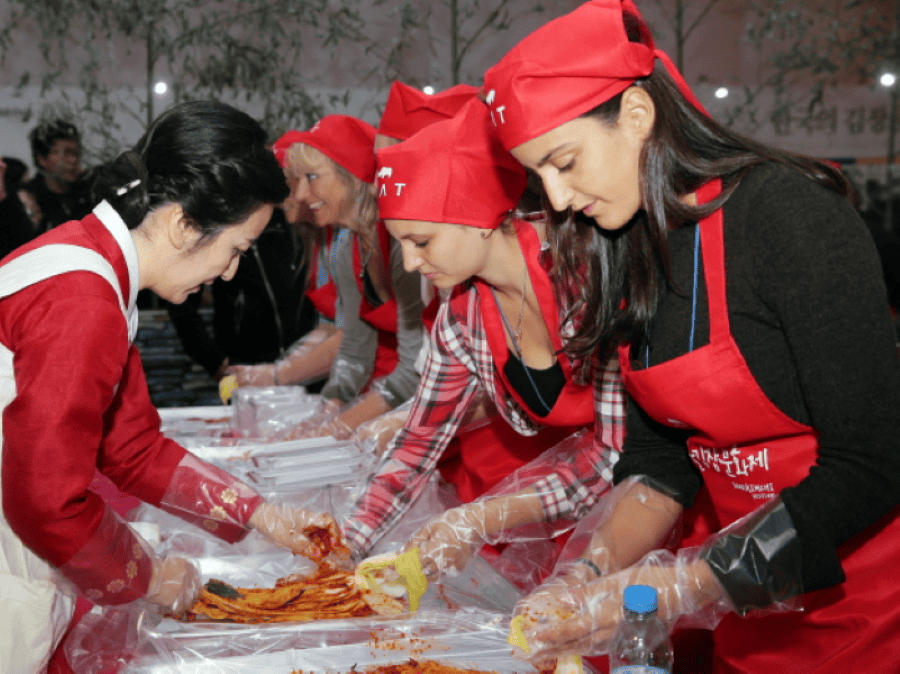
This is where the festival comes alive. People roll up their sleeves and get right into making all sorts of kimchi. Skilled kimchi masters walk you through it, sharing tips you won’t find in any cookbook.
- Kimchi Sharing and Donations
Giving back sits at the core of kimjang culture. Volunteers team up to make huge batches of kimchi- which go straight to families in need and local charities. It’s about community, plain and simple.
- Cultural Performances
There’s always something happening on stage. One moment you’re listening to a live band or a DJ. And next, you’re watching traditional Korean dancers perform samulnori. If that’s not enough, you’ve got- balloon artists, circus acts, and magicians keeping the crowd on its toes.
- Food Stalls and Markets
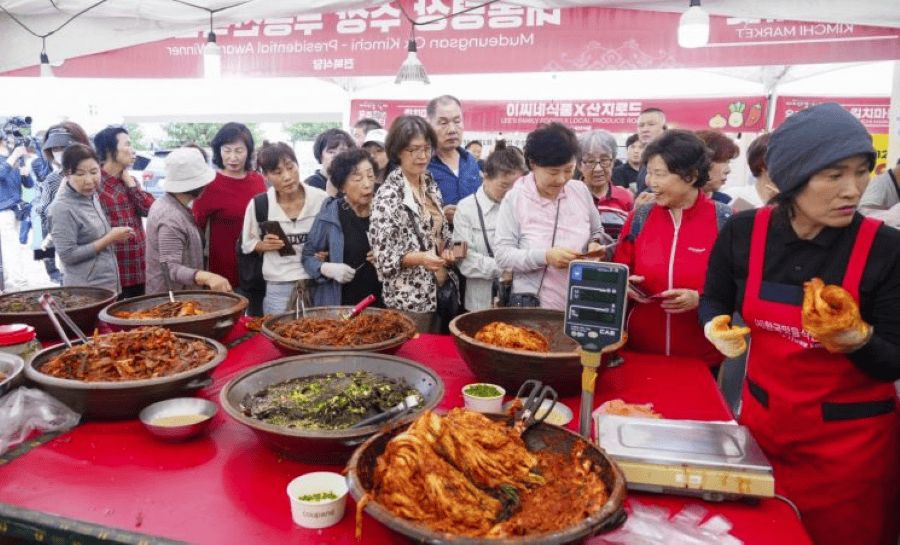
Hungry? You’re in luck. The market buzzes with vendors selling street snacks. You will also find fresh ingredients for homemade kimchi, produced straight from local farms.
- Exhibitions and Educational Displays
Curious about kimchi’s backstory? Head over to the exhibits. They lay out the history, the many varieties, and how kimjang culture earned UNESCO recognition.
- Kimchi Tasting and Pairing
This is where your taste buds get a workout. Sample all kinds of kimchi and then find out what goes best with bossam or a glass of makgeolli.
Conclusion
Kimjang goes past being just a tradition. It’s an open door right into the heart of Korean life. A celebration where community and generosity come alive in every spicy and messy step of making kimchi.
What really sticks with you from the Kimjang Festival isn’t just the taste or the colors. But that deep sense of togetherness. People come from every corner. Sharing stories and making memories that last way beyond a single day.
So, next time when you’re planning a trip- think about Korea during kimjang season. Come for the festival experience and leave with a story you’ll keep telling long after you are home.

Written by – Aparna Sharma
About the Author –
Aparna has a deep curiosity for languages and global cultures. She enjoys diving into stories that offer fresh perspectives and meaningful connections. For her, writing is a way to process ideas and connect with others who share similar interests.