
One of the most disturbing instances of institutionalised sexual violence committed by the Imperial Japanese Army during World War II was the ‘Comfort Women’ system. In this system, women were systematically abducted and forcefully transported across borders into serving as sex slaves for soldiers near military bases and warzones. These women were thus subjected to prostitution, marriages, and involuntary domestic labor, all while facing coercion and abuse. This system was a disturbing event of WW II that revealed the depths of human cruelty and the long exhaustive journey of speaking up against it.
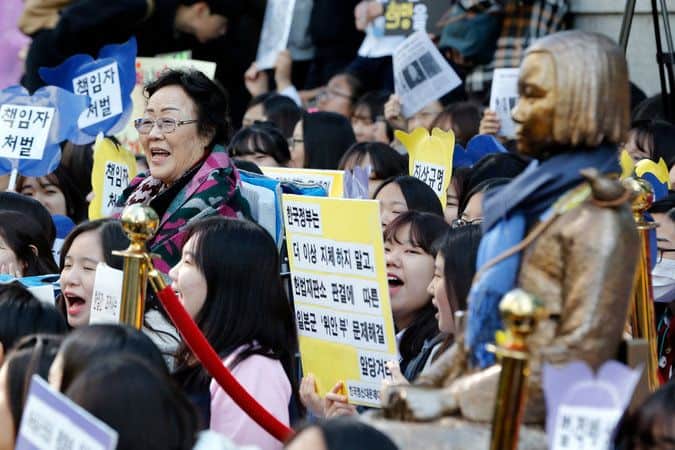
Approximately 200,000 women from diverse backgrounds such as Burmese, Dutch, Indians, Indonesians, Filipinas, Vietnamese, Chinese, Eurasians, Japanese, Taiwanese, Pacific Islanders, and Koreans were abducted, lured or forcibly conscripted by the Japanese military and put into the comfort stations scattered throughout the Japanese war zones.
Among these women, Korean women were disproportionately affected and comprised approximately 80 percent of total victims. The mortality rate among these women was extremely high, with only around 30 percent coming out alive. This was so because these women had to go through brutal torture and severe mistreatment which caused widespread suffering and deaths.
In Korea, these women were called as ‘jungshindae’ (정신대) which meant Women’s Voluntary Labor Corps and in Japan they were widely referred with euphemisms like ‘ianfu’ or comfort women and ‘jugun ianfu’ or military comfort women. However, UN documents describing the crimes and other advocacy groups preferred to call them ‘military sexual slaves’ which reflected the gravity of the crimes and clearly stated their plight.
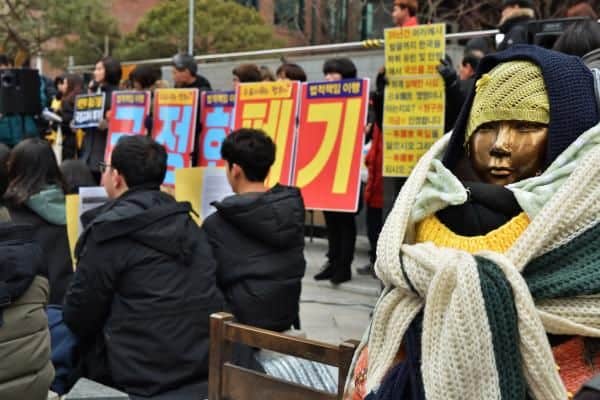
The issue of comfort women remained largely unaddressed and suppressed for many years, largely for nearly four decades after the war ended. This was because of South Korea’s specific historical and political situation and history. After South Korea’s liberation from Japan, the country mainly focused on rapid nation building and was also subjected to a repressive political environment. During this time, the women’s movement in South Korea lacked strong focus on women centred activism and thus could not prioritise the comfort women issues due to several reasons.
One such reason being the issue of sexual violence not being regarded as that of societal and governmental attention, but rather being an individual’s responsibility, influenced by the norms of patriarchy. In countries like South Korea where the society is often influenced by entrenched social hierarchies and fast- paced economic policies, sexual crimes are considered taboo. In addition to the culture, what further hindered the aspect of open discussion of the crimes by the victims was the country’s need to maintain a favourable relation with Japan. This fostered internalised shame among the survivors.
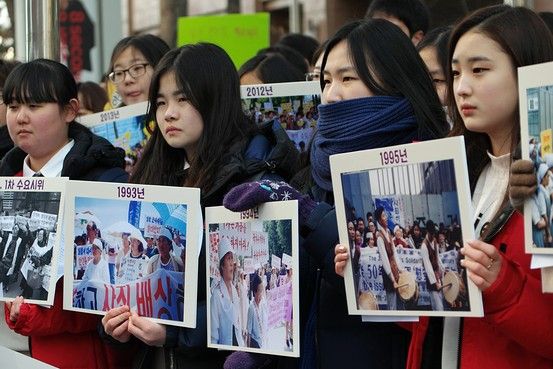
Japan’s response to this whole issue further delayed any chance of justice due to half- hearted acknowledgements and denying to confront the moral and legal implications of their actions. In the aftermath of World War II, the International Military Tribunal for the Far East, or the “Tokyo Trials” conducted from 1956 to 1948 failed to shed light on the issue, allowing their suffering to remain hidden.
It took until the early 1990s for Japan to reluctantly investigate the matter which led to the Chief Cabinet Secretary Yōhei Kōno to deliver a statement in 1993. This was called the ‘Kōno statement’ in which the cabinet secretary barely offered any acceptance of the Japanese military’s role in the comfort stations.
Further, in 1995, Japan established an Asian Women’s Fund to offer compensation and support to the comfort women but it was subjected to a lot of criticism and was viewed as a self- serving attempt to sidestep responsibility because it was funded by public donations instead of the government’s treasury.
The controversy deepened when a former Japanese cabinet member dismissed the comfort women’s experiences as being a ‘commercial activity.’ Any voice was refused to be heard by the Japanese government that went with the assertion that the comfort women were in fact paid professionals or volunteered to engage in the act. Japan refused to take accountability and change its stance towards the whole issue even after the comfort women advocacy movement’s efforts to align with international groups and utilize the UN human rights mechanisms in 1998.
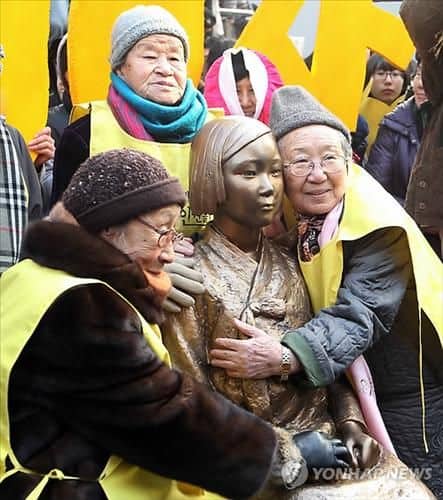
In 2015, a diplomatic agreement between Japan and South Korea was made that promised an apology and compensation for the comfort women, along with addressing concerns over a contentious comfort women memorial statue built in Seoul. However, this agreement was also not fruitful and was seen as being hastily concluded and lacking in genuine remorse.
Prime Minister Shinzo Abe later denied the presence of documented evidence regarding any forced recruitment which not only underscored Japan’s apparent indifference to the issue but also laid the fact that this was far from being resolved. All the agreements till today fell short of recognising the crimes and achieving any final, largely accepted apology and led to the few surviving comfort women feeling their experiences as being triviliased.
Amid these failed diplomatic negotiations and compensation promises , the testimonies of former comfort women have been the most prominent in breaking through the silence of the survivors and bringing out the cruel reality of the whole system, thus pushing Korean women’s movements into prominence. However, some of these women’s organizations, while deeply committed to advancing women’s roles and rights, often framed these efforts within the context of national progress and fitting into the larger anti-Japanese narrative.
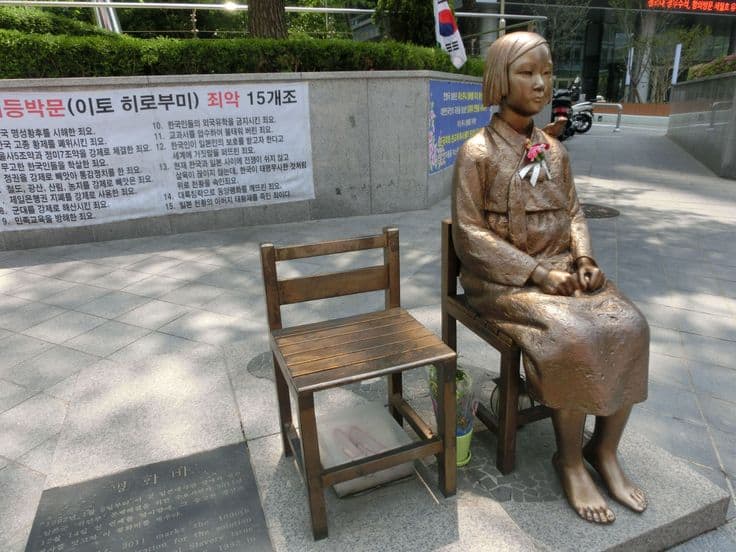
Often the stories told by the survivors were constructed as symbols of a larger political narrative rather than being acknowledged as a nuanced, individual experience. However, even though the activism sought after a steady development and was imperfect, it gradually gave the courage to the survivors to come forward and tell their stories to the public.
Written by – Priyanjana Jha

About the Author –
Priyanjana is a post graduate in Global Studies, with a research background in feminism and cultural studies. Her interests lie in exploring themes related to cross-cultural relations, history and gender identities, with a particular passion for Korean culture and society. She is actively learning the Korean language and sees writing as a way to bridge cultural gaps in the world, and share her stories with others. In her free time, she loves to watch K-dramas and make K-pop dance covers.