
As Korea’s fierce summer humidity gives way to a crisp, golden autumn, a unique energy sweeps across the peninsula. This is the feeling of Chuseok (추석), Korea’s harvest moon festival. While often referred to as “Korean Thanksgiving,” this label only scratches the surface. Chuseok is a profound national homecoming, a ritual of gratitude, and a vibrant celebration of family and food, all unfolding under the season’s brightest full moon. Today, let’s unfold this humble yet unique festival of Korea through this piece of writing.
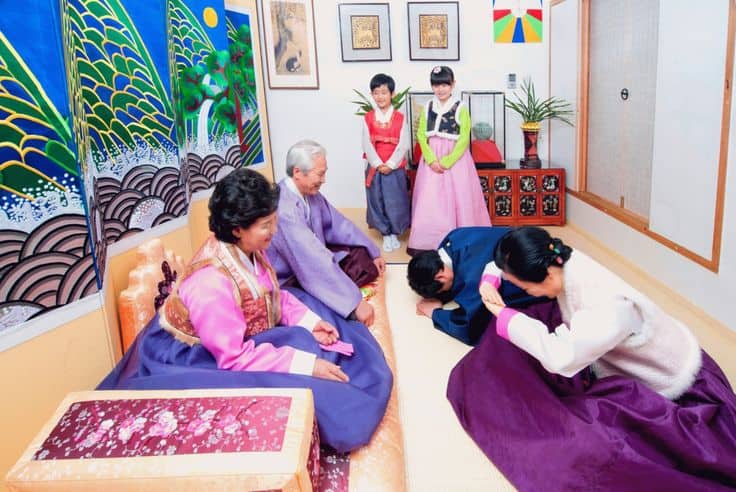
The Great Journey Home: The Pilgrimage of the Heart
The celebration begins with a journey, known as 귀성길 (guiseong-gil). Millions of people embark on a pilgrimage back to their hometowns, creating one of the world’s largest annual migrations. This mass movement home is the first clue to Chuseok’s true meaning: it serves as an anchor point for the Korean soul, a time to reconnect with roots and family.
A Table for the Ancestors: The Sacred Ritual of ‘Charye’
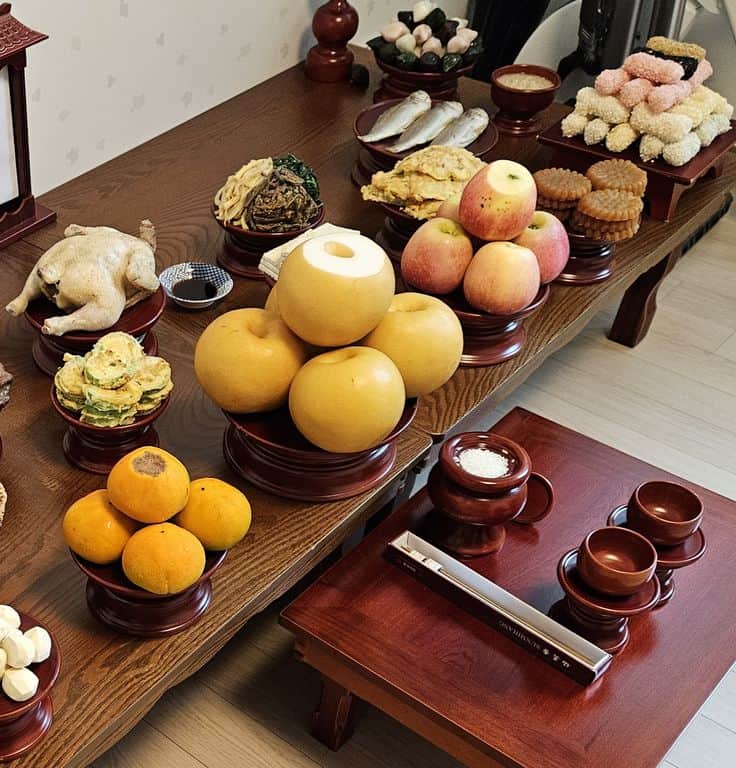
At the heart of Chuseok is the 차례 (charye), the ancestral memorial ritual. Families meticulously prepare a table of offerings to express gratitude and honor their forebears. The arrangement is symbolic of east for red fruits, west for white, fish heads pointing east, a beautiful, edible tapestry of respect. It’s a solemn moment of remembrance, linking the generations present to those who came before and ensuring they partake in the harvest’s abundance.
Pinching Dreams: The Legend and Lore of Songpyeon
Then comes the feast, a glorious testament to the season. The undeniable star is 송편 (songpyeon). These half-moon-shaped rice cakes are more than just food; they are a family activity. Generations gather to pinch the dough, hiding sweet fillings like sesame honey or red bean paste inside. The legend says that the maker of the most beautiful songpyeon will be blessed with a wonderful spouse or a bright future. Steamed on a bed of pine needles, they emerge with a unique, fragrant chewiness that tastes purely of autumn. Meanwhile, the kitchen is alive with the sizzle of 전 (jeon), savory pancakes loaded with zucchini, shrimp, or mushrooms, eagerly eaten straight from the pan.
Dancing Under the Moon: From Ssireum to Ganggangsullae
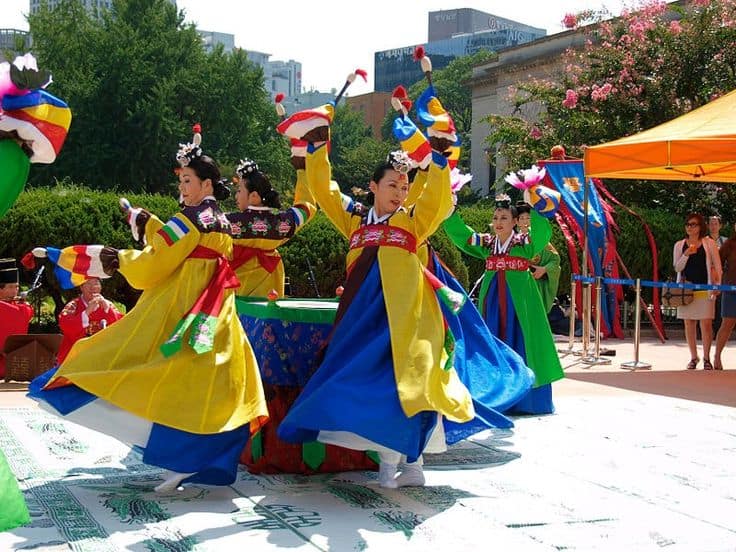
But Chuseok isn’t all quiet reverence. It’s also a time for play and community. Traditionally, villages held wrestling tournaments called 씨름 (ssireum), and women would join hands under the moonlight for the graceful circle dance known as 강강수월래 (ganggangsullae), a practice now recognized by UNESCO.
Though with changing times, the modern Chuseok has its own rituals, like the hunt for the perfect 선물세트 (gift set) in bustling department store basements, and gifting lavish boxes of Spam, tuna, cooking oil, or honey has become a quirky, beloved custom of its own.
As the last of the songpyeon is shared and the farewells are whispered, the spirit of Chuseok lingers long after the holiday ends. It travels back with families on the long roads to the city, not in the shape of a gift set, but in the heart, a quiet, glowing ember of connection. It’s the remembered taste of pine and sesame, the echo of shared laughter, and the profound comfort of knowing you are a branch on an ancient, enduring tree. This is the true harvest of Chuseok: not just the season’s bounty, but the lasting warmth of togetherness that carries Korea through the turning of the year.
Written by – Trisha Deka
About the Author –

Think of Trisha as your modern-day storyteller for a dynamic culture. She’s got a sharp eye for the moments where tradition and hyper-modernity collide in Korea. One minute, she’s breaking down the latest digital trends from Seoul, and the next, she’s explaining the timeless ritual of a tea ceremony. Her writing is your front-row ticket to understanding not just the “what” of Korean culture, but the “why” that makes it so captivating.