
Forget the gourmet fried chicken of the West. In Korea, chimaek is a sacred ritual with its own language, etiquette, and deeply held beliefs. Welcome to the masterclass.
Introduction: A Love Letter in a Paper Box
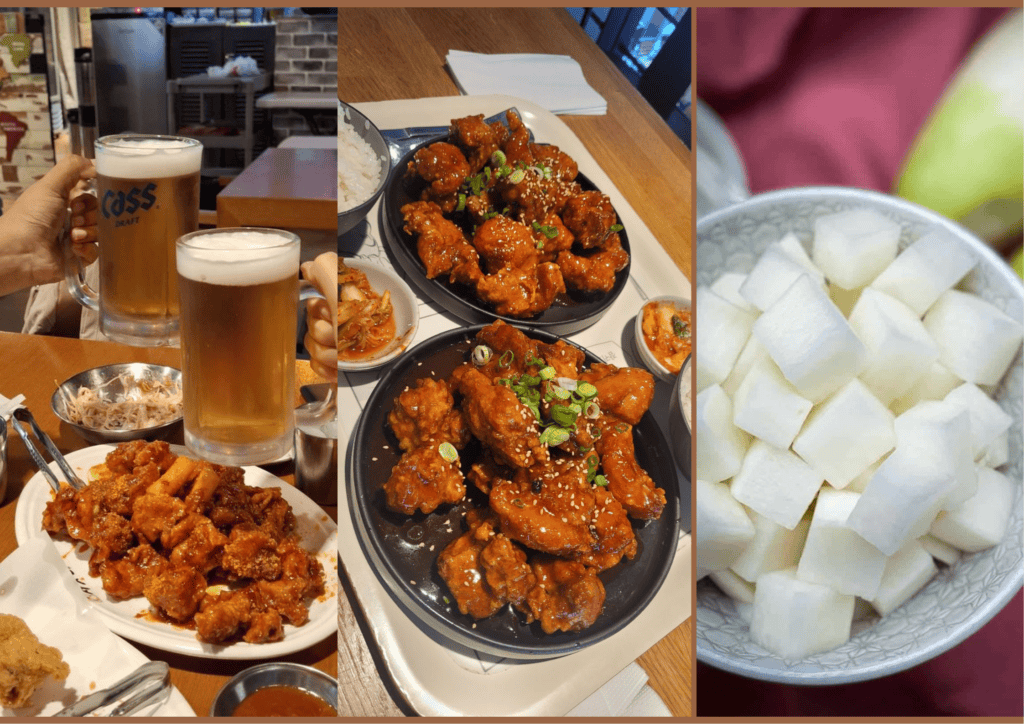
The doorbell buzzes. You rush to the entrance of your apartment building, phone in hand. A delivery driver, helmet still on, holds out a familiar red-and-white paper bag, the contents warm and fragrant. You exchange a few bills, a polite “Gamsahamnida,” and the transaction is complete. You close the door, the scent of crispy batter and sweet-spicy glaze already filling your small kitchen. This is not a delivery. This is a summoning.
Fewer rituals are as beloved, as hotly debated, or as quintessentially Korean as Chimaek (치맥)—a portmanteau of Chikin (fried chicken) and Maekju (beer). It is the official meal of summer evenings, of baseball games, of late-night catch-ups, and of rainy days when nothing else will do. But chimaek is not simply food. It is a series of unspoken rules, a cultural code that every Korean knows by heart. If you wish to participate, you must learn to play the game.
Consider this your rulebook.
Rule 1: Thou Shalt Not Eat Alone (Unless Thou Must)
Chimaek is, at its soul, communal. It is meant to be shared. The ideal order is **for two people, minimum**, allowing for the holy grail: ordering two different types of chicken to share.
- The Golden Combo: One “Fried” (후라이드, plain, crispy, golden) and one “Seasoned” (양념, glazed in a sticky, sweet-spicy gochujang sauce). This is the classic pairing, offering textural and flavor contrast that keeps each bite interesting.
- The Solo Exception: Eating chimaek alone is acceptable, especially after a long workday. But it is done with a certain quiet desperation, a slumped posture, and often, a side of kkondae (pickled radish) eaten directly from the container while staring at a screen. There is no shame in it. Only understanding.
Rule 2: The Beer Pour Is a Sacred Geometry
You do not simply “pour a beer.” You perform a ceremony of foam.
- The Angle: Hold the glass at a 45-degree angle.
– The Pour: Pour the beer down the side of the glass, not directly into the center. This minimizes excessive foam.
– The Adjustment: As the glass fills, slowly straighten it to an upright.
– The Foam Crown: The perfect pour leaves a finger’s width of creamy foam at the top. This foam is not waste; it is a flavor protector, sealing in the beer’s aroma and carbonation.
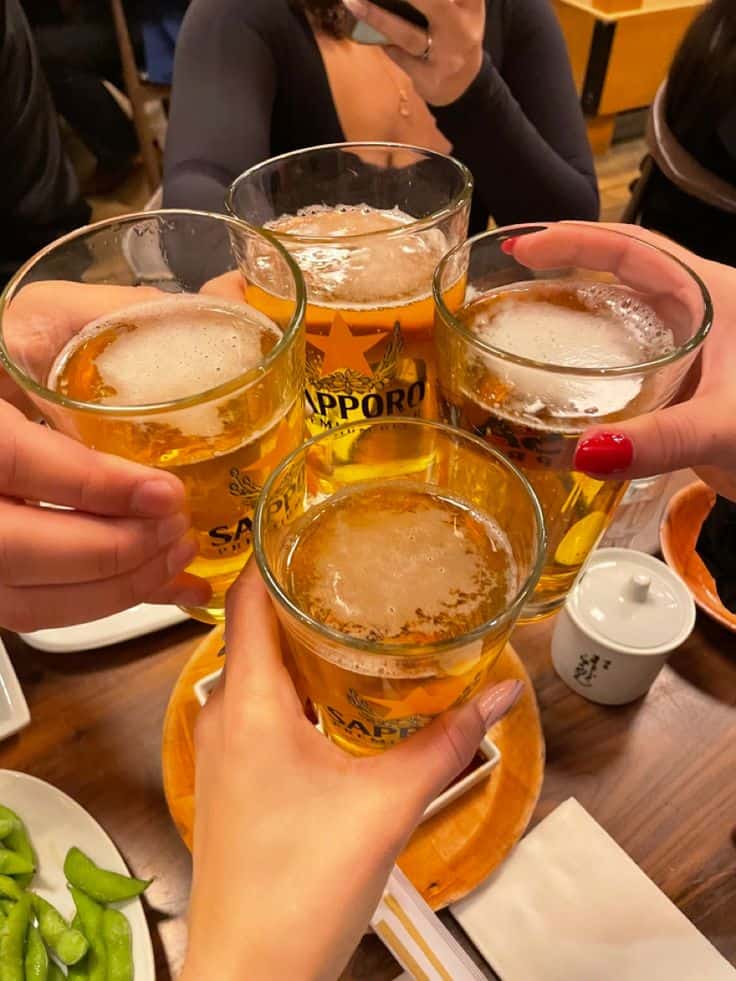
Golden Rule: Never fill a glass to the absolute brim. Leave space. And never, ever pour your own glass first. Pour for your companion; they will pour for you. This is the law.
Rule 3: The Pickled Radish (Mu/ 무) Is Not a Garnish. It Is a Necessity.
The small, yellow cubes of pickled radish (chikin-mu, 치킨무) are not an afterthought. They are the palate cleanser, the textural interlude, the sour-crunchy bridge between bites of rich, fatty chicken.
The Protocol:
– Take a piece of chicken. Eat it. Savor it.
– Before the next bite, take a cube of radish. Let its vinegary, refreshing crunch reset your taste buds.
– Repeat.
To skip the radish is to deny the rhythm of chimaek. It is like eating sushi without ginger, possible, but fundamentally wrong.
Rule 4: The Debate: Fried vs. Seasoned vs. The Upstarts
This is the great theological divide of Korean chimaek culture. Every aficionado has a fierce loyalty.
– The Purist (Fried): The true test of a chicken shop is its original fried. The batter should be thin, shatteringly crisp, and not greasy. The seasoning is just a distraction.
– The Hedonist (Seasoned): But the yangnyeom is the soul! The gochujang, the garlic, the sweet-sticky glaze that coats your fingers. It is messy, addictive, and perfect with beer.
– The Experimentalist (The New Guard): You’re both living in the past. Have you tried Soy Garlic? Honey Butter? Cheese Ball Chicken? That is evolution.
The answer? There is no correct answer. The only rule is variety. Order two types. Debate with your companions. The argument itself is part of the fun.
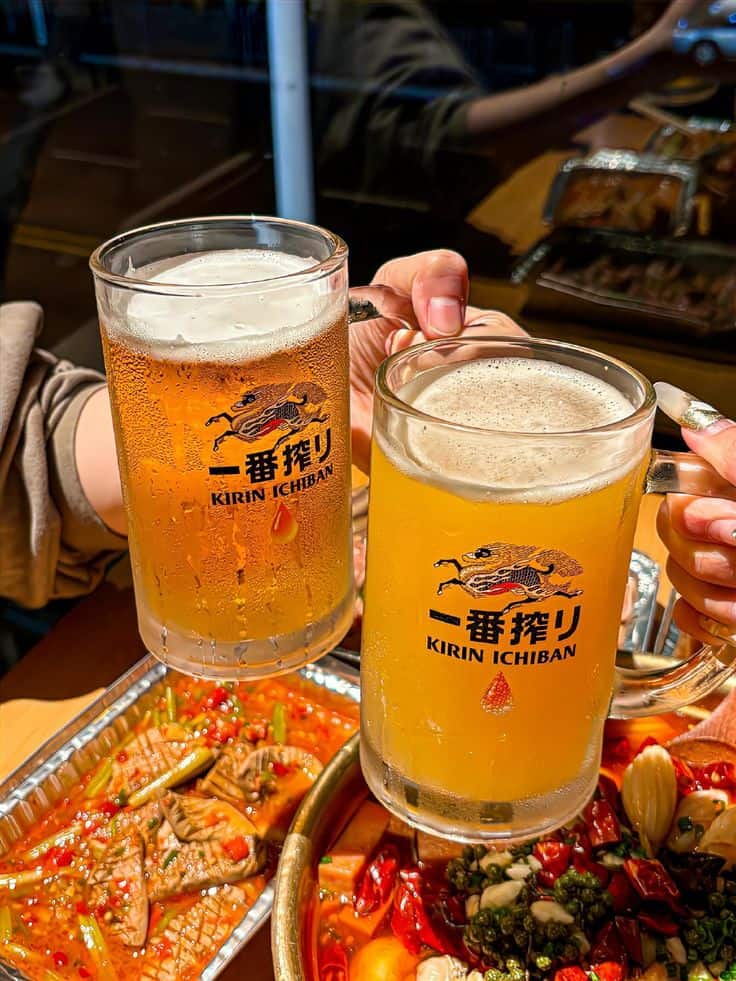
Rule 5: The Hands Are the Only Approved Utensil
Forks and chopsticks are for the weak and the foolish. Chimaek is a finger food.
– The Technique: Grab a piece of chicken. Do not dab. Embrace the mess. The glistening oil on your fingertips, the smear of sauce on your lower lip, these are badges of honor.
– The Napkin Cycle: Eat a piece. Wipe your hands on the provided paper napkin (or, if you are a true veteran, on a wet wipe). Drink beer. Repeat.
Rule 6: The Final Course Is the Leftover Sauce
When the last piece of seasoned chicken is gone, you will be left with a small pool of sweet-spicy gochujang sauce at the bottom of the container.
DO NOT THROW THIS AWAY.
This is liquid gold. The ritual demands you use it:
– Dip leftover pickled radish into it.
– Mix it into your final sips of beer for a surprisingly delicious abomination.
– Order a small bowl of plain rice and mix it in for a makeshift bibim-bap.
– In dire straits, simply lick it from the container when no one is watching.
Waste not, want not. This is the chimaek way.
The Final Sip
Chimaek is not a meal. It is a seasonal state of being. It is the sound of a baseball crowd cheering, the feeling of a cold glass on a humid night, the taste of friendship and late-night confessions.
Follow these rules, and you will not simply eat chicken. You will participate. You will understand why, on any given summer evening, the streets of Seoul are filled with the scent of frying batter and the quiet, satisfied pop of a beer can opening. Now go. Order your chicken. Pour your beer. And may your pickled radish always be crisp.
What’s your chimaek order? Fried purist or seasoned hedonist? And do you have a secret rule I missed? Let me know. The debate is eternal.
Article Compiled & Written By: Trisha Deka
About the Author –

Think of Trisha as your modern-day storyteller for a dynamic culture. She’s got a sharp eye for the moments where tradition and hyper-modernity collide in Korea. One minute, she’s breaking down the latest digital trends from Seoul, and the next, she’s explaining the timeless ritual of a tea ceremony. Her writing is your front-row ticket to understanding not just the “what” of Korean culture, but the “why” that makes it so captivating.