
Korea follows the Gregorian (solar) calendar in daily life, but many important cultural holidays are still celebrated according to the Lunar Calendar. This blend of solar and lunar systems creates a unique cultural rhythm that shapes Korean traditions, festivals, and seasonal customs.
The Lunar Calendar in Korea:
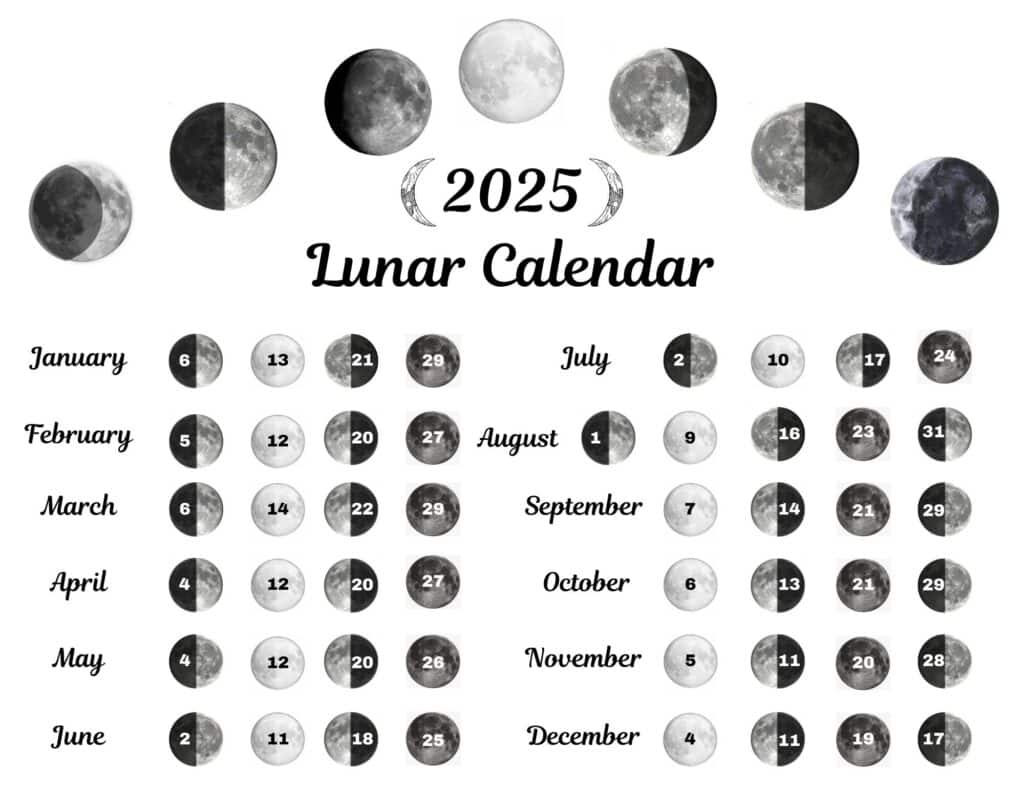
The Lunar Calendar (음력) is based on the cycles of the moon. Each month begins on the day of a new moon, and major traditional holidays fall on significant lunar dates. While Korea uses the solar calendar officially, the lunar system still determines:
- Seollal 설날(Korean Lunar NewYear)
- Chuseok 추석 (Korean Harvest Festival)
- Daeboreum 대보름(First Full Moon Festival
- Many ancestral rites and fortune-telling days
As the lunar calendar changes every year, these holidays shift dates on the solar calendar as well.
1.Seollal (설날): Korean Lunar New Year
Seollal is one of Korea’s most important traditional holidays. It usually falls in late January or early February depending on the lunar calendar.It marks the start of a new year and is a time to honor ancestors, strengthen family bonds, and bring good fortune.

Main traditions:
1.Charye (차례) – Ancestral memorial ritual.
Families prepare a table of food to show respect to their ancestors.
2.Sebae(세배) – New Year’s bow.
Younger family members bow deeply to elders and receive Sebae money (세뱃돈) as a blessing.
3. Eating Tteokguk (떡국) – Rice cake soup.
Eating tteokguk symbolizes becoming one year older and starting the year clean and pure.
4. Hanbok (한복) – Traditional clothing
Many people wear colorful hanbok during the celebrations.
5. Yutnori (윷놀이) – TraChuseokditional board game
Families play this game together for fun and luck in the new year.
Seollal is not only about celebration, but also about RENEWAL, GRATITUDE, and
FRESH BEGGINGS.
2. Chuseok (추석) – Korean Harvest Festival
Chuseok, often called the Korean Harvest Festival, is one of Korea’s biggest and most meaningful traditional holidays. It’s celebrated on the 15th day of the 8th month of the lunar calendar, when the full moon is the brightest.Chuseok began as a time to thank ancestors and the earth for giving a rich harvest. Koreans believed the full moon brings abundance and good fortune, so this day became a moment to:
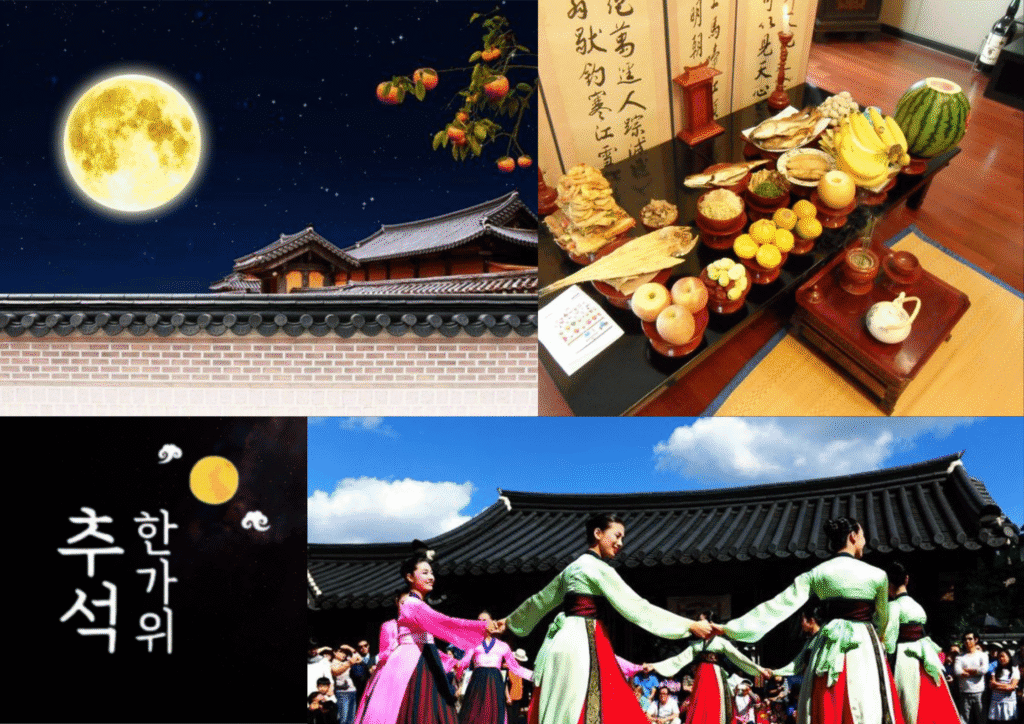
•Give thanks for the year’s harvest
•Honor ancestors who protected the family.
•Celebrate together with relatives.
Main traditions:
1. Seongmyo (성묘) & Beolcho (벌초) – Visiting Ancestors’ Graves.
2. Eating Traditional Foods.
3. Traditional Games & Performances.
4.Charye (차례) – Ancestral Memorial Ritual.
5. Family Time & Gift-Giving.
Chuseok reminds people to be thankful for the harvest and the ones they love, making it a special time for family, traditions, and wishing for a good year ahead.
3.Daeboreum (대보름) – The First Full Moon Festival.
Daeboreum is a traditional Korean festival celebrated on the 15th day of the first LUNAR MONTH, when the first full moon of the year appears. It’s all about health, long life, protection from bad luck, and starting the year with good energy.
Main traditions:
1. Eating “Ogokbap” (오곡밥)
2. Eating “Bureom” (부럼 깨물기)
-Nut-Cracking.
3. “Jwibulnori” (쥐불놀이) -Fire-Spinning Game.
4. “Daljip Taeugi” (달집태우기) – Burning the Moon House.
5. Wishing on the First Full Moon.
Daeboreum is a day to pray for health, good luck, and a strong year ahead as people follow meaningful traditions under the first full moon.
Solar vs Lunar Calendar in Korean Life.
Solar Calendar → Work, school, official events.
Lunar Calendar → Traditional holidays, ancestral ceremonies, fortune-telling, farming traditions.
Conclusion:
The Korean calendar is a beautiful mix of modern solar timekeeping and deep-rooted lunar traditions. Festivals like Seollal and Chuseok show how important family, gratitude, and cultural heritage are in Korean society. Even today, the lunar calendar continues to shape the rhythm of Korean life, connecting the present with centuries-old customs.
Written by -Sneha Chhabra
About the author –
Hello, I’m Sneha. I’m studying at Delhi University and learning Korean at KCCI. I’m really into languages, culture, and discovering new things about Korea every day. Whatever I learn – from grammar to little cultural details – I love sharing it in a simple, real, and relatable way. This journey means a lot to me, and I hope people can grow and learn with me.