
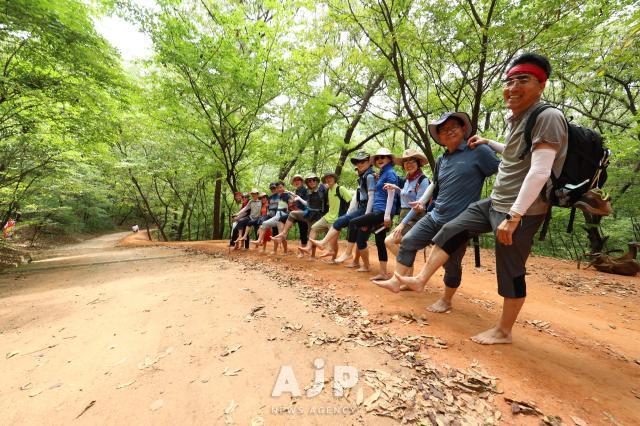
If you happen to be in one of Seoul’s forest parks or on a walking trail along the seaside in Busan in 2026, you may notice something unusual: many people walking barefoot on pathways (red clay) with their expensive sneakers held in their hands. This is known as the “Earthing” (Eosing) revolution. While this seems to be more of a cultural or folk movement rather than anything scientific, there is a great deal of physiological evidence supporting the Korean Barefoot Movement. We will analyze the physiological effects of barefooting, ranging from “Plantar Sensory Feedback” to the “Bio-electrical” impact on the reduction of inflammation by identifying the reason why removing your shoes may represent the most advanced medical procedure in the past decade.
1. The “Hwang-to” Craze: From Ancient Wisdom to Urban Infrastructure
Hwang-to (yellow/red clay) has been the foundation of Korea’s traditional medicine for hundreds of years. It has been used in saunas, skincare products, and in building homes because of the minerals it contains. In 2026, the “Barefoot Revolution” began because of a modern issue: Sensory Deprivation. In Korea’s overly developed cities, people get very little contact with the ground as the human foot now only touches flat hard surfaces like concrete pavement or soft cushioned soles in shoes. Local governments, from Dongjak-gu in Seoul all the way to the Gyejoksan Trail in Daejeon, have responded by installing many kilometers of specially built clay pathways for walking on. These pathways are not just for recreating outside but are also called “Open-Air Rehabilitation Centres” where they will help to reconnect the body with the uneven tactile feeling of the ground. For most residents, it is a response to the “asphalt jungle,” and for scientists it is a reestablishing human biomechanics.
2. The Biomechanics of the “Unhindered” Foot
From a clinical standpoint of physical therapy, contemporary shoes provide a functional cast, resulting in “Intrinsic Muscle Atrophy” of the foot. When a person walks on a path of red clay the foot experiences a change in forces that cannot be re-created by shoes.
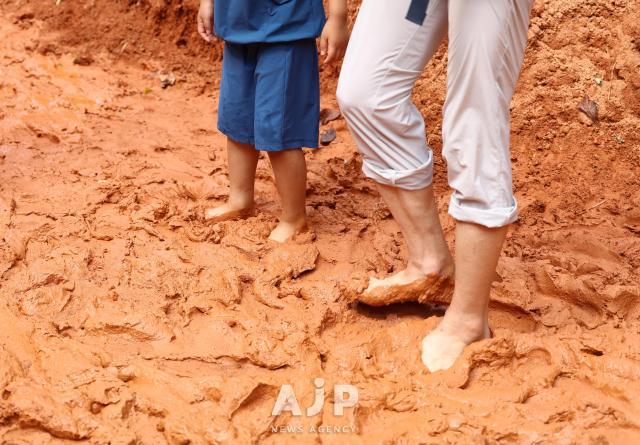
- Activation of the Plantar Fascia: Soft, pliable properties of clay compel the foot to ‘grip’ and ‘conform’ to the surface of the clay. This activates the 29 muscles and 33 joints of the foot which do not function when the foot is limited by stiff shoes.
- Re-awakening of proprioception: The bottom of the foot contains several thousand mechanoreceptors. Walking on clay produces a very large ‘data dump’ into the somatosensory cortex (of the brain). Thus, the somatosensory cortex rerecords the balance centers of the body. This balance center is a key element in fall prevention amongst the rapidly aging population of Korea.
3. The “Earthing” Hypothesis: Bio-Electricity and Inflammation
The “Eosing” movement is based on the belief that the body’s bio-electrical properties influence how well we function. Proponents of this theory believe that modern society creates an artificial barrier between the Earth and our bodies, resulting in “instability” of our cells’ electric properties.
- The Antioxidant Effect: Korea is an extremely high-stress country; therefore, systemic inflammation has become an epidemic known only to those educated on this topic. Although very little research has been conducted on eosing, previous studies indicate that touching the ground with your bare feet is a method of transferring free electrons that react with and neutralize free radicals (Reactive Oxygen Species) to provide natural antioxidant benefits.
- The autonomic balance: There have been numerous clinical studies conducted in Korea showing that regular eosing consistently restores the autonomic nervous system to a “parasympathetic” state (recovery) by moving the body’s nervous system from a stressed-out “sympathetic” state (“fight or flight”). For example, everyone who has taken a walk for 30 minutes barefoot has likely felt refreshed and more relaxed after sleeping than before.
4. Natural Reflexology: The “Second Heart” and Circulation
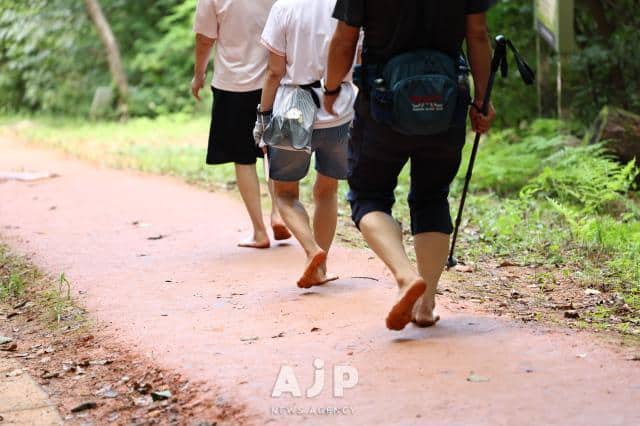
In Korea, the feet are commonly called the “Second Heart.” Walking barefoot over different types of ground surfaces (e.g., mud, clay, small pieces of stone) will massage the veins of the lower extremity through mechanical “milking.”
- Venous Return: The rhythmic action of the clay provides a massaging action on your calves increasing blood flow back towards the heart and decreasing swelling in the lower extremities (edema) through the use of the calf muscle pump.
- Thermal Vasodilation: The physical properties of Hwang-to (will stay cool in the summer heat and hold heat when it’s sunny) will stimulate localized blood vessels. This is especially beneficial for people with Su-jok-naeng-jeung (cold hands and feet) who are commonly seen to suffer from this condition in the senior population in Korea.
5. The “Mind-Grounding” Effect: Sensory Mindfulness in a Digital Age
In addition to the physical aspects of being barefoot, a barefoot revolution provides a solution for the psychological crises that urbanity creates: An overwhelming amount of digital distraction/overload creates a hyperactive brain state.
- Sensory Grounding: The raw, real-time sensation of the squishiness of the cold mud beneath our feet helps the brain focus on the present. From a psychological standpoint, this is regarded as sensory grounding, which allows the brain to settle from the noise it experiences.
- Cortisol Decrease: Research from Korean chi-yu-rim (healing forests) revealed that 20 minutes of barefoot contact with nature reduces the level of salivary cortisol, one of the main stress-related hormones.
- Social Longevity: Walking and conversing along these paths creates social connections and mobility, combating the growing number of people suffering from loneliness in today’s urban setting.
6. Conclusion: The Future of Urban Longevity
The Barefoot Revolution blends traditional culture with modern-day health practices, demonstrating how both can coexist harmoniously in South Korea. The creation of these red clay paths, in my opinion, plays a very important role as we transition to “wellness urbanism,” and they will aid Physical Therapists to enhance the health of our population as South Korea becomes a “Super-Aging Society” by the year 2026. Thus, the development of these paths will help promote mobility and mental health, at little cost, throughout the country. The point is simple: The answer to our high-tech future may be found in the dirt beneath our feet. To advance our health, we must sometimes remove our shoes and reconnect with the earth one step at a time.
Written by- Anjali Gupta
About the author –
Hi! I’m Anjali Gupta, a healthcare student whose interest in healing and well-being naturally led me toward Korean culture — a place where wellness, balance, and tradition beautifully blend with modern living. I enjoy writing simple, emotional, and meaningful pieces that help readers connect with a culture rather than just learn about it.