
Do You Know What 4IR is?
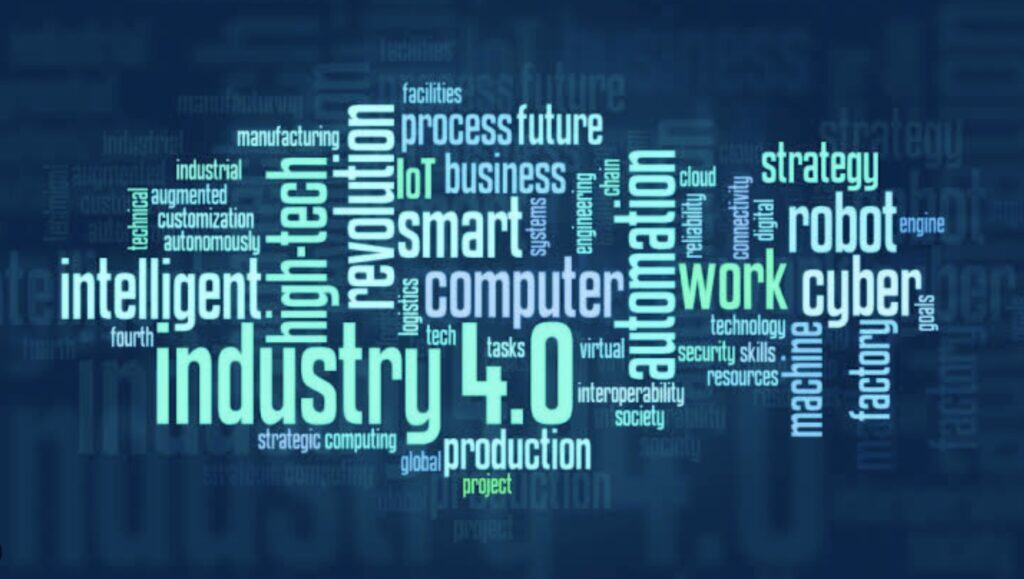
The full name of 4IR is “ The Fourth Industrial Revolution” , also known as Industry 4.0. The founder of the World Economic Forum, Klaus Schwab, made this character well – known in 2016.The rapid evolution of advanced technologies such as artificial intelligence, robotics & automation, big data, advanced biotechnology , internet of things (IoT) and quantum computing, which help the manufacturing of products, industrial progress and social processes. The boundaries between the digital, biological and physical domains, opening up new avenues for automation connectivity and creativity.
4IR ESTABLISHMENT IN SOUTH KOREA
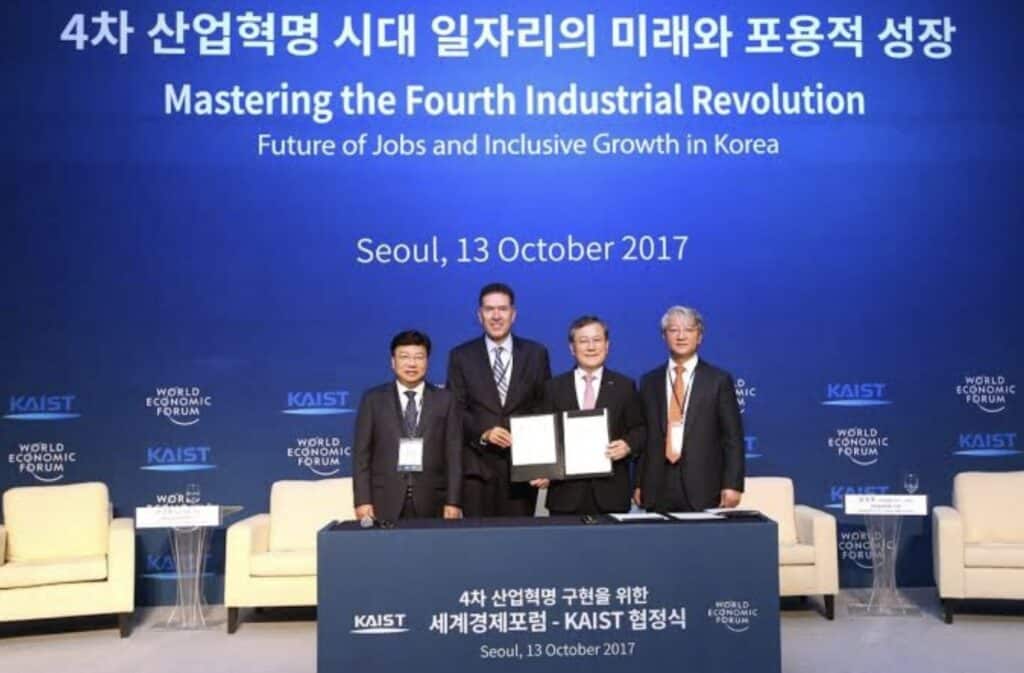
In 2017, a Presidential Committee on the Fourth Industrial Revolution was established in the Republic of Korea. Officially, it debuted on October 11,2024.
Under the direction of its head, Chang Byung-gyu, the committee is composed of five government representatives and twenty civilians. Members will discuss how to successfully implement the plans and the government policies related to The Fourth Industrial Revolution.
At the S-plex Center in Sangam-Dong, Seoul, President Moon Jae-in was present at the committee’s inaugural ceremony, saying that “Our approach to the fourth industrial revolution must be centered on the people, too, as are other government policies that we are currently pursuing.”
The fundamental components from the core of a people-centered economy are growth in employment and a fair economy, the President said “Among the three, innovative growth is our new government’s core strategy for economic growth.”
GOVERNMENT INITIATIVES & POLICY
Presidential Committee (PCFIR): The PCFIR is a private-led consultative body that aims to develop workable policies outside the public sector’s constraints by obtaining the views of diverse groups.
Smart Factory Diffusion: One of the main agenda items is the spread of smart factories, which incorporate cutting-edge technologies to automation processes and boost production efficiently.
Centre for the Fourth Industrial Revolution (C4IR Korea):To promote innovation and guarantee responsible, sustainable development through multi-stakeholder collaboration, the center for the Fourth Industrial Revolution’s initiatives are arranged into important technology domains, with a focus on fields like artificial intelligence, climate technology and advanced manufacturing.
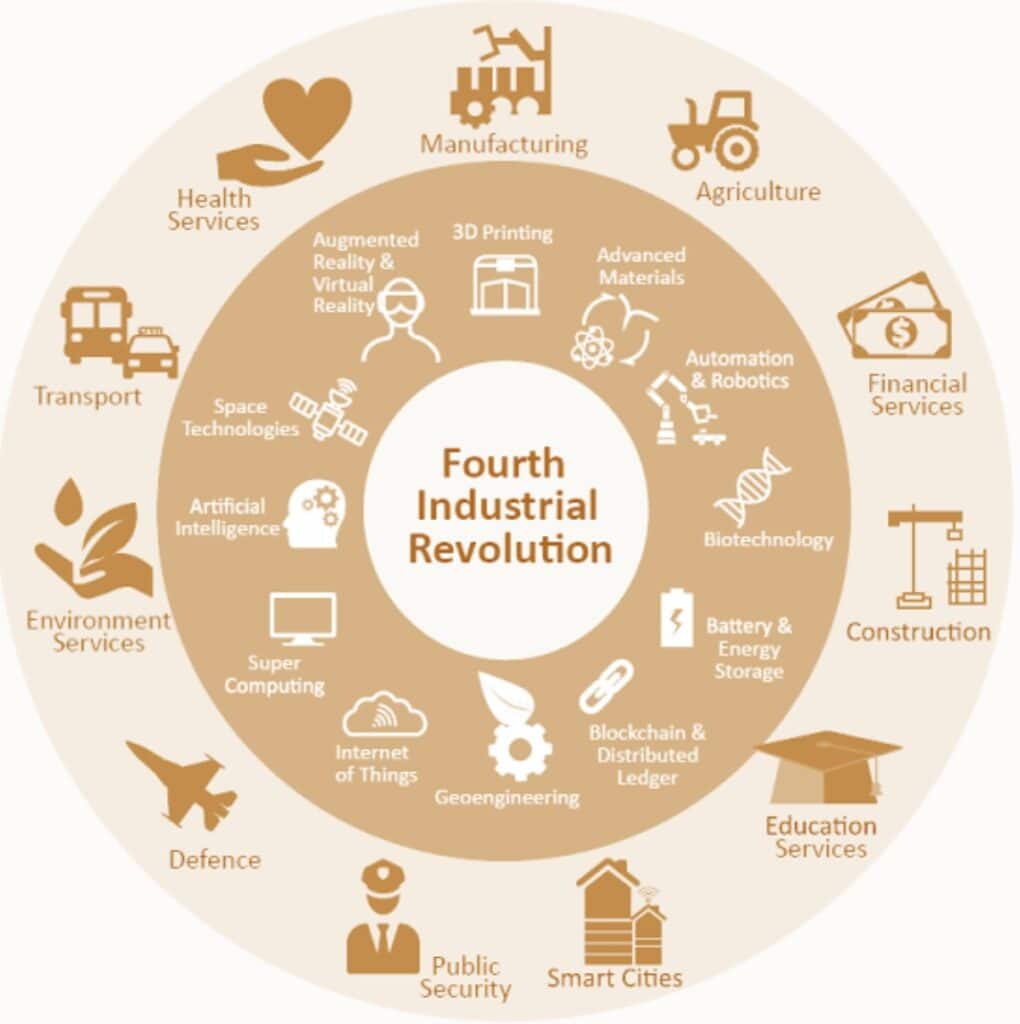
In keeping with the government’s innovation driven economic policy, the Republic of Korea is concentrating on inclusive development and new growth engines such as artificial intelligence, smart manufacturing, driverless vehicles and drones. By means of this goal is achievement through government-led programs and the incorporation of cutting-edge digital technology throughout the country’s economy
PRINCIPAL OF 4IR TECHNOLOGIES
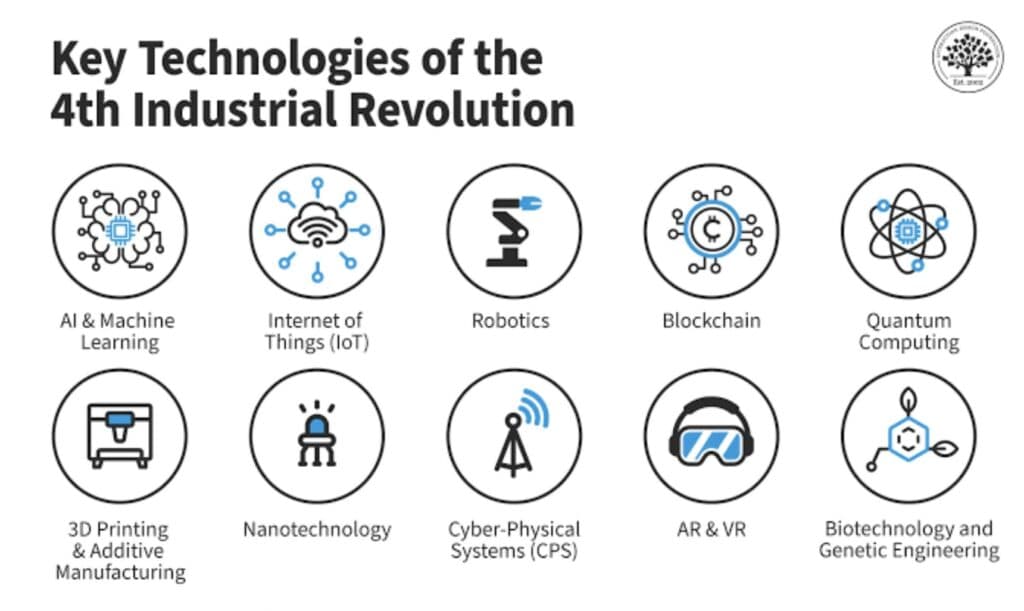
- Digital:
- Artificial Intelligence(AI).
- Big Data and Analysis.
- Internet Of Things(IOF).
- Quantum Computing.
- Blockchain.
- Cybersecurity.
- 5G and Next-Gen Connectivity.
- AR/VR.
- Physical:
- Robotics And Automobiles.
- 3D And 4P Printing.
- Nanotechnology.
- Smart Sensors.
- Biological: Biotechnology And Genomics.
IMPLEMENTATION CHALLANGES
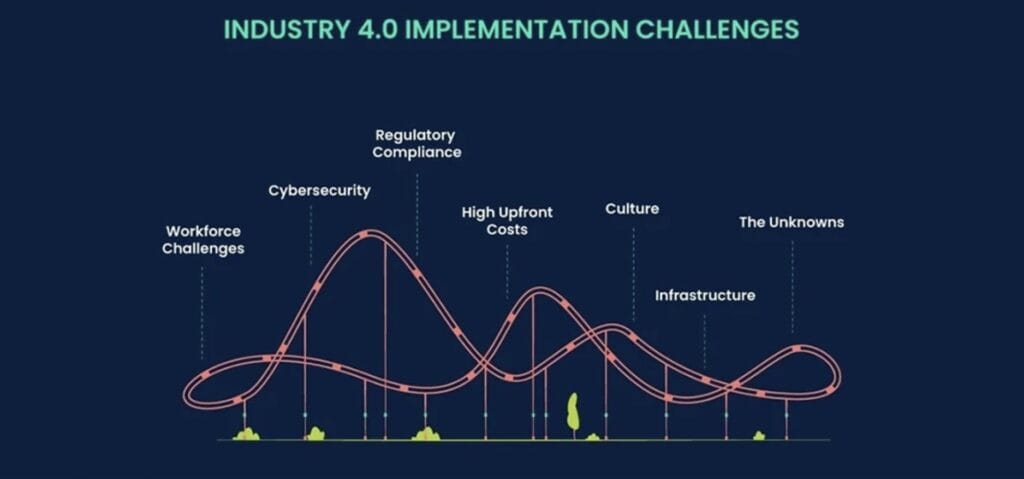
- Economics:
- High Financial Expenses.
- Adaptation Of Business Models.
- Unclear Economic Gains And Excessive Expenditure.
- Requiring Systematic Adaptation And Extensive Workforce Reskilling.
- Social:
- Concern About Privacy.
- Observation And Mistrust.
- Stakeholder’s Overall Resistance Of Change.
- Automobiles And IT-Controlled procedures that result in the loss of many jobs,particularly for blue-collar workers.
- “Education 4.0” is required to adapt educational systems to the demands of the digital age by emphasizing immersive,personalized and adaptive learning.
CONCLUSION
As Korea comes to the end of the Fourth Industrial Revolution (4IR), it highlights the challenges it poses for policy reform, employment and equity in addition to its significant technological impact. Korea’s economy is changing as a result of the integration of technology like robotics, big data and artificial intelligence. These technologies are also changing business models and necessitating more creative management techniques and flexible labor markets.
Written by – Sahinoor
About the Author –

My name is Sahinoor. I have a strong desire to learn a new language and culture whenever I get spare time. Despite being from a different culture, I have always been interested in other cultures. After watching Korean drama, I became very interested in Korean culture and life-style as a teenager. My passion for learning has given me a fantastic opportunity to write articles. I will be able to broaden my knowledge and discover a lot more about my cherished South Korea by writing articles.