
What if I told you that some of Korea’s most beloved cultural traditions are actually games ? imagine children running across villages, families gathering during holidays, and friends laughing together. These moments were shaped by games that have been passed down through generations. In an era where digital gaming dominates, these traditional games might seem forgotten, yet they still bring out the same excitement and warmth, whether you’re playing them with friends or simply remembering them from a k-drama scene.
These traditional games have been passed down through generations, often played during festivals, family gatherings, and holidays. Each game carries its own story from strategy-based board games to energetic outdoor activities. These games show a fun side of Korean culture – some are competitive, some are creative , and some are just pure fun.
Let’s take a look at a few games that Koreans have played for centuries.
1- Yut nori (윷놀이)
Yut nori is one of Korea’s most well known traditional board games, usually played during seollal.It often appears in festive episodes of variety shows like Running man and 1 night and 2 days.
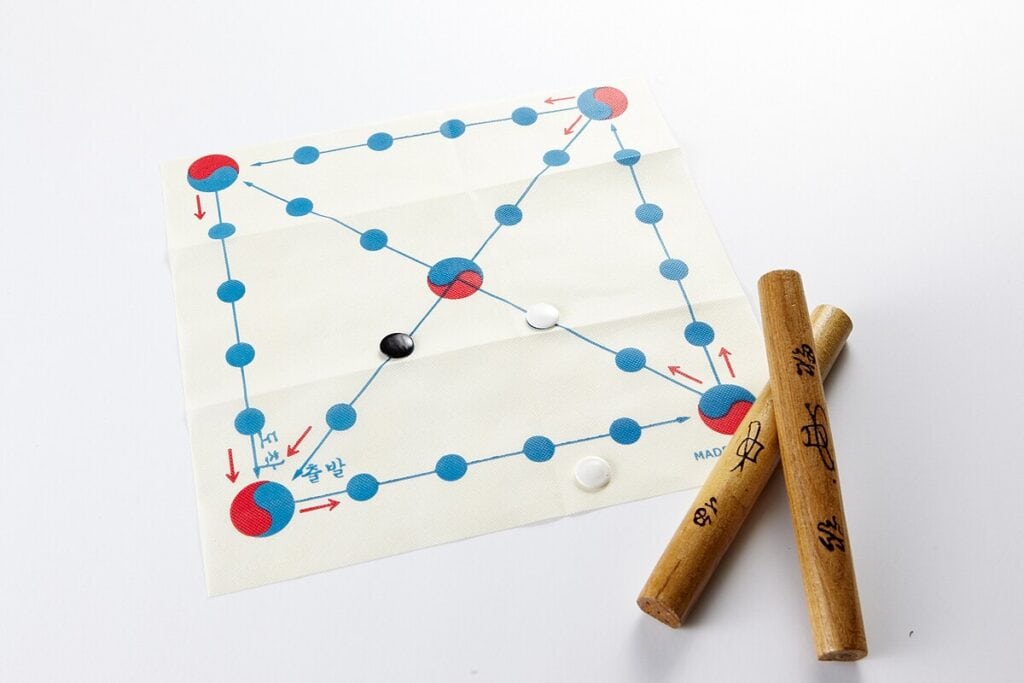
How it works –
- The game is played between two teams or two players.
- Instead of dice,players use four wooden sticks
- When the sticks are thrown the pattern in which they land decides how many steps a token moves.
- Each team has four tokens, and the goal is to move all of them around the board and finish first .
- Some throws also give extra turns.
Meaning :- the four sticks represent the four elements of nature, and the game itself symbolizes luck,teamwork,and family unity,which is why it’s played during lunar new year.
2- Ddakji( 닥지 )
Ddakji is a traditional Korean game played with folded paper tiles. It’s popular among children and is often used to test skill, focus,and creativity.Ddakji became globally famous through the squid game.
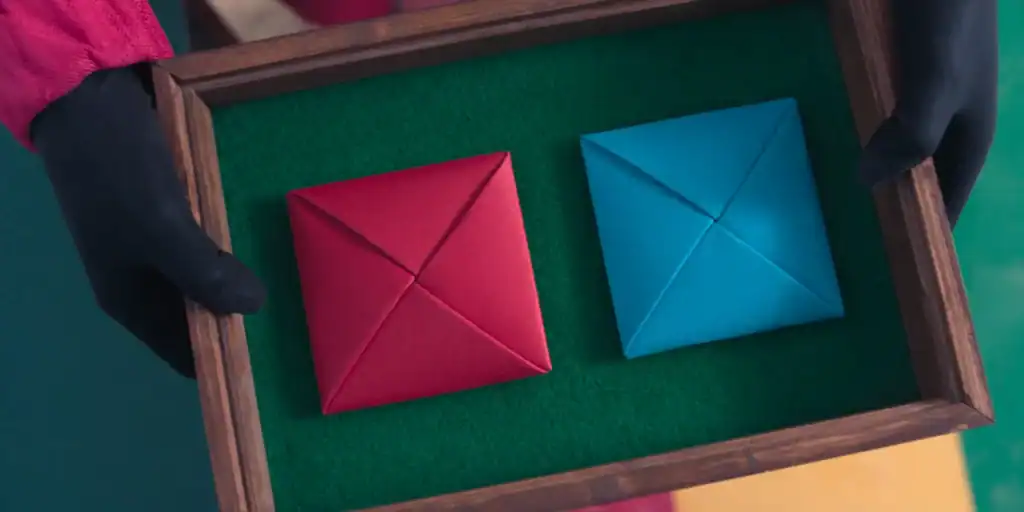
How it works –
- The games can be played between two or more players.
- Each player folds square pieces of paper into thick ,flat tiles called ddakji.
- Players take turns throwing their tile at an opponent’s tile,trying to flip it over.
- The player who successfully flips the opponents tile wins that round.
- Games continue until one player collects all the tiles or a set number of rounds are completed.
Meaning :- It symbolizes focus, strategy, and friendly competition. It also reflects creativity. As children often make their own titles.
3-Gonggi(공기)
Gonggi is a popular Korean game played with small stones or plastic pieces.It was featured in the second season of squid game.
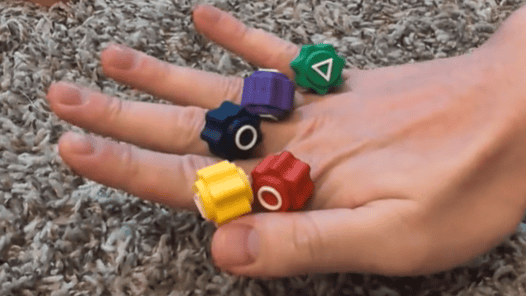
How it works –
- Usually played by one person or in small groups.
- Players toss one piece into the air and try to pick up other pieces before catching the falling one.
- Points are scored based on how many pieces are successfully picked up.
Meaning :-gonggi emphasizes speed, hand – eye coordination,and skill.
4-Jegichagi(제기차기)
Jegichagi is a traditional Korean game usually played during new year holidays.It was also featured in squid game 2.
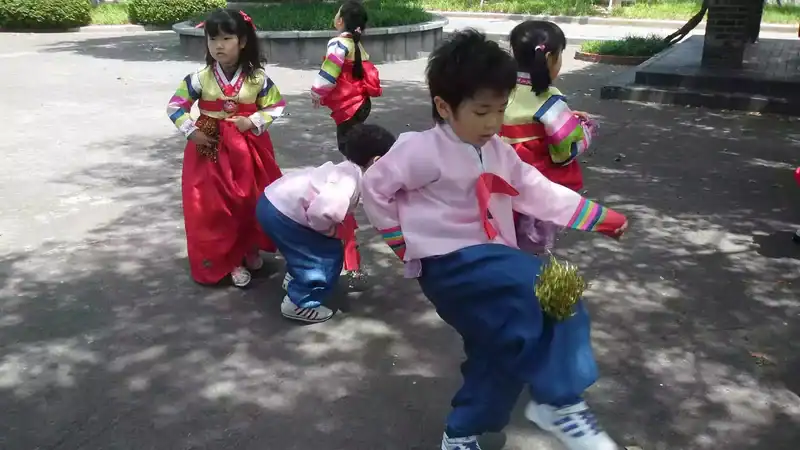
How it works –
- It is played individually or in small groups.
- Players use a small weighted object called a jegi and kick it repeatedly to keep it in the air.
- The goal is to see how many times the jegi can be kicked without it falling to the ground.
Meaning:- It promotes balance, coordination, and endurance.
5- Tuho(투호)
Tuho is an ancient Korean game where players throw sticks into a narrow container. It was historically played in royal courts and by the upper class.
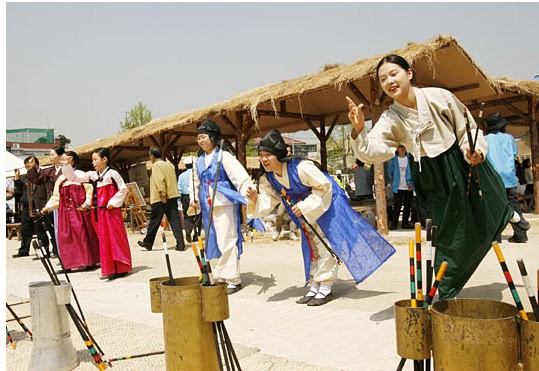
How it works –
- Played individually or in teams
- Players throw arrows or sticks into a large jar or hole from a set distance.
- Points are earned based on how many sticks land inside the container.
- The player or team with the most points wins.
Meaning:- It symbolizes patience, accuracy, and focus,reflecting a calm and disciplined mindset .
6-Ssireum(씨름)
Ssireum is traditional Korean wrestling,especially played during harvest celebrations.Ssireum recently gained attention through the drama Like Flowers in Sand, which follows the life of a young traditional wrestler.
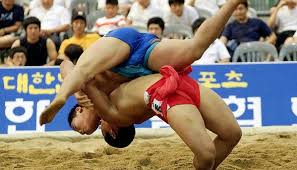
How it works –
- Played between two opponents who wear cloth belts called satba.
- The goal is to throw the opponent to the ground using strength and technique.
Meaning:- It represents strength, fairness, and community spirit .
7- Neolttwigi(널뛰기)
Neolttwigi is a traditional Korean seesaw game, mainly played by women .
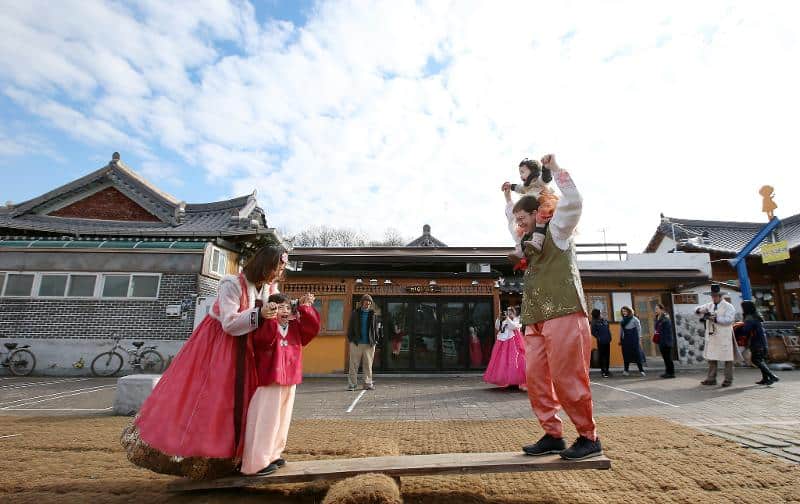
How it works –
- Played by two or more players standing on opposite ends of a long wooden board.
- One player jumps down while the other is lifted into the air.
- The players take turns jumping , trying to reach a good height while keeping balance.
Meaning:- It symbolizes joy, celebration, and freedom.
From yut nori to neolttwigi each game has its own story and charm. They may seem old-fashioned next to video games, but they carry joy and history. Just like our childhood games in India .These games show how culture and fun go hand in hand. Playing them today is like stepping into Korea’s vibrant past.
Written by – Kanak Rawat
About the author –
Hi, I’m Kanak, the writer behind this piece.Curiosity is what led me to explore different cultures and their stories.I’m especially drawn to writing that explains culture in a clear, relatable way.As I explored more, Korea naturally became a big part of that interest.I enjoy turning what I learn into simple insights for readers.My focus is on keeping my storytelling natural and easy to read.I’m learning Korean as part of this journey, which adds a new perspective to my experience.For me, writing is a way to connect cultures and share meaningful experiences.