
Winter melts. Strawberries arrive. The street food finally makes sense…
Introduction: The Pretty One, Done Right
Let’s be honest. Myeongdong is beautiful. It’s designed to be. Pastel storefronts, soft spring light, the occasional K-pop soundtrack drifting from a speaker somewhere. You could spend an afternoon here just looking at things and leave perfectly happy. But that would be a waste.
Because when spring arrives in Myeongdong really arrives, when the cold finally gives up, the street food transforms. The heavy winter stews retreat. The rice cakes get lighter. And suddenly, strawberries are everywhere. Not the pale, crunchy kind. The deep red, juice-bursting-through kind.
This is not a guide to eating in Myeongdong because you have to. This is a guide to eating here because you finally want to.
Let’s walk.
Before You Go: The Myeongdong Spring Mindset
A few things to know before you start:
- Go hungry, but not starving. The portions are small, which is good. You’ll want to try six things, not one big thing.
- Bring a friend or accept your limits. Sharing is how you win here. If you’re alone, prioritize ruthlessly.
- Follow the seasonal crowd. In spring, locals don’t line up for tteokbokki. They line up for strawberries. Watch where the Korean college students are waiting.
- Eat as you walk. This is not a sitting-down part of Seoul. Save the chairs for dinner. Myeongdong street food is meant to be consumed in motion, one hand holding a cup, the other shielding your shirt from a drip.
Now, let’s eat.
Stop 1: Strawberry Mochi – The Taste of Spring, Wrapped in Softness
You’ll notice it immediately. Every other person in Myeongdong is holding a small plastic cup with something pillowy and pink inside. That’s strawberry mochi, and it’s the unofficial flavor of Korean spring.
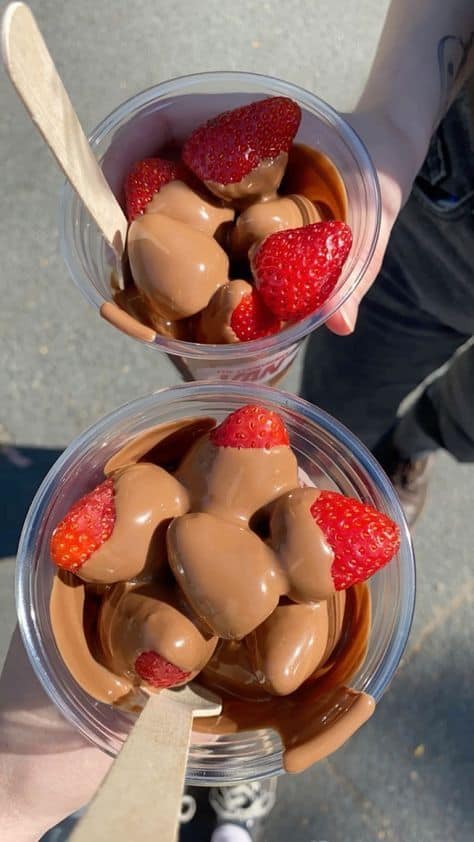
- What It Is: A whole fresh strawberry, ripe and cold, wrapped in a thin layer of sweet red bean paste, then coated in soft, chewy mochi rice dough. Some versions skip the bean paste and go straight from strawberry to mochi. Both are correct.
- Where to Find It: The stalls are everywhere, but look for the ones with the longest line of young women. That’s not a stereotype, that’s a quality marker. They know.
Order This: One cup with 2-3 pieces (₩4,000-₩6,000/ INR 260- INR 389). Eat the first one plain. Eat the second one dipped lightly in the provided honey or condensed milk if you want to understand what the fuss is about.
Pro Tip: The best stalls make the mochi fresh, not pre-packaged. If you see an ajumma dusting rice flour onto a counter and pressing dough by hand, you’ve found the right place.
Stop 2: Fresh Strawberry Cups – The No-Fuss Version
Maybe you don’t want mochi. Maybe you just want the strawberry itself, unadorned, because Korean spring strawberries are genuinely that good.
- What It Is: A cup of washed, hulled strawberries. That’s it. No cream, no sugar, no anything. Just fruit that tastes like candy.
- Why It’s Special: Korean strawberries (specifically the ‘seolhyang’ variety) are bred for sweetness and texture. They’re firm enough to hold their shape but soft enough to burst when you bite. In spring, they peak.
Order This: A medium cup (₩5,000/ INR 324). Don’t bother with the whipped cream version unless you want a dessert. The plain cup is the purest expression of the season.
Pro Tip: Eat these first, before the savory stuff. They’re palate-cleaners disguised as treats.
Stop 3: Tanghulu – The Candy Jewel You Can’t Stop Crunching
Tanghulu isn’t originally Korean; it’s Chinese, specifically Beijing street food, but Seoul has adopted it with enthusiasm. In spring, it makes perfect sense.
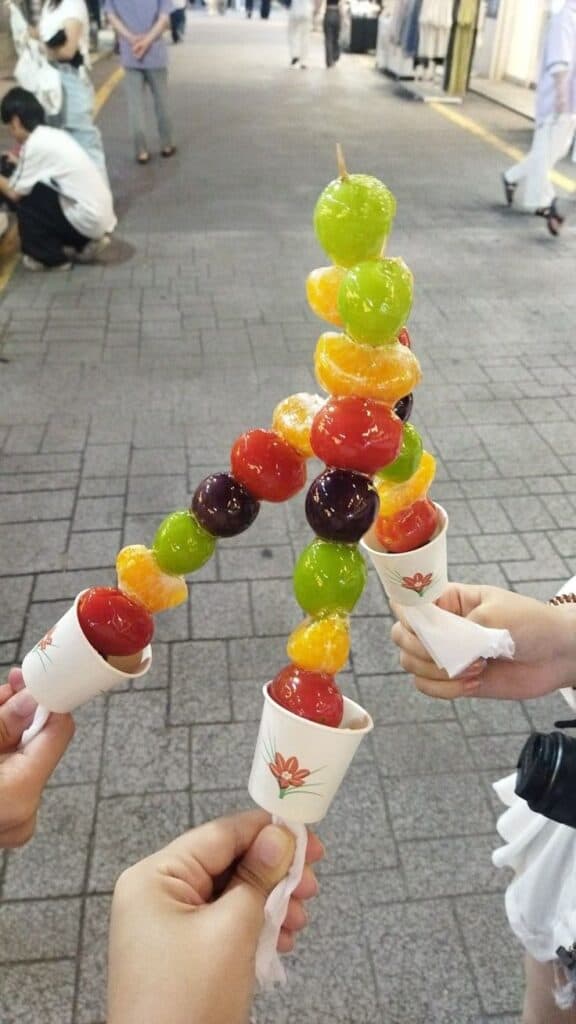
- What It Is: Fresh fruit (strawberry, grape, mandarin, sometimes green grape) skewered and dipped in a boiling sugar syrup that hardens into a glossy, glass-like shell. One bite cracks the sugar. The next bite hits the cold fruit inside.
- The Experience: It’s loud. The crunch is satisfying in a way that feels slightly aggressive for such a pretty snack. People will stare at you. Let them.
Order This: Strawberry tanghulu (₩4,000-₩5,000/ INR 260-INR 324) for the classic. Green grapes for something more refreshing. Avoid the massive mixed skewers; they’re harder to eat while walking.
Pro Tip: The sugar shell begins to melt in warm weather. Spring is safe. Summer is a sticky disaster. Eat tanghulu now or wait until autumn.
Stop 4: Soft Serve Ice Cream – The Sun Pause
There’s a specific pleasure to holding a cone of melting ice cream in soft spring sunlight. It’s not hot enough to make you rush. It’s not cold enough to make you regret it. It’s just right.
Where to Find It: The best soft serve in Myeongdong comes from dedicated dessert stalls, not the generic ones. Look for the ones with matcha powder dusted on top or a swirl of two colors.
Order This: Matcha-milk swirl (₩3,500-₩4,500). The matcha is slightly bitter, which balances the sweetness of everything else you’re eating. A plain milk cone is fine. A plain matcha cone is better. The swirl is perfect.
Stop 5: Gyeran-ppang – The Warm Break You Didn’t Know You Needed
Even in spring, after three sweet things, you’ll want something savory. But you won’t want something heavy. Enter gyeran-ppang: egg bread.
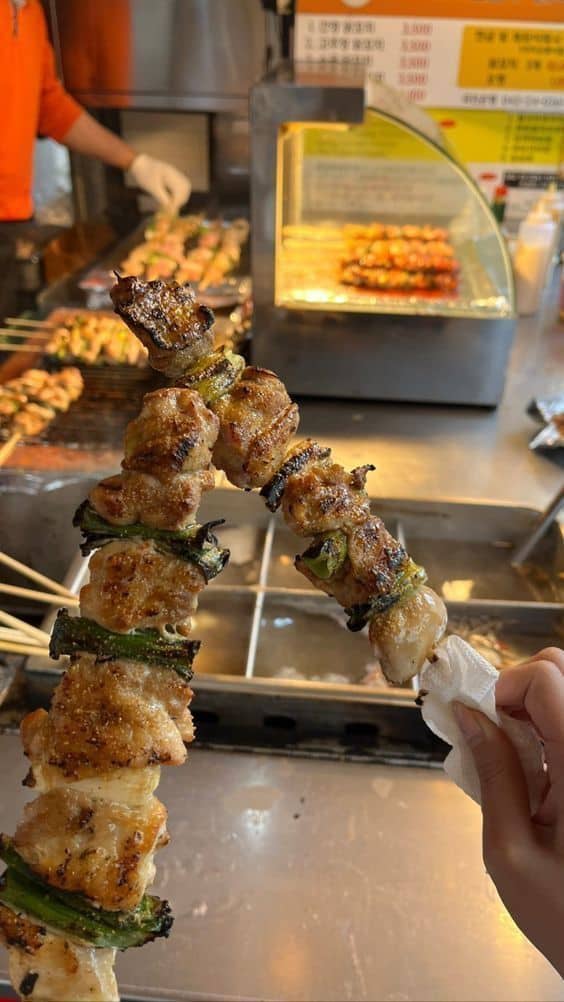
What It Is: A small, cornbread-like loaf baked with a whole egg cracked into the center. The egg sets into a soft, almost custardy layer on top. The bottom is fluffy and slightly sweet.
Why It Works: It’s warm without being hot. Filling without being a meal. And it resets your palate after all that sugar.
Where to Find It: These are everywhere, but the best ones come from stalls that bake them to order, not the ones sitting under a heat lamp. Watch for steam.
Order This: One plain gyeran-ppang (₩3,000). Some stalls add cheese or herbs. Don’t. The original is the blueprint for a reason.
Pro Tip: Eat it fresh. The texture dies in under five minutes. The difference between a 30-second-old egg bread and a three-minute-old egg bread is the difference between understanding Korea and being confused by it.
Stop 6: Chicken Skewers & Fruit Ade – The Final Balance
By now, you’ve had sweet, sweeter, sweetest, then a small savory break. You need one more savory note before you’re done. Then something cold and sharp to wash it all down.
Chicken Skewers (Dakkochi): Grilled over charcoal or an electric grill, basted with a sweet-spicy gochujang sauce or a soy-garlic glaze. The texture is everything, slightly charred on the edges, juicy inside.
Order This: One spicy dakkochi (₩3,500-₩4,500). Skip the soy glaze. The spicy version has more complexity.
Fruit Ade: Fresh lemon, strawberry, or peach, muddled with sugar and topped with sparkling water. Served in a clear plastic cup with a wide straw.
Order This: Lemonade (₩4,500). It’s the sharpest, the least sweet, and the best palate-cleanser before you walk back to your subway station.
The Myeongdong Spring Philosophy
What makes Myeongdong in spring worth your time isn’t the Instagram backdrops or the pastel streets. It’s the small, seasonal honesty of the food.
The strawberries are good because they’re actually in season, not because someone added sugar. The soft serve melts at the right speed because the temperature is finally cooperative. The egg bread feels like a break, not a chore, because you’ve earned it after all that sweetness.
In spring, Seoul remembers how to eat outside again. And Myeongdong, for all its tourist traps and face mask salesmen, still does that better than anywhere else in the city. So come hungry. Bring a friend or make peace with your limits. And when you see a stall with a line of Korean college students, join it without overthinking.
You’re not just eating street food. You’re walking through the best season Seoul has to offer, one small bite at a time.
Article Compiled & Written By: Trisha Deka
About the Author –

Think of Trisha as your modern-day storyteller for a dynamic culture. She’s got a sharp eye for the moments where tradition and hyper-modernity collide in Korea. One minute, she’s breaking down the latest digital trends from Seoul, and the next, she’s explaining the timeless ritual of a tea ceremony. Her writing is your front-row ticket to understanding not just the “what” of Korean culture, but the “why” that makes it so captivating.