
Early childhood education recognizes these figures and the reality that children are learning and absorbing from the moment they are born. They are soaking everything up. This is just one reason that the early years in a child‘s life are of profound importance to the child‘s eventual health and success. The fastest growing period of the brain is from birth to age eight, making early education a key component to a child’s success.
Understanding the Nuri Curriculum
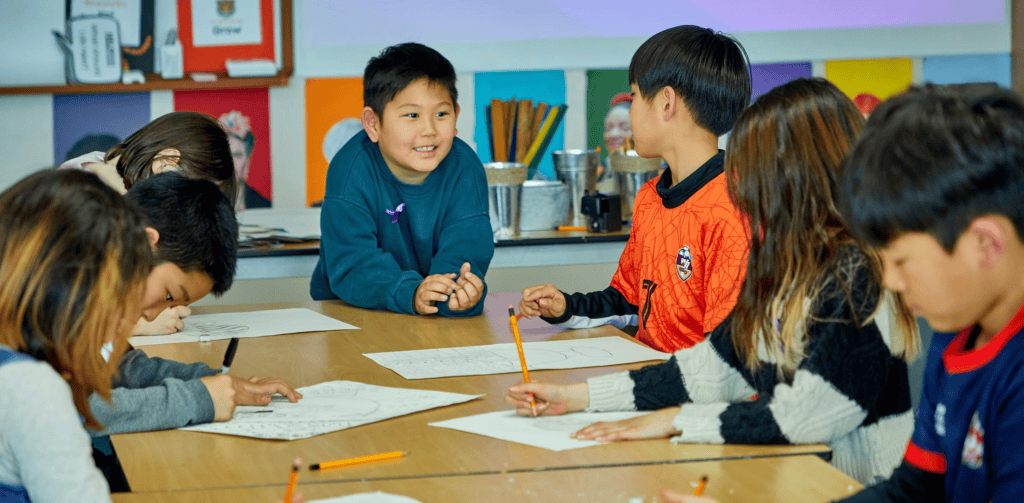
Early Childhood education in South Korea is provided on a nationwide basis as per Nuri Curriculum (누리과정). It governs the early childhood educational practices in the country and is provided to the children from 3 to 8 years of age. The same curriculum is used both in Kindergartens (유치원) and childcare centers (어린이집), which makes the basis of values and manners for the children to follow growing up further.
The main principle of Nuri Curriculum is personal development of the child. Instead of putting too much pressure on academics or examinations, children are focused to develop physical, emotional, mental, social nature and enhance creativity from a very young age, to prepare children for living in the society rather than preparing for exams.
Learning Through Physical Health and Daily Routines
Physical education is another vital aspect of Korean kindergarten education. Children practice many simple exercises, such as running, walking, balancing, and copying body movements. Besides physically active games, the children learn how to wash their hands, eat, and observe safety regulations in the course of daily routine.
These activities can contribute to the development of self, control and body awareness in children. Eventually children will learn to look after themselves and understand simple responsibilities in life.
Communication Begins with Listening
Children in Korean kindergartens are taught to listen before they speak. Learning a language is through stories, songs, picture books, and group talks. Children are subtly encouraged to develop an early habit of politeness.
This shows traditional Korean respectful culture. Kids were taught to be patient, take turns, respond carefully, and be polite in class from a young age. They later applied these lessons when they communicate to their teachers and community.
Social Relationships at the Center of Learning
At the heart of the Nuri Curriculum is social development. Children learn by playing in groups and by working together and sharing. They are taught to share and follow rules, respect their elders, and look out for each other. Instead of concentrating mainly on individual expression, the Nuri Curriculum encourages children to learn how to live within a group. This early preparation promotes teamwork, harmony, and sharing.
Creativity Within Structure
They are encouraged to draw, to make sound, to dance, sing and react to the rhythm. The children are introduced to creativity but they soon find out that creativity has a framework and that of course has to take place in common actions.
This balance encourages children to share and express , yet also respect limits. It would seem that the Korean educational system praises creativity, but is still sympathetic to order and collaborative efforts.
Exploring Nature and Thinking Naturally
Children are introduced to nature and their fundamental thinking skills from observation and inquisitiveness. They learn about their environment and basic relationships of cause and effect by investigating, questioning and discovering patterns.
Early on, the academics are presented indirectly; they are not taught under pressure nor examined. Instead, learning is natural and experiential, not based on memorization.
What Korean Kindergartens Choose Not to Teach
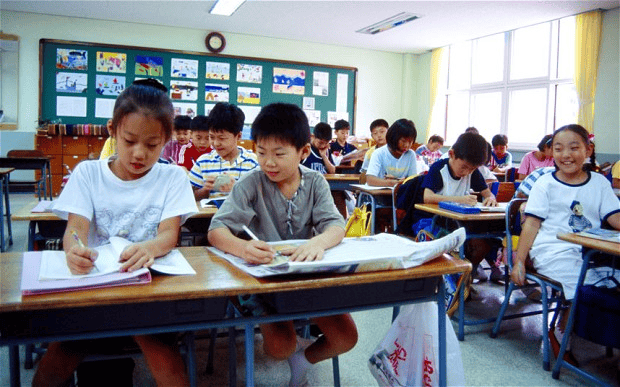
Despite the very academic environment of South Korea later in life, in the early years, pre, school education does not include much homework, formal examination, ranking or early ‘academic’ drilling.
Instead, it emphasizes behavior, emotional stability and socio, ability. Although some private kindergartens start with early English or numeracy, especially in an urban or ‘elites’ context, this would depend on social class and regional variation.
Overall, the ‘Nuri curriculum’ is more about who children will become, and therefore provides an explanation as to why Korean society later displays a high degree of discipline and respect for order and numbers and an ability to control their emotions and to adapt instinctively.
Written by – Sakshi Yadav

About the Author –
I am Sakshi Yadav, and I am currently pursuing my Master’s in Computer Applications. My interest in technology and diverse cultures has brought me to South Korea, a place where innovation and rich traditions beautifully coexist, which has made me learn Korean Language and also work on my interest which is writing, and am so passionate about it as well as have gained valuable experience in this field