
For over a millennium, the lotus lantern has transformed Korean streets into rivers of light. Beyond the spectacle lies a profound story of unity, resilience, and a faith that welcomes everyone…
A City Set Aglow
Imagine standing on a spring evening in downtown Seoul. The air is soft, carrying the first warmth of the season. Then, at a signal you cannot hear but can somehow feel, the street before you erupts into a cascade of light. Thousands upon thousands of lanterns, delicate paper sculptures shaped like lotuses, dragons, elephants, and phoenixes, begin to drift through the heart of the city. Children clutch handmade lanterns no larger than their palms. Monks in gray robes carry ceremonial lights. Tourists from a dozen nations walk shoulder-to-shoulder with elderly Korean grandmothers, all moving as one luminous river toward a distant temple.
This is Yeondeunghoe (연등회), Korea’s Lotus Lantern Festival. And for one night each spring, the boundaries between faith and festivity, between Buddhist and non-Buddhist, between ancient tradition and modern celebration, dissolve completely into light.
Chapter 1: A Light That Has Burned for 1,200 Years
The roots of Yeondeunghoe run deeper than most modern festivals can claim. The earliest records of lantern ceremonies date to the Silla Kingdom (57 BCE – 935 CE), when Queen Jinseong visited Hwangnyong Temple in 890 CE to observe the lanterns. The Samguk Sagi (History of the Three Kingdoms), completed in 1145, documents these early celebrations. During the Goryeo Dynasty (918–1392), the festival grew into a grand national event. Historical records show that the lotus lantern festival was organized around Buddha’s birthday, with the practice becoming firmly established in Korean cultural life.
Even during the Joseon Dynasty (1392–1910), when Confucianism became the dominant state ideology and Buddhism was suppressed, the lantern tradition survived. It persisted quietly, passed down through families and temple communities, refusing to be extinguished. Today, more than 1,200 years after those first lanterns were hung, Yeondeunghoe continues not as a relic, but as a living, breathing tradition that adapts to each new generation.
Chapter 2: The Lantern’s Secret Language
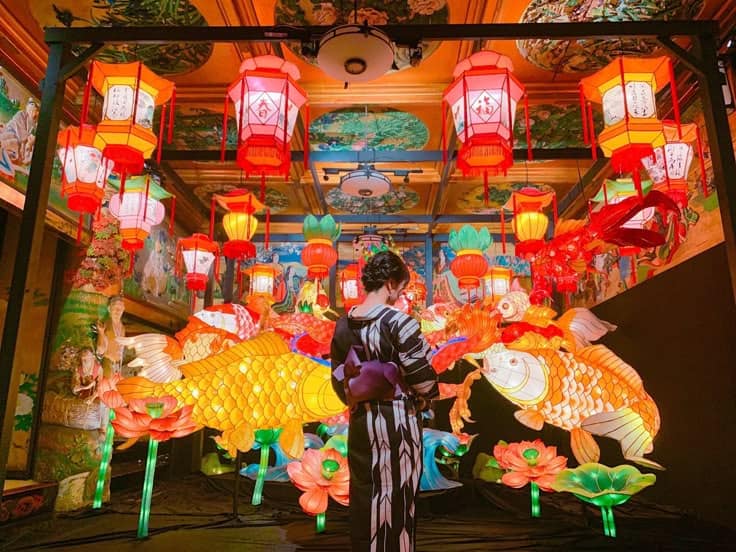
Not all lanterns are the same. Each shape, each color, each ornament carries a specific wish. The “lotus lantern” is the most iconic. The lotus flower holds profound meaning in Buddhist scriptures. It blooms from muddy waters, its pure petals emerging unstained from the mire. It represents the human journey: born into suffering, yet capable of rising toward enlightenment.
The traditional lantern is crafted from a bamboo or steel wire frame covered by hanji (traditional Korean paper). Artisans who have spent decades perfecting their craft create the larger display lanterns, while families and children make simpler versions at home or in workshops. But the most important detail? Each lantern is a prayer made visible. When you carry a lantern, you are not just holding paper and light. You are expressing a wish for your family’s health, for your child’s success, for peace in your neighborhood, for hope in difficult times.
Chapter 3: The Festival Unfolds
Yeondeunghoe is not a single event but a constellation of activities spanning days, sometimes weeks, across Korea. At the same time, each region has its own flavor, and the heart of the celebration beats in Seoul, the Jongno district. The most spectacular event is the Lantern Parade (2026: May 16, 7:00–9:30 PM KST). The procession begins at Heunginjimun Gate (Dongdaemun) and flows along Jongno Street, passing through four major subway stations before culminating at Jogyesa Temple, the headquarters of the Jogye Order of Korean Buddhism.
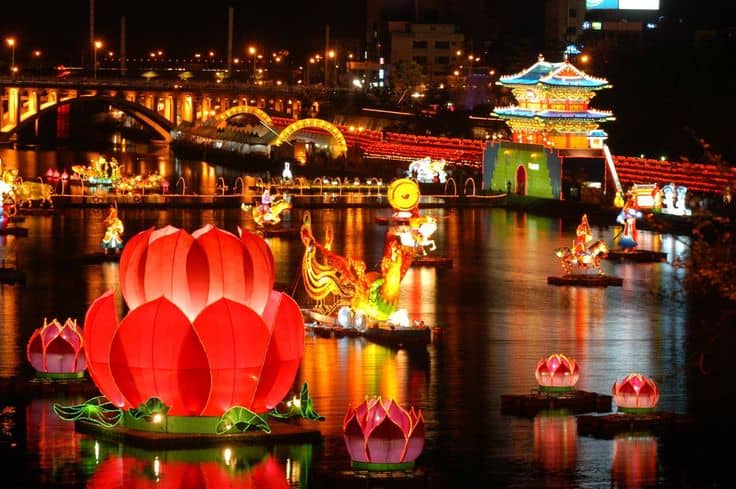
More than 100,000 lanterns typically illuminate the three-kilometer route. Some are small enough to carry by hand; others are massive thematic floats transported on vehicles, depicting Buddhist scenes, mythical creatures, or contemporary messages of peace. After the parade comes Daedong Hanmadang, the post-parade celebration. Under the night sky, participants gather for traditional activities, such as the Ganggangsullae circle dance, where hundreds of people join hands and move in graceful, synchronized circles.
Chapter 4: The Sacred Heart
Before the lanterns light the streets, before the drums begin, there is a quieter, more ancient ritual. The festival traditionally begins with the bathing of a baby Buddha image. This ritual, performed at temples nationwide, commemorates the birth of Prince Siddhartha Gautama, the historical Buddha, who is said to have been bathed by dragons upon his arrival in the world. Participants pour water or sweet tea over the statue, an act of reverence that also symbolizes cleansing one’s own mind of impurities.
This is, at its core, a religious festival. Buddha’s Birthday (Seokga Tansinil or Bucheonim Osin Nal) falls on the eighth day of the fourth lunar month, typically early to mid-May. In 2025, it was observed on May 5; in 2026, the lantern parade is scheduled for May 16.
But here is where ‘Yeondeunghoe’ becomes something more.
Chapter 5: A Festival Without Borders
Perhaps the most remarkable quality of Yeondeunghoe is its radical inclusivity. “You don’t have to be a Buddhist to enjoy Yeondeunghoe,” states the official Visit Korea website. “It is a festival where everyone, regardless of their belief, gender, and nationality, can come together as one”.
This is not just marketing language. It reflects a genuine transformation. What began as a purely religious ritual has evolved into a national spring festival open to all.
The UNESCO inscription in 2020 recognized precisely this quality. The festival “provides a chance to share various Buddhist cultures, also includes people who are not Buddhists. This demonstrates the inclusive nature of the lantern parade”. Participation is notably high among women and children. In a society where patriarchal culture has long held sway, Yeondeunghoe offers an uplifting occasion where traditional hierarchies temporarily dissolve. Children are especially encouraged to express their creativity, experimenting with lantern shapes and colors in ways that would be less welcomed in formal settings.
The international dimension is equally striking. Participants come from India, Japan, Mongolia, Sri Lanka, Thailand, and beyond, a visible reminder that Buddhism itself was never a Korean invention but a gift that traveled across Asia, transforming and being transformed by each culture it touched.
Chapter 6: Light in Times of Darkness
Yeondeunghoe’s true significance reveals itself not in good times, but in bad. UNESCO’s evaluation noted that while the festival is “generally an arena for sharing pleasure and happiness, in times of social difficulties it plays a particularly important role in integrating society and helping people overcome the troubles of the day”.
A powerful example occurred in 2014. When the Sewol Ferry disaster shocked and saddened the entire nation, the previous plans for Yeondeunghoe were scrapped. A new theme was announced: “Sharing sadness and collecting hope”. The festival became a space for collective mourning, for holding grief together rather than alone. The lanterns, still bright, carried a different weight that year.
Yeondeunghoe has been canceled only three times in modern Korean history: in 1961 (during martial law), in 1980 (during the pro-democracy movement), and during the COVID-19 pandemic. Each cancellation reflected a national crisis. Each return reflected national resilience.
Chapter 7: The UNESCO Recognition
On December 16, 2020, Yeondeunghoe was inscribed on UNESCO’s Representative List of the Intangible Cultural Heritage of Humanity. The decision was unanimous. The evaluation committee commended South Korea for a “well-prepared file that can serve as a good example” of how intangible heritage inscription can raise visibility and awareness.
Korea now has 21 UNESCO intangible heritage assets, including kimjang (kimchi-making), ssireum (traditional wrestling), pansori (epic storytelling), and the folk song Arirang. Yeondeunghoe joins this distinguished company as a testament to the power of light, both literal and symbolic, to bring people together.
Chapter 8: How to Experience Yeondeunghoe Yourself
If you wish to walk among the lanterns, here is what you need to know:
2026 Festival Details :
- Lantern Parade: May 16 (Saturday), 7:00–9:30 PM
- Route: From Heunginjimun Gate (Dongdaemun) along Jongno Street to Jogyesa Temple
- Nearest Subway Stations: Dongdaemun Station (Lines 1 & 4, Exits 9, 10); Jongno 3-ga Station (Lines 1, 3, 5); Jonggak Station (Line 1)
How to Participate:
– You can walk in the parade by bringing your own handmade lantern. Some temples offer lantern-making workshops before the festival.
– To reserve participation: Contact the Yeondeunghoe Preservation Committee via their website (www.llf.or.kr).
Other Events:
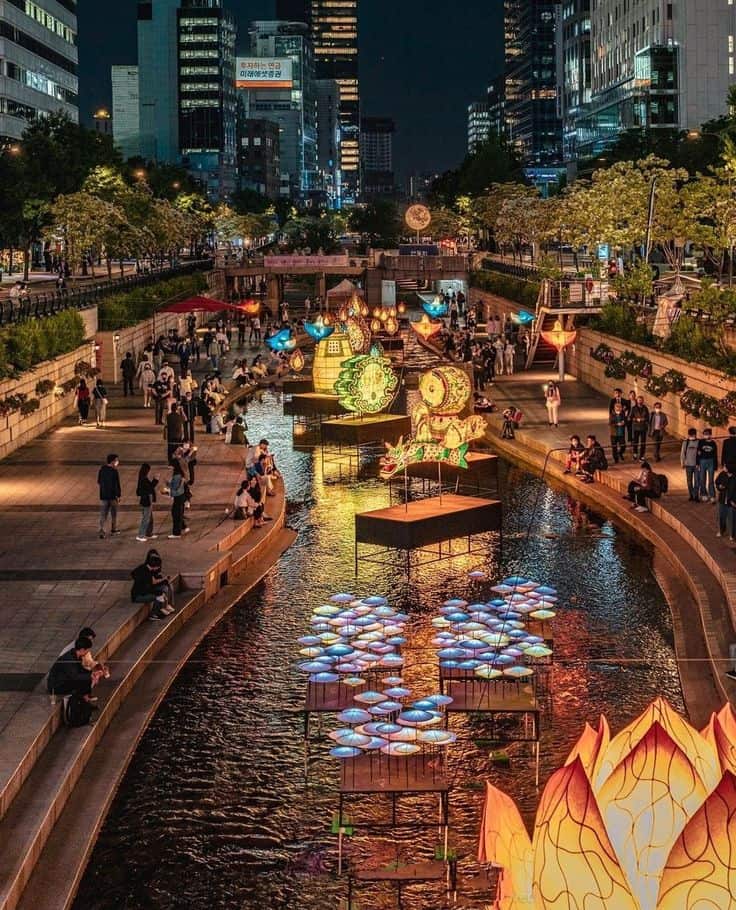
- Traditional Lantern Exhibition at Jogyesa Temple and along Cheonggyecheon Stream
- Eoulim Madang (Buddhist Cheer Rally) before the parade
- Traditional cultural experience programs, including temple food tasting, hanji paper crafts, and Buddhist painting
The Light That Remains
The lantern parade ends. The drums fall silent. The streets empty, and the last paper lights are carefully packed away until next spring. But the spirit of Yeondeunghoe lingers not just in the memories of those who walked among the lanterns, but in the quiet understanding that light, shared freely, multiplies rather than diminishes.
Each lantern is a single flame. But a thousand lanterns, carried by a thousand hands, become something else entirely: a river, a constellation, a declaration that even in darkness, we can choose to illuminate.
And that, perhaps, is why Yeondeunghoe has survived for 1,200 years. Not because it is Korean. Not because it is Buddhist. But because it is human to light a lantern, to make a wish, to walk together toward hope, it belongs to everyone.
Article Compiled & Written By: Trisha Deka
About the Author –

Think of Trisha as your modern-day storyteller for a dynamic culture. She’s got a sharp eye for the moments where tradition and hyper-modernity collide in Korea. One minute, she’s breaking down the latest digital trends from Seoul, and the next, she’s explaining the timeless ritual of a tea ceremony. Her writing is your front-row ticket to understanding not just the “what” of Korean culture, but the “why” that makes it so captivating.