
Beyond museum pieces and tourist attractions, Korea’s ancient architectural wisdom is being rediscovered and reimagined for contemporary living, creating spaces that are both sustainably modern and deeply rooted.
Introduction: More Than Just a Pretty Roof
The image is iconic: the gracefully curved giwa (tiled) roofs of a hanok set against a mountain landscape. For centuries, these wooden structures defined the Korean peninsula. But for many, they became beautiful but impractical relics, better suited for museums than modern life. Yet, in a remarkable cultural renaissance, the hanok is being reborn. A new generation of architects, designers, and homeowners is looking past the nostalgia to uncover the timeless intelligence of hanok design, proving that this ancient architectural form holds the key to sustainable, serene, and stunningly modern living.
Chapter 1: The Original Green Building – Hanok’s Hidden Intelligence
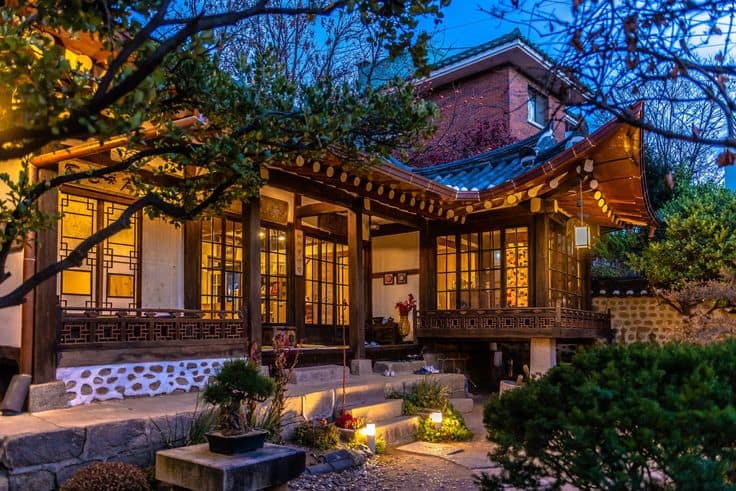
Long before “sustainable design” became a buzzword, the hanok was a masterclass in environmental harmony. This revival begins with a deep appreciation for its original principles:
- The Breathable House: Built with natural materials wood, stone, clay, and hanji (traditional paper) a hanok breathes, regulating humidity and creating a healthy indoor atmosphere.
- Ondol (온돌): The Original Radiant Floor Heating: The ingenious system of channeling hot air from the kitchen stove under the stone and clay floors provided efficient, even heat a technology so advanced it remains a cornerstone of Korean homes today.
- Daedeulbo (대들보): The Beauty of Structure: The massive, exposed wooden beams are not just supports; they are the home’s skeleton, celebrated for their strength and beauty. The intricate joinery, using no nails, allows the structure to flex and withstand seismic activity.
- Madang (마당): The Central Courtyard: More than a space, the courtyard is the lung of the home, facilitating ventilation, providing private outdoor space, and creating a crucial connection to nature and the changing seasons.
Chapter 2: The Modern Hanok Blueprint – Respectful Reinvention
Today’s hanok innovators are not building replicas; they are translating principles. The result is a new architectural language that honors the past while embracing the present.
- The Glass-and-Wood Fusion: Architects are replacing solid wooden walls with vast, floor-to-ceiling glass, framing views of the madang and flooding interiors with light while maintaining the iconic wooden post-and-beam structure.
- Reinterpreting the Roof: The heavy giwa roof is sometimes replaced with lighter, modern materials, or its traditional form is abstracted, creating a striking silhouette that recalls the past without being bound by it.
- Open-Plan Living:The traditional bang (rooms) centered around the courtyard are being reworked into open-plan living spaces that suit contemporary lifestyles, while still maintaining a clear flow between inside and out.
- Hanji 2.0: Traditional hanji, known for its durability and insulating properties, is being used in innovative ways as modern sliding screens, lamp shades, and even as a textured wall covering that adds warmth and depth.
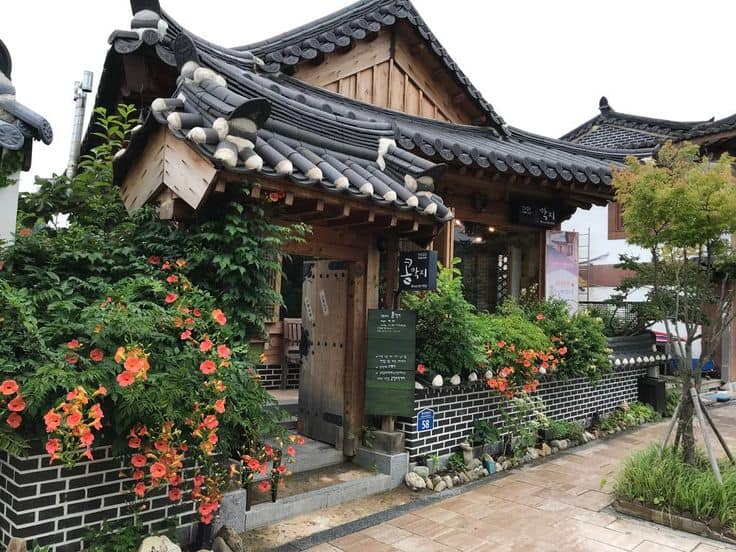
Chapter 3: Case Studies – Hanok for the 21st Century
1. The Urban Oasis: The “Bukchon Rooftop Hanok”
Tucked away in a Seoul alley, this hanok appears traditional from the street. But inside, a central courtyard is covered by a glass roof, creating a year-round indoor garden and living space. The original wooden frame is preserved, but the interior is minimalist and modern.
2. The Country Retreat: “The Sloping House” in Yangpyeong
This new-build hanok by a young architect uses local materials and passive solar principles. It follows the slope of the land, with a green roof that blends into the hillside. The ondol system is powered by a modern, high-efficiency boiler, proving that tradition and technology can coexist.
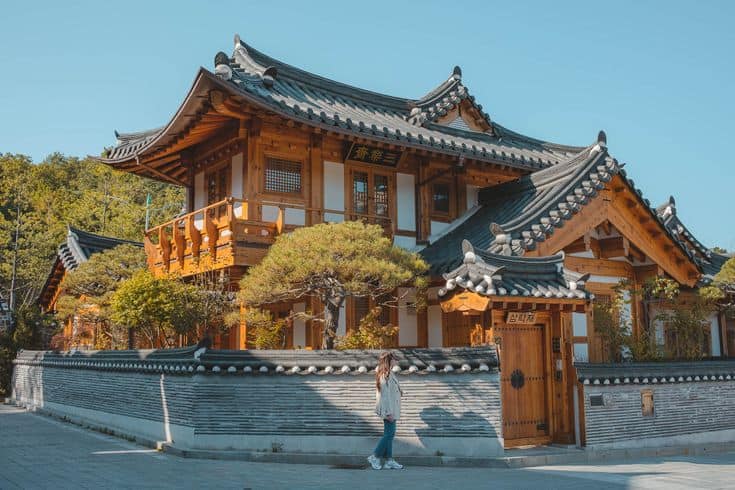
3. The Commercial Hybrid: “Supyo-gak” in Ikseon-dong
The trendiest neighborhood in Seoul is a maze of renovated hanok, now housing cafes, galleries, and boutiques. Here, the hanok’s adaptable structure is on full display, with original beams exposed above minimalist interiors, attracting a young, style-conscious crowd.
Chapter 4: The Challenges – The Realities of Hanok Living
The revival is not without its hurdles:
- Cost and Craftsmanship: Quality materials and skilled artisans are expensive and scarce.
- Maintenance: The natural materials require more upkeep than concrete and vinyl.
- Modern Codes: Adapting traditional designs to meet modern building codes for insulation and fire safety can be a complex puzzle.
Chapter 5: Experience the New Hanok – A Traveler’s Guide
For those wanting to experience this fusion firsthand:
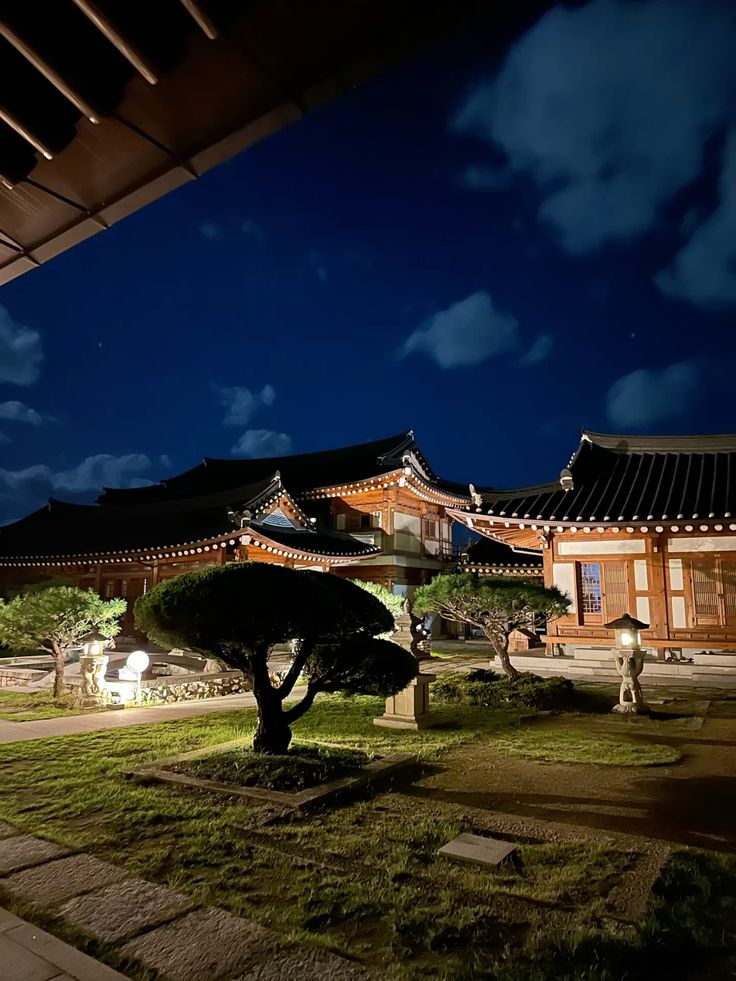
- Stay: Book a night at a modern hanok guesthouse in Ikseon-dong or Seochon in Seoul.
- Dine: Visit “Brewing Bros Hanok” in Gyeongju, a cafe in a restored hanok that exemplifies the blend of old and new.
- See: Explore the “Bukchon Traditional Culture Center” in Seoul to understand the principles, then walk the alleys to see them applied in contemporary ways.
Conclusion: Building a Future with a Past
The 21st-century hanok is more than an architectural style; it is a philosophy. It’s a declaration that progress doesn’t have to mean erasing the past, but can instead be a dialogue with it. In a world of resource depletion and homogenized global design, the hanok offers a powerful alternative: a blueprint for living that is sustainable, human-centric, and deeply connected to place.
As the curved roofs once again rise against the sky, they no longer speak only of tradition. They speak of a future where our homes are not just shelters, but sanctuaries that ground us, inspire us, and remind us of the timeless wisdom in living in harmony with the natural world. The hanok is no longer a relic; it is a revelation.
Written by – Trisha Deka
About the Author –

Think of Trisha as your modern-day storyteller for a dynamic culture. She’s got a sharp eye for the moments where tradition and hyper-modernity collide in Korea. One minute, she’s breaking down the latest digital trends from Seoul, and the next, she’s explaining the timeless ritual of a tea ceremony. Her writing is your front-row ticket to understanding not just the “what” of Korean culture, but the “why” that makes it so captivating.