
SEOUL — The time of day is 3:00 AM in a typical underground area of the Gangnam district. The only thing that fills the air is the overwhelming scent of waxing the floor with industrial strength wax and cleaning machines. In one room, there are 6 teens doing the same dance movement for 800 repetitions, and their movements are fast and coordinated with an accuracy that appears to be mathematical. In another adjoining room, illuminated by ultra-wide screen computers, another group of teens performs 500 clicks of the mouse per minute and their heart rate is elevated to levels normally thought to be consistent with long-distance runners.
Although it seems like the two have little in common, the K-Pop idol and professional eSports gamers are both considered to be world champion athletes in South Korea. The two different individuals are both high-performance bodies.

The rise of South Korea as a major player on the world stage has been an incredible feat in a country that was once torn apart by conflict and division. The nation’s most developed product is its human capital, which has been engineered over many years into a highly efficient and effective labor force that excels domestically and internationally. Korea’s booming economy has created a demand for people who are creative, skilled and productive, making them desirable to the world. Ultimately, understanding the Korean Wave begins with understanding the physical and psychological engineering of Koreans who create the culture exported through the wave.
1. The Thesis: The “Export Warrior” Reborn
In considering how South Korean idols dominate the globe, or how world-class gamers are”, one must begin by looking at the destruction caused by the Korean War in the early 1950s and the despair experienced during the financial crisis of 1997 due to the IMF. The Korean War and IMF crisis put the country at an existential tipping point, and thus created Korean society as one defined by ‘palli-palli’ (hurry-hurry), whereby the race for fast-paced development was borne out of destroying an agrarian war-torn society and building a technology-based economy in one generation.
The Concept: The Body as a National Asset
In Korea, the body as an individual entity is not normally thought of as a tool for personal expression, but is rather treated as a national resource and/or an avenue for the country’s Gross Domestic Product (GDP) and international prestige to be maximized. Therefore, to succeed as an individual is not merely an individual’s success, but rather the success of every other individual collectively.

The Evolution: From Factories to Arenas
The “High-Performance Body” has evolved in a rather fascinating fashion:
The “Export Warrior” of the 1970s: In the heyday of the “Miracle on the Han River,” the hero was the factory worker. They were the first “export warriors,” testing the limits of the human body on the assembly lines to build the ships, cars, and electronics that saved the economy.
The Modern “Performance Machine”: In the present day, the assembly lines have been replaced by the practice room and the PC bang. The K-pop idol and the eSports athlete are the modern versions of the export warrior.
Whether the K-pop star is honing their “knife-like” dance synchronization or the eSports athlete is sustaining a 500 APM (Actions Per Minute) heart rate, they are both built for the same purpose: precision, endurance, and global conquest. They are both high-performance machines designed to win on the global stage, proving that South Korea’s greatest export is no longer hardware, but the excellence of the human form itself.
2. The K-pop Pillar: Aesthetic Labor & Precision
K-pop may be perceived as just catchy songs and brightly colored hair to the world, but K-pop is a physical endurance test and geometric feat performed by people to turn the human body into a high-definition product. In the world of K-pop, there can be as much attention paid to the space between two dancer’s fingers as there would be to the layout of a circuit on a semiconductor.
The Trainee System: The Crucible of Performance
Before an idol ever performs on stage at Coachella or Wembley, they are created through almost industrial-level reliability systems of training. Although the government has put pressure on record companies to reform their “slave contracts” from the early 2000s, the “Training System” is still a “survival of the fittest” scenario. Young (most begin their career in their early teens) will work from 12 to 15 hour days, during their “pre-debut” phase, by providing long hours of vocal instruction, language instruction, and most importantly endless exposure to dance repetitions that will ultimately destroy the human body, before it can be rebuilt into a highly-functioning item with near-perfect results.
Calculated Perfection: The “Aesthetic Labor”
“K-Pop” (Korean Pop music) features numerous coordinated dance moves known as “kal-gunmu” (conducting a robotic dance with knife-like precision). This is what sociologists refer to as “aesthetic labor,” whereby an individual’s physical features and movement can be commodified for the marketplace. The symmetry of the performers’ dancing must be perfectly synchronized; if one person’s elbow is three inches below the other dancers, then the “machine” is broken and cannot operate. Because of the degree of precision needed, the person’s body must move like a fast-moving robotic machine that fuses organic movement and mechanical precision.
The Physical Toll (The Seven-Year Curse) of the “High-Performance Body”.
However, the pursuit of perfection will come at a high price (both biologically and/or physiologically). The maintenance of a high-performance body requires extreme caloric restriction combined with “visual management”, which segments the body into distinct working parts without leaving much room for error (this can be extremely dangerous). The K-Pop industry also has another noxious trait: the “Seven-Year Curse”, which represents the average life cycle of an idol group. This is the average point at which an idol group ceases to exist due to chronic joint injuries caused by various injuries during the idol group pre- and post-performance periods and an overall decline in the quality of the performance and mental burnout due to the younger and “faster” singers. This pursuit of the “high-performance body” is often described as a “flame”, as it is extremely bright, which only lasts for a very short period (one to seven years); performing at an optimal level takes precedence over how long a performer can perform at an optimal level.
3. The eSports Pillar: The Cognitive Athlete
Despite the stereotype of gaming as a sedentary activity (e.g., lazy), the two decades of evolution in South Korea has proven otherwise: video gaming is a way of life, a form of digital martial art. Professional gamers do not sit on their couches but rather are working cognitive athletes, able to measure their performance based on milliseconds, neurological firing patterns, etc.
The APM and the Neurological Border
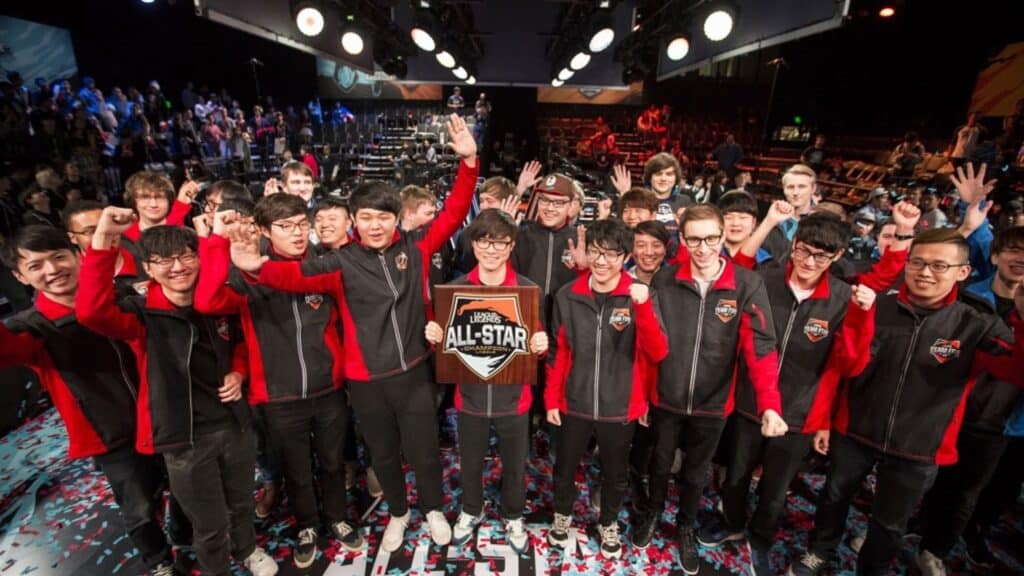
APM (actions per minute) is the primary metric with which the cognitive athlete’s body will be measured in eSports. Professional gamers in the top skill range of gaming categories (StarCraft II, League of Legends, etc.) frequently achieve an average of 300-500 APM, or 8-9 separate inputs per second that were purposeful and used strategically. These fast-paced movements occur as the result of a direct communication process between the athlete’s brain and hand(s), not just random occurrences due to excessive button-mashing per se. Cognitive athletes have undergone a specific range of training to exhibit their skill levels based on their proprioceptive abilities and muscle memory that allow them to achieve these types of metrics at high levels. Thus, the mouse becomes an extension of its central nervous system.
The ‘Gaming House’: Digital Monastery
As with the K-Pop trainee, the eSports athlete is confined to a highly regulated ‘Gaming House’, where they’re regulated in every aspect of their life while they train. These homes are designed to maximize their potential win-wise. The players live, eat, and breathe the game in their houses with about six coaches or trainers monitoring them constantly.
- Regulated Life: Sleep patterns are regulated so that they are at their peak during tournament hours.
- Nutritional Optimization: The players’ diets are being increasingly monitored to eliminate the issue of ‘sugar crashes’ that can cause the players to lose a championship.
- Mental Fortitude: Players are completing extensive VOD (Video) reviews of previous matches with the same amount of analytical scrutiny that a doctor applies to an examination of a complicated surgical procedure.
The Micro-Injury: Battle Scars of the Frontier
While the “High-Performance Body” in eSports suffers a breakdown, just as in dancing, the injuries are not visible but rather microscopic. Digital frontiers have their unique injuries, which leave battle scars:
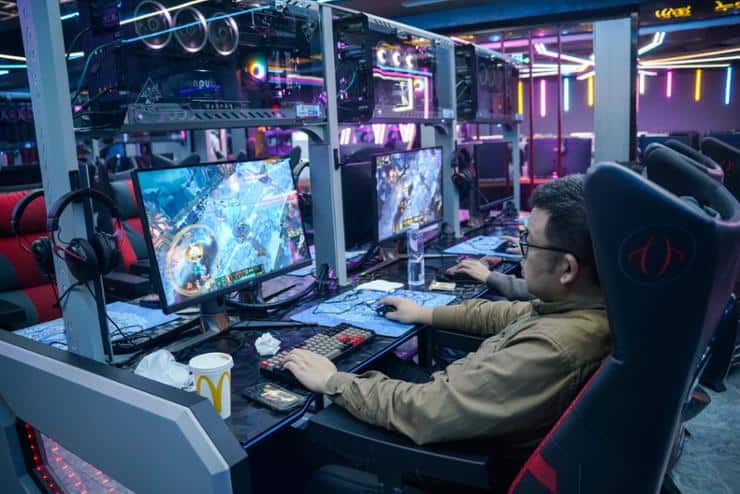
- Carpal Tunnel Syndrome and Repetitive Strain: Many athletes are forced to retire after having wrist surgery performed on them before the age of 25.
- “Gamer’s Neck” and Lumbar Collapsed: Years of tilting their head towards the “blue light” cause them permanent damage by messing up their spine.
- Optical Fatigue:The continuous stress placed on the eyes to follow every minute movement of the pixels causes athletes to undergo unique eye treatments.
In such an environment, the athlete’s body turns into a high-tech computer. When the hardware, in the form of tendons, nerves, and spine, no longer keeps pace with software, the athlete is forced to enter retirement long before their colleagues in other countries begin their careers.
4. Comparative Analysis: Why Korea?
From an outsider’s perspective, there is little commonality between the steamy rehearsal space and the bright gaming space. The first showcases the elegance of dance while the second emphasizes the agility of a strategist’s mind. But, in the case of South Korea, these two industries share the same structural model. Both are “finishing schools” that transform innate ability into a global product by pushing individuals to their limits under extreme conditions.
This table depicts why these two distinct universes are actually the same engine of culture:
K-Pop Idols vs Esports Professionals
Living Conditions
- Group Dorms: Conduct extensive communal living in order to create good ‘team chemistry’ and maintain 24/7 focus on gaming.
- Gaming Houses: Are homes where employees/players eat, sleep, and practice under the direction of one central staff.
Training Phases
- ‘Trainee’ period: In K-Pop, ‘trainees’ spend years working on their foundation of dance, vocal and media etiquette before they debut.
- Academy level: K-Pop scouts for ‘pros’ based on a ranking system of Challenger or ‘Academy’ level and ultimately converts those into professional entertainers.
Peak Age
- K-Pop Age Range: 18 to 25; natural range for Visuals and Stamina at K-Pop peak performance; follows by mandatory military service or injury.
- Esports Age Range: 17 to 23; range of ages in which neurological response ‘neuro-plasticity’ is highest.
Core Metrics
- K-Pop: Created based on synchronized ‘knife-like precision’ of all group members (body movement) and ‘perfect aesthetics’ of all group members.
- Esports: Based on ‘APM’ (Actions Per Minute) and ability and speed of decision-making.
Corporate Structure
- Entertainment/A&R Agencies: Are multi-national conglomerate type organizations (HYBE, SM and YG) that control all aspects of the business for each of their K-Pop brands.
- Major Tech/Telecom Sponsors: Operated by tech corporations like T1 (SK Telecom) or Gen.G treating players as specialized software.
The “Why”: A Culture of Comparative Excellence
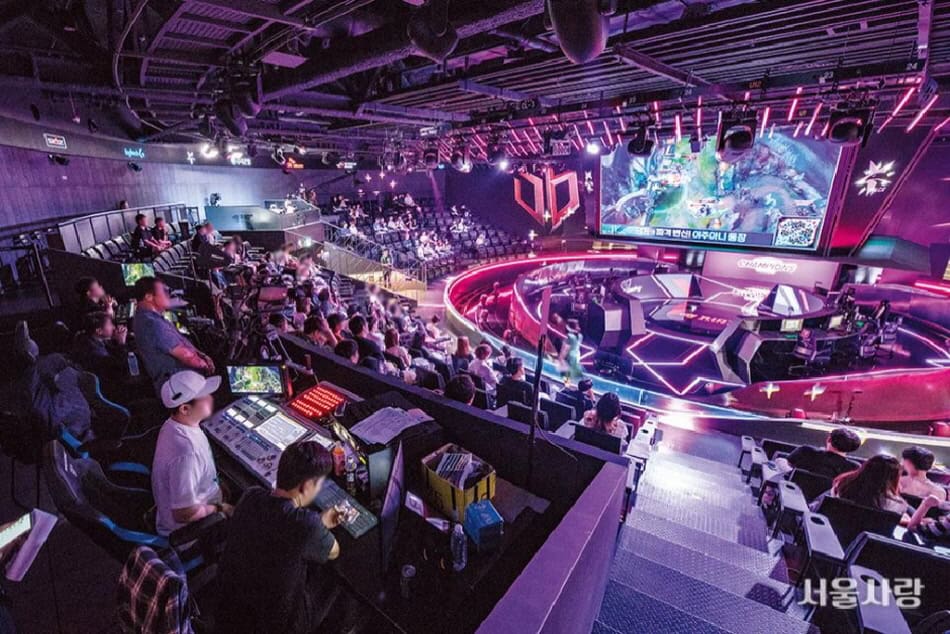
What enables South Korea’s unique distinction across these two domains is the existence of social supports that reinforce their “Extreme Specialization” mentality. South Korea is both a densely populated and highly competitive nation, which limits the ability for individuals to achieve their potential due to the “high-performance superior” type of job opportunity that exists only within a narrow pathway to success. For example, when a Korean student takes the CSAT (College Entrance Test), attempts to get selected for the next round of the audition for a dance group, or competes against the best players in the StarCraft online game; they will need to demonstrate their ability to perform at an extraordinarily high level if they have any hope of getting beyond being a typical participant in their competition’s experience. Thus, these competitive opportunities typically only become available to participants who have successfully “survived” the national “survival-of-the-fittest” challenge, which is an experience that most competitors on the international stage have never experienced.
5. The Cultural Cost: The “Hell Joseon” Narrative
If you only look at the high-performance body from the perspective of flashy videos and packed concerts, you are missing a very real part of today’s South Korea. The term that most reflects the realities of South Korea is ‘Hell Joseon’ which was coined by South Korean youth as a criticism of a hyper-competitive society that resembles a 19th century feudal society as opposed to a true modern utopia. In some ways, the high-performance body has become a tool for survival but also carries with it an enormous psychological cost.
The Burnout Epidemic
There is great pressure to be “perfect” in both the physical realm and mental stability. As a result, there is now an epidemic of mental illness. The difference between one’s own personal identity and one’s identity as a “product” has been blurred in K-Pop and eSports. Everything about an individual’s worth is connected to their physical output, whether through dance or wins/losses. Thus, whenever someone underperforms due to illness/injury/etc., the individual will feel like they are failing as a human being. The lack of success leads to a vicious circle of continuous exhaustion, anxiety and depression, which ultimately leads to untreated illnesses because you are trying to sustain the appearance of being a “high-performing machine”.
The “Plug-and-Play” Replacement Rate
Probably the most intimidating thing about the way Korea has achieved success is that their training systems (the academies and the talent agencies) are so streamlined that the goals of the organisations have become more important than the individual attributes of the individual performing. *Disposable performance – if a top performer injures their wrist while gaming or a K-pop artist suffers from a mental health issue (depression or otherwise), the system will continue to push forward with replacing that individual without pause.
On the waiting list (or queue) are thousands of current “trainees” and “academy athletes” who have been trained to perform exactly the same movements and the same strategies as the person they are replacing. As a result, there is a very high replacement rate and there is an environment where each individual feels like an interchangeable part of a very large cultural machine—and if one “cog” breaks, there are hundreds of others who will be able to be plugged in immediately.
The Paradox of Social Status
The paradox of high achieving Koreans is that they are revered as the global icons of modern times; however, they are scrutinized intensely at home.
The “Moral” Performance: A person’s morality in Korea is viewed through the lens of their physical performance, creating a direct association between morals and physical performance. For example, if someone has attained 10 of the required 17 medals in six competitions, that means they have committed a moral fault.
Cancel Culture: Once a performer’s public image has been jeopardized, whether through a “dating scandal”, a weight change, or an apparent lack of effort, the same public that aided them in their ascent can participate in a rapid and total “cancel” campaign.
Thus, the physical high-performing body of an individual is essentially an elaborate trap; it grants entry into the upper elite of the world but only as long as that person meets the inhumane societal standards that prohibit them from being normal. The “Export Warrior” conquered the world but is a prisoner to the exceptionalism that made them outstanding.
6. Conclusion: What is in store for Humanity?
At the end of this century, look into the future. The South Korean “high-performance body” represents an incredible example of a country that has achieved an extraordinary standard of excellence. With its small size as compared to most nations and its growing influence as a cultural and digital powerhouse, South Korea’s impressive success raises important questions about how far we go beyond traditional boundaries with each advancement in technology.
As K-Pop and eSports continue to merge into one another, the future will see the “Export Warrior” definition being redefined, as physical strength becomes secondary to optimized synchronization and cognitive endurance.
Written by- Anjali Gupta

About the author –
Hi! I’m Anjali Gupta, a healthcare student whose interest in healing and well-being naturally led me toward Korean culture — a place where wellness, balance, and tradition beautifully blend with modern living. I enjoy writing simple, emotional, and meaningful pieces that help readers connect with a culture rather than just learn about it.