
What if the longest, coldest night of the year actually brought people closer and filled the homes with warmth?
That’s exactly what happens in South Korea during Dongji. Dongji isn’t just about marking the shortest day on the calendar. But a day that symbolizes new beginnings on the horizon. Families gather, perform old rituals, and share special foods.
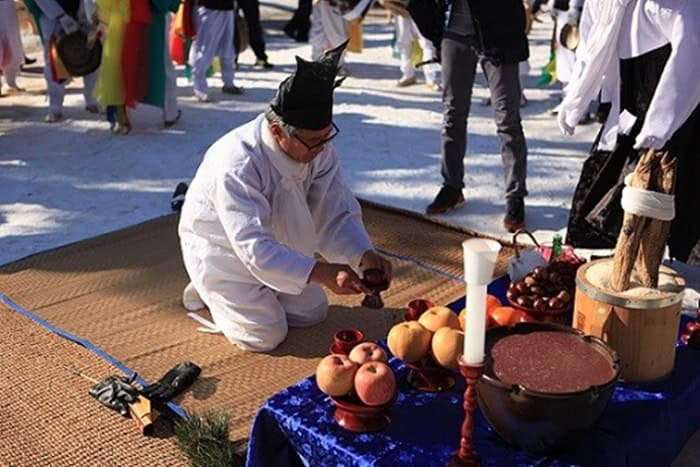
One of the best loved traditions?
Making and eating patjuk—red bean porridge. People believe it scares away evil spirits. The whole festival is packed with rituals. Rituals that focus on staying healthy and wishing for prosperity. Dongji is a chance for everyone to slow down. Celebrating strength to get through winter’s toughest days.
In this article, we will explore the origins and customs of the Dongji.
Dongji
The winter solstice is celebrated on the day of the year with the shortest daylight hours and the longest night. The day with the longest night is called Dongji. And it usually falls on or around December 22nd.
Dongji belongs to a set of 24 seasonal markers—“jeolgi”. Dongji goes way back to old Korean farming life and spiritual traditions. The winter solstice marks- the peak of yin energy. The darkest and coldest time.
After Dongji, yang energy starts to build. Bringing back sunlight and warmth. And with it, a sense of new life. Farmers and villagers saw this moment as a turning point. With the right rituals, they believed they could:
- protect their families,
- bring in a good harvest, and
- keep misfortune at bay
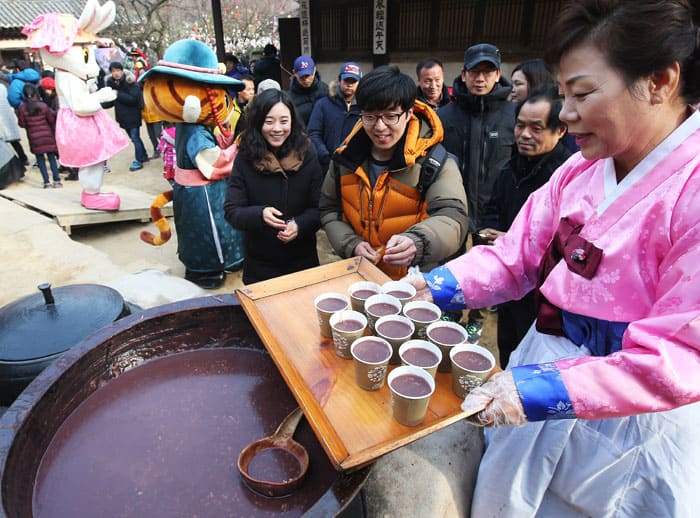
During celebration, people gathered at home or in the village. Offering up prayers and food to stay in harmony with nature and the spirits. Over generations, these customs settled deep into family and community routines. Turning Dongji into something much more than just a day on the calendar.
Patjuk: The heart of Dongji
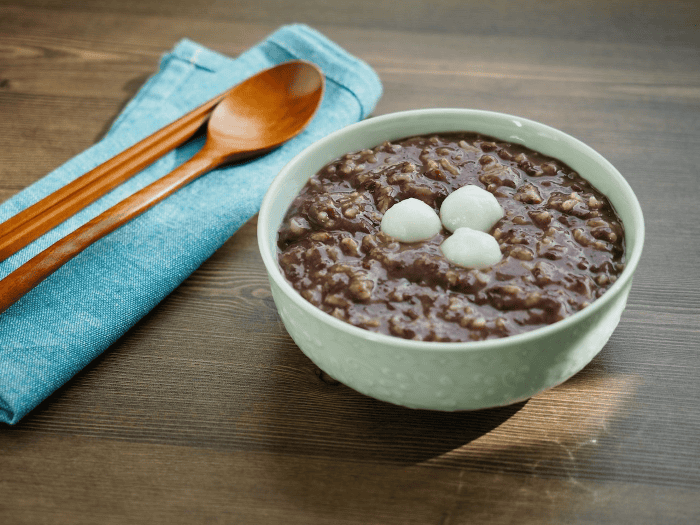
If you ask almost anyone what Dongji means, they’ll probably mention patjuk—red bean porridge. This simple, hearty dish is the soul of the solstice in Korea.
Why red beans?
Old stories say they drive away evil spirits and bad luck. With yin energy at its strongest, people made patjuk to protect their families and homes. There’s an old belief that ghosts hate red colour. And they can’t stand the deep, earthy scent of simmering beans. So, families ate the porridge. Not only did they eat it, but they also set out bowls by the gate, in corners of the house, or near barns—just in case anything was lurking on the longest night.
Patjuk is rarely served plain. Floating in the rich red soup- are small, chewy rice cake balls called saealsim (“bird’s eggs”). They stand for new beginnings and the cycle of life. Kids used to help roll them out, turning the cooking itself into a small celebration.
These days, most people don’t worry much about ghosts or bad luck. But the tradition lives on. Schools serve patjuk in the cafeteria. Workplaces might hand out bowls as a treat. At home, families still gather to cook it up. It’s all about warmth and a little comfort as the cold settles in. A proof that even the smallest rituals can carry a lot of meaning.
Customs and superstitions
Dongji isn’t just about patjuk. For a long time, this winter solstice day has been loaded with all sorts of beliefs and traditions, each one showing off Korea’s old connection to nature and a bit of luck.
A “Little New Year”
Back in the day, people treated Dongji almost like a mini New Year’s Day. Some folks believed you actually turned a year older on Dongji, or that it kicked off the next cycle of the year. Even though hardly anyone keeps up that tradition now, you’ll still hear “dongji seol” pop up in stories and old sayings.
Fortune for the Year Ahead
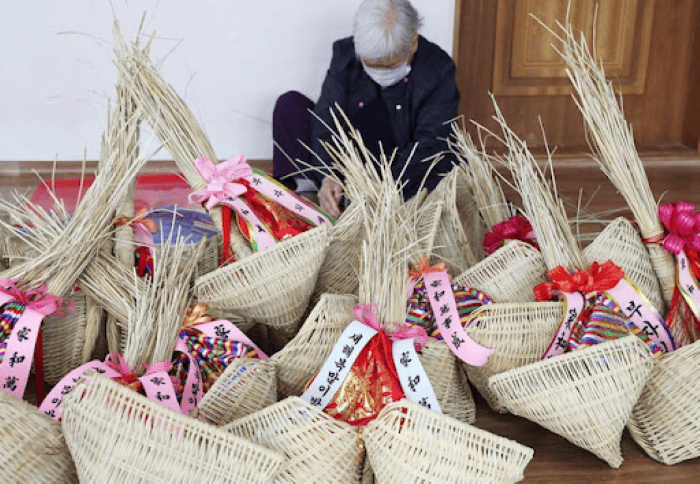
People once thought Dongji could set the tone for the whole year. If the day passed quietly and without fuss then that was a good sign. You’d want to avoid fights or risky stuff—just keep things smooth and careful. Farmers watched the weather, too. A bright, clear Dongji meant a good harvest was probably on the way.
Calendars and Ritual Markers
Families used to make or hand out new calendars around Dongji, marking the shift into a new season. You don’t really see this anymore, but it says a lot about how deeply the seasons shaped daily life.
Conclusion
These days, Dongji isn’t an official holiday in South Korea. But still, you’ll hear about it on the news. People post photos of steaming patjuk bowls on social media and maybe catch a small event at a local cultural center. For many Koreans, Dongji is an opportunity to bask in the calm of winter. Enjoy something warm and take note of the subtle changes happening in nature.
Dongji is about starting fresh—right in the heart of the darkest season. By sharing red bean porridge, Koreans connect with old traditions and the natural cycles that shaped generations. As the longest night slips away, Dongji leaves you with a bit of comfort. Warmth is coming and brighter days are just ahead.
Written by – Aparna Sharma

About the Author –
Aparna has a deep curiosity for languages and global cultures. She enjoys diving into stories that offer fresh perspectives and meaningful connections. For her, writing is a way to process ideas and connect with others who share similar interests.