
Beyond the high-end barbecue and elaborate banchan lies the true heart of everyday Korean eating, the glorious, carb-loaded, comforting world of Bunsik.
Introduction: The Soundtrack of Everyday Life
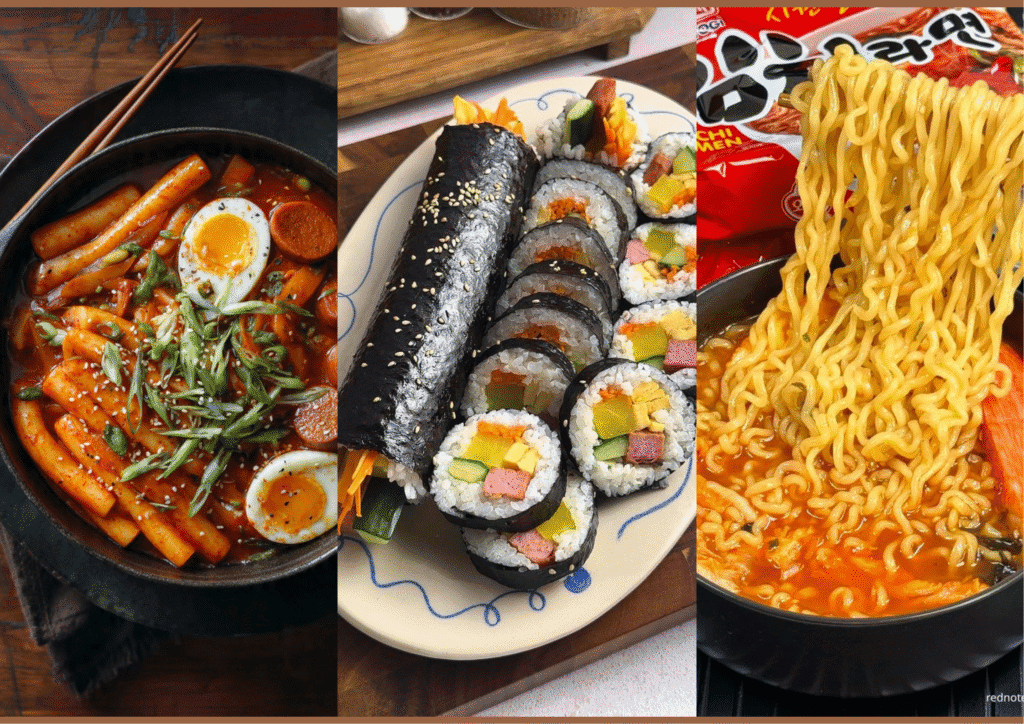
The sizzle of oil, the rhythmic thump-thump-thump of a knife cutting rolled gimbap, the cheerful shout of “Juseyo” across a crowded counter. These are the sounds of Bunsik (분식), the universe of Korean snack food that fuels students, comforts office workers, and defines casual, affordable eating. It’s not fine dining; it’s life dining. In a culture known for its spicy, fermented, and complex flavors, Bunsik is a love letter to simplicity, carbs, and instant gratification.
Chapter 1: Defining Bunsik – The “Flour Food” Phenomenon
Literally translating to “flour food,” Bunsik’s origins are rooted in post-war Korea, when inexpensive wheat-based foods became a crucial source of calories. Today, it has evolved into a beloved culinary category all its own.
- The Philosophy: Bunsik is fast, cheap, and delicious. It’s the food of quick lunches, after-school treats, late-night cravings, and budget-friendly meals with friends.
- The Setting: The Bunsik-jip (분식집): The quintessential Bunsik restaurant is often small, brightly lit, no-frills, and family-run. The menu is plastered on the wall, the tables are Formica, and the air is thick with the irresistible smell of frying and chili paste.
Chapter 2: The Holy Trinity – The Unbeatable Core
No Bunsik-jip can exist without these three foundational pillars:
1. Tteokbokki (떡볶이): The Fiery Soul
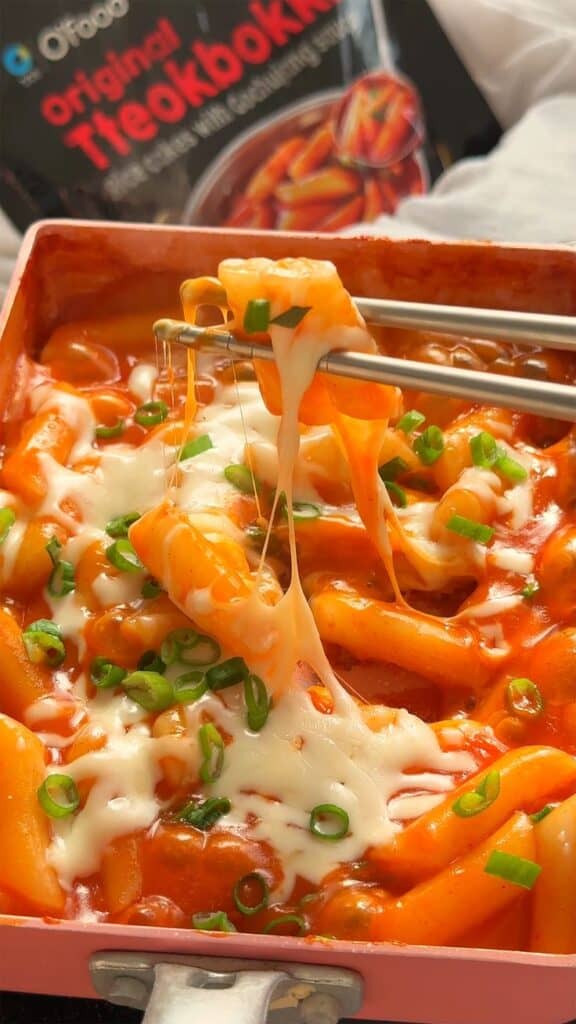
What it is: Chewy cylindrical rice cakes smothered in a sweet, spicy, and savory sauce made from gochujang.
The Experience: It’s the undisputed star. The sauce is a glossy, crimson concoction, the lifeblood of the Bunsik-jip, often used as a base for other dishes.
Pro Tip: Always order it with eomuk (fish cakes) and a hard-boiled egg to soak up the glorious sauce.
2. Gimbap (김밥): The Portable Perfection
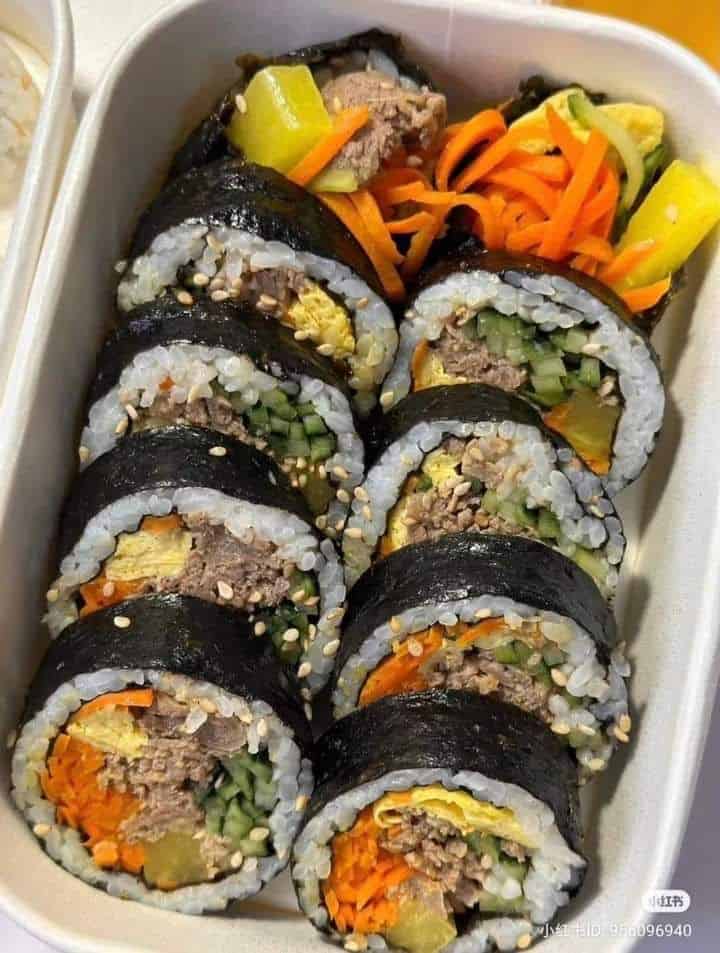
What it is: Steamed white rice and various fillings (like pickled radish, spinach, carrot, and ham) rolled in dried seaweed.
The Art: While it may look like Japanese sushi, Gimbap is its own entity, heartier, seasoned with sesame oil, and designed as a complete, portable meal.
The Varieties: From the basic Chamchi Gimbap (tuna) to the luxurious Chungmu Gimbap (small, bare rolls served with spicy squid side dishes), there’s a roll for every occasion.
3. Ramen (라면): The Elevated Instant
What it is: Yes, it starts with a packet of instant noodles, but in a Bunsik-jip, it’s transformed.
The Upgrade: Cooked to order in a metal pot, often with an egg cracked directly into the bubbling broth, slices of eomuk, and a handful of scallions. It’s comfort in a bowl.
Chapter 3: The Fusion Classics – When the Trinity Collides
The true genius of Bunsik culture is its brilliant, chaotic fusion. The most popular dishes are often glorious mash-ups:
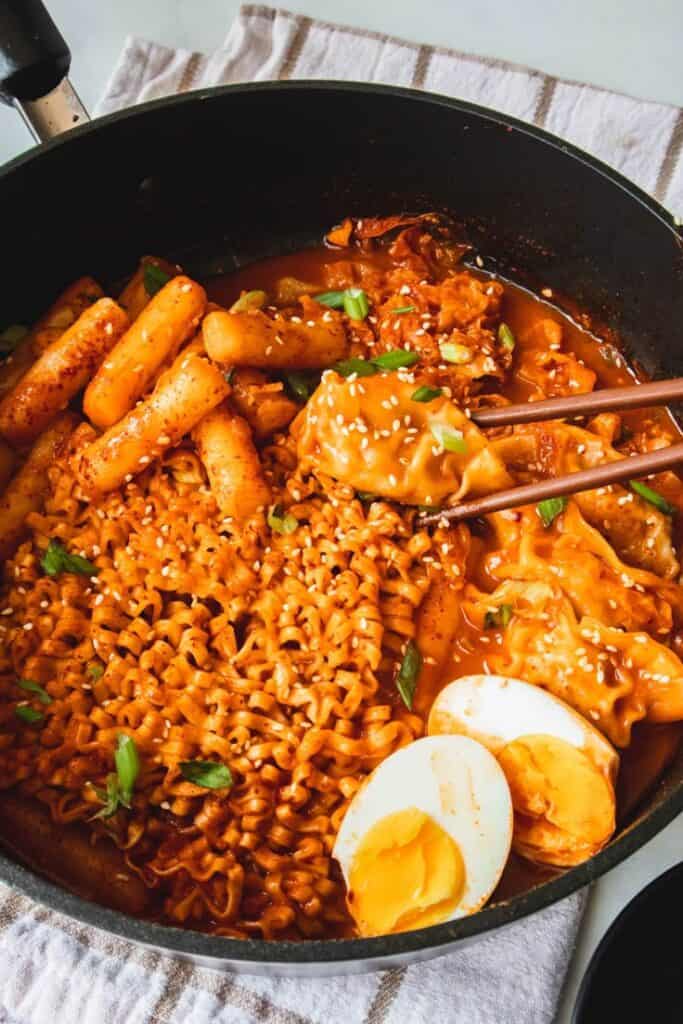
- Rabokki (라볶이): The ultimate power couple. Ramen and Tteokbokki are cooked together in the same spicy sauce, creating a carb-heavy, textural dream.
- Cheese Tteokbokki (치즈떡볶이): A modern twist that sees a blanket of mozzarella melted over the top, adding a rich, creamy contrast to the spicy sauce.
- Sundae (순대): While not made of flour, this Korean blood sausage is a Bunsik-jip staple, often ordered alongside Tteokbokki for a savory, chewy counterpoint.
Chapter 4: The Supporting Cast – Frying, Fritters, and More
A full Bunsik feast involves a symphony of sides:
- Twigim (튀김): The Korean take on tempura. An assortment of ingredients sweet potato, squid, kimchi, perilla leaves, and peppers, are dipped in a light batter and deep-fried to a perfect, greasy crisp.
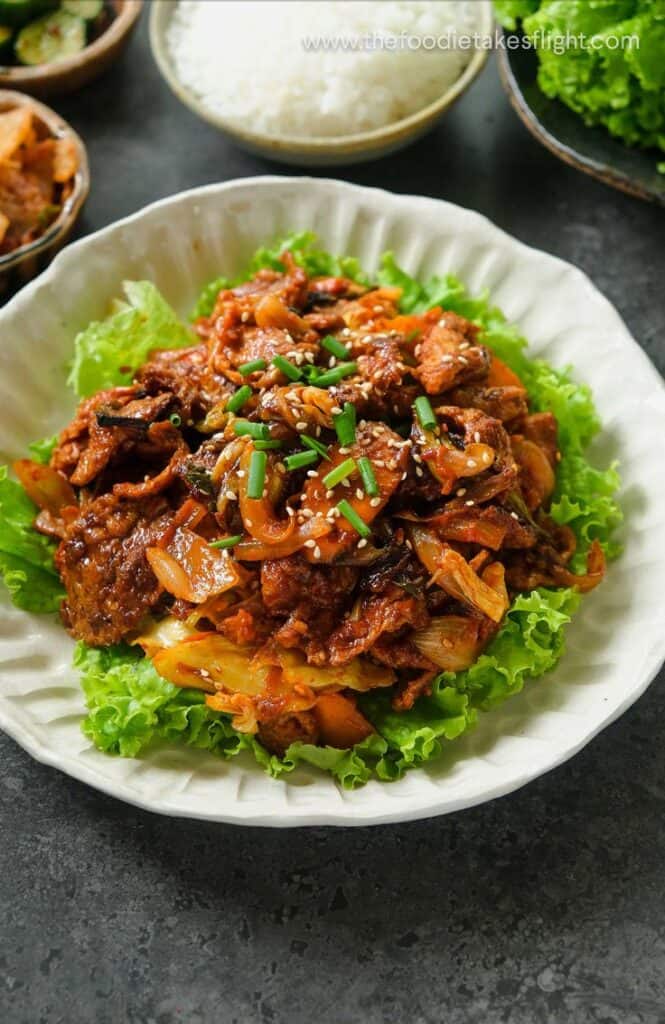
- Jeyuk Bokkeum (제육볶음): Spicy stir-fried pork, a popular dish to share, often leading to something more memorable.
- Bap-bokkeum (밥볶음): The grand finale. After you’ve finished the pork, the remaining spicy, flavorful marinade is fried with rice at your table, creating a crispy, savory crust.
Chapter 5: The Bunsik Survival Guide – How to Order Like a Pro
1. The Combo is King: Look for “set” menus. A classic is “Tteokbokki + Gimbap + Twigim,” which offers the perfect tasting platter.
2. Customize Your Heat: If you’re sensitive to spice, point to the Tteokbokki and say, “Mappeugo juseyo” (맵게 주세요) for more spicy, or “Deo maepji ankey juseyo” (더 맵지 않게 주세요) for less spicy.
3. Embrace the Self-Service: Grab your own side dishes (like yellow pickled radish, or danmuji) and water from the counter.
4. The Ultimate Move: Order a bowl of Tteokbokki sauce on the side for dipping your Twigim and Gimbap.
Conclusion: The Comfort of Carbs
In a nation hurtling toward the future, Bunsik is a delicious anchor to the simple, satisfying present. It’s a culinary culture that requires no pretense, only an appetite. It’s the taste of shared plastic stools, of laughter between classes, of a warm, cheap meal that feels like a hug from the inside.
So, the next time you’re in Korea, skip the fancy restaurant for a meal and step into the warm, noisy, fragrant embrace of a Bunsik-jip. Pull up a stool, point at something sizzling, and taste the real, unfiltered, and utterly delicious joy of everyday Korean life.
Written by – Trisha Deka
About the Author –

Think of Trisha as your modern-day storyteller for a dynamic culture. She’s got a sharp eye for the moments where tradition and hyper-modernity collide in Korea. One minute, she’s breaking down the latest digital trends from Seoul, and the next, she’s explaining the timeless ritual of a tea ceremony. Her writing is your front-row ticket to understanding not just the “what” of Korean culture, but the “why” that makes it so captivating