
Across the world,while much of the modern world welcomes January 1st as the New Year, both India and Korea follow their own traditional calendars, where the beginning of a new year is guided not by the Gregorian system but by lunar or lunisolar rhythms;The moon has quietly shaped how time is measured, festivals are celebrated, and beginnings are honoured. In both Korea and India, lunar traditions are not just about dates on a calendar—they are emotional milestones, moments when families pause, remember, and renew.

These New Years are not loud countdowns,parties or crackers shows—they are soulful resets, shaped by rituals, family, and reflection.
Korea: Seollal — A Lunar New Year of Respect and Renewal
In Korea, the traditional New Year is Seollal, celebrated according to the lunar calendar, usually falling between late January and February. Seollal is deeply family-centric and ritual-driven.
The day begins with ancestral rites (charye), where families prepare a ceremonial table of food to honour their ancestors, thanking them for guidance and protection. This is followed by sebae, a deep formal bow offered to elders, symbolising respect, gratitude, and the hope for blessings in the year ahead. Elders, in return, give words of wisdom and sebaetdon (New Year money).
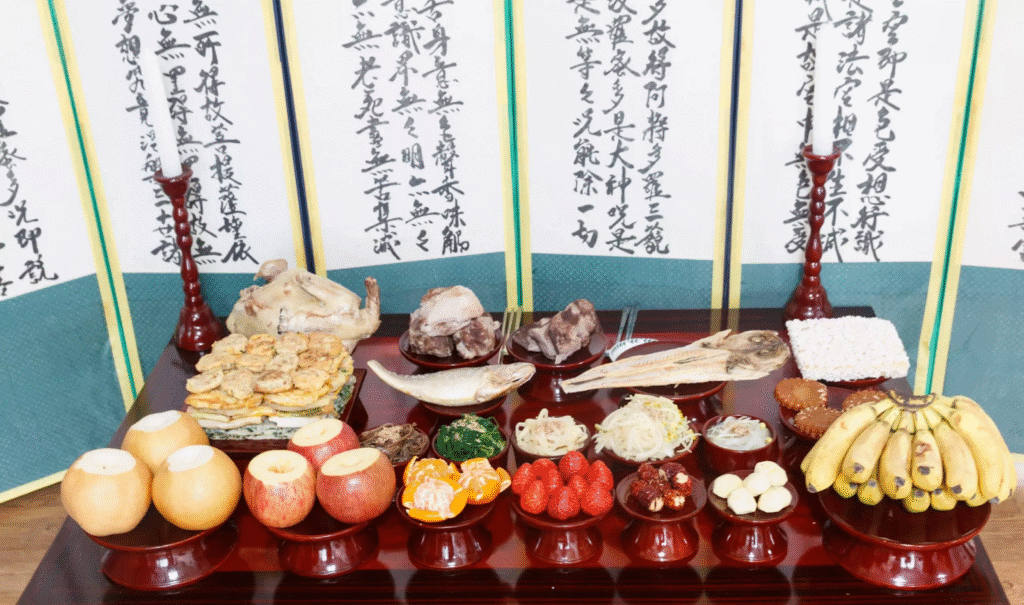
Traditional food like tteokguk (rice cake soup) is essential—eating it symbolises growing one year older and stepping into the new year with purity and clarity. Games like Yut Nori, Neol ddwigi,storytelling, and wearing hanbok complete the celebration, making Seollal both solemn and warm.
India: New Year Through Many Moons
India’s traditional New Year changes across regions, but the foundation remains the same—lunar or lunisolar calendars tied to nature and harvest cycles and across regions, homes are cleaned, rangoli is drawn, elders are respected, prayers are offered, and new clothes are worn—signs of leaving the old behind and welcoming fresh energy.

- Ugadi (Andhra Pradesh, Telangana, Karnataka) marks the New Year with prayers, oil baths, and the symbolic Ugadi Pachadi, a dish blending sweet, sour, bitter, spicy, and tangy flavours—representing life’s many emotions.
- Gudi Padwa (Maharashtra) welcomes the year by hoisting the gudi outside homes, symbolising victory, prosperity, and new beginnings.
- Vishu (Kerala), though solar-based, follows traditional calculations and begins with Vishu Kani—an auspicious arrangement viewed first thing in the morning to attract abundance.
- Bihu: Bohag Bihu (or Rongali Bihu), celebrated in April, marks the beginning of the Assamese New Year and the onset of spring. It is a significant harvest festival and a major cultural event in Assam.
- Pongal: Celebrated over four days in mid-January, Pongal is the harvest festival of Tamil Nadu. It marks the beginning of the Tamil month Thai and is often called Thai Pongal, signifying the start of the Tamil New Year
Conclusion: Same Spirit, Different Expressions

Though Korean Seollal and Indian traditional New Years differ in rituals and dates, their emotional core is strikingly similar. Both emphasising on Honouring ancestors and elders,Beginning the year with humility and gratitude,Sharing symbolic food and Strengthening family bonds
Both cultures remind us that the New Year is not just a change of date—it is a conscious pause, guided by the moon or the sun, reminding us that beginnings are sacred when rooted in tradition. They remind the world that time is not just counted—it is felt, respected, and celebrated together.
Written by – Shweta Bajaj

About the Author –
I write from the heart, grounding every article in my own experiences and reflections. Inspired by the world of K-culture, I explore how music, fandom, and storytelling shape emotions and identities. In my articles highlight the beauty of connection, celebrating how art transforms people in quiet, powerful ways.