
Whenever a little child takes their first step they feel like they can walk to the sky and catch the sun or moon. But when we can’t walk again after a big accident or long term injury, before the first step is taken, there is always a moment of hesitation — a question of whether the body still remembers how to move. For millions living with disability or age-related decline, walking again is not about speed or distance, but about reclaiming a sense of self

It appears that the phrase “The Walk of Independence” is currently utilized in media coverage and social networking sites to reference South Korea’s initiative to design and establish the utilization of cutting-edge robotic exoskeletons that will enable those living with paralysis or limitations in mobility to regain their ability to walk. The advancements achieved with these technologies represent a major step toward improving the ability to recover and achieve greater independence from dependence upon traditional wheelchairs.
1. Redefining Mobility means Redefining Independence
Throughout history, the wheelchair has not been viewed as something negative by anyone. Instead, it stands for many things to us all that we need to survive, have freedom in this world, and have access to life itself. However, for those who are in rehabilitation from a stroke or a spinal cord injury, as well as those who are elderly and have sustained an age-related injury, the ability to walk again takes on additional meaning. The loss of being able to walk represents a loss of autonomy, dignity, and personal independence. Walking is more than a physical action; it represents a basic ability to be self-reliant and actively engaged in the world around you.
Societies worldwide are facing an unprecedented increase in mobility-limiting conditions. The rapidly aging populations, increasingly prevalent strokes, traumatic injuries, and neurodegenerative disorders have put unprecedented pressure on healthcare systems. As life expectancy continues to grow, the goal is no longer just to prolong life but also to preserve functional independence and a quality of living. This shift has made rehabilitation strategies that go beyond long-term dependency toward functional restoration a renewed interest globally.
In the recent decade, South Korea has become the unintentional leader of a Revolution in Rehabilitation. South Korea has established itself as not only a technology and pop-culture hub but also a centre for Innovation in Rehabilitation Technology. By integrating the areas of Advanced Physiotherapy, Neuro-Rehabilitation Science, and Medical Technology, Korea has changed our perspective regarding Recovery. The Concept of Recovery is now more than just regaining the ability to walk; it is about giving individuals the tools to regain the ability to walk, be confident and regain independence, wherever there is potential for Recovery. This new way of thinking reflects a new and different approach to Rehabilitation that places an emphasis on the value of the ability to walk when possible, to assist an individual when necessary, and to be treated as a person with dignity at every level of Recovery.
2. Why the World Is Moving Beyond the Wheelchair (Not Against It)

The worldwide community of rehabilitation practitioners has no intention of banning wheelchairs, which will continue to be a necessary piece of assistive equipment for millions of people worldwide. On the other hand, new rehabilitation practices are becoming more and more concerned with achieving a better aim: diminishing dependency when restoration of functional capacity might be biologically viable.
Limitations of Long-Term Wheelchair Dependence –
In situations where the use of a wheelchair becomes a long-term reality even in the face of a possible recovery, it can assist in the development of health complications in a secondary manner. Lack of physical activity can cause muscle atrophy, mainly in the lower and abdominal regions, thus enhancing functional decline due to muscle weakness. Lack of engagement in physical activity can also cause cardiovascular deconditioning, associated with an increased level of morbidity among the elderly and those with neurological disorders.
Further, the prolonged utilization of wheelchairs may lead to an increased risk of skin injury due to pressure, postural deformities, and stiffness of the joints if not properly addressed. From the psychosocial standpoint, there may arise a lack of confidence and fear of movement among the patients due to psychological dependence on the wheelchair during the early stoppage of the restorative phase of the rehabilitation program.
A Global Shift in Rehabilitation Philosophy
International rehabilitation frameworks — including those supported by the World Health Organization (WHO) — increasingly emphasize a functional continuum often summarized as:

Assist → Restore → Optimize
This model places priority on assistive devices when needed, aggressively pursues restoring lost function through rehabilitation when that function is lost, and finally maximizes function to maximize independence. The issue is not one of turning off the assistance but rather restoring function before substituting it permanently.
This is especially true in geriatric and neurorehabilitation settings, where early, intensive, and specific therapy has already demonstrated the ability to increase gait, balance, and overall functional status post-stroke, spinal cord injury, and for patients experiencing age-related mobility dysfunction.
South Korea’s Rehabilitation Philosophy –
This global shift is best evidenced in South Korea, where there is a strong focus on early intervention and intensive rehabilitation with the goal of re-establishing the ability to walk if biologically possible. This is because physiotherapy programs in Korea focus on quick transitions from hospital care and concentrate on gait, balance, and neuromuscular rehabilitation.
Instead of seeing wheelchairs as the ultimate product of rehabilitation, there is a temporary usage of wheelchairs in Korean rehabilitation for patients when advanced physiotherapy and neuroplasticity techniques are employed to assist the regaining of upright mobility in patients where there is still muscle and neurological potential.
This philosophy is reflective of an overall emphasis within Korean healthcare on functional independence, participation in society, and living a good quality of life, especially in light of a rapidly aging population.
International Relevance –
As the global community struggles to deal with an increasing number of strokes, neurodegenerative disorders, and disability among the aging population, there is much to be learned from Korea’s rehabilitation model. While integrating assistive technology and functional or rehabilitative physiotherapies, Korea is setting an example in how active rehabilitation can progress from being passive.
Crucially, this transition is not an opposing force to the use of wheelchairs; instead, it repositions the use of the device to ensure that it enhances rehabilitation instead of an outright alternative to it.
3. Korea’s Rehabilitation Revolution
The South Korea’s approach to rehabilitating patients marks a revolutionary departure from passive long-term care and has shifted towards active functional recovery, especially in the area of patients who have suffered strokes, neurological damage, and the effects of aging in respect of mobility. The strategies and interventions are informed by principles that are remarkably in line with what the World Health Organization (WHO) recommends.
Early-Stage Intensive Rehabilitation –
One of the most characteristic and effective features of the rehabilitation system in Korea is its recognition of the need to provide early rehabilitation following a stroke or a trauma to the body. Unlike the need to first stabilize the patient medically prior to the start of any therapy, the Koreans also recognize the importance of early mobilization and task-specific physiotherapy.

Fully in line with WHO guidelines for rehabilitation, continuous and functionally directed rehabilitation is strictly necessary for optimum results for recovery. For example, in Korea, early gait training, balance retraining, and neuromuscular activation can now be regularly incorporated into in-patient programs, thereby lowering the risk of disability.
Integration of Hospital-Based and Community-Based Rehabilitation –
The other cornerstone in the rehabilitation revolution of Korea is the smooth transition from hospital-based care to community-based rehabilitation services. They are not discharged into inactivity, with structured outpatient programs, a community rehabilitation center, and follow-up physiotherapy to ensure continuity of care.
This integrated model reflects the WHO’s advocacy for community-based rehabilitation; this is a strategy for promoting inclusion, independence, and participation at community levels. In keeping the momentum of rehabilitation going beyond hospitalization, Korea reduces functional decline and sustains mobility recovery.
Government-Supported Rehabilitation Systems –
The country’s national healthcare system greatly assists in rehab accessibility. The state-funded insurance plan for rehab facilitates patients, particularly older patients and those who have suffered a stroke, to gain better accessibility for continued physical and neuro-rehab treatments and therapies.
A policy-level recognition of rehabilitation as a core healthcare service and not as an afterthought would help fall in line with WHO’s call to action to strengthen rehabilitation in implementing Universal Health Coverage. This would help in improving engagement rates for rehabilitation and outcomes in the long run.
Functional Outcomes and Mobility Recovery –
The comparative global observations are that South Korea tends to result in relatively good functional outcomes in stroke rehabilitation, with noted strengths in the areas of gait recovery and reintegration into daily activities. Outcomes vary by individual and condition, but Korea’s emphasis on early intervention and continuous physiotherapy often enables quicker progressions from hospital-based care to assisted walking, and in many instances, to independent mobility.
This trend represents a rehabilitation culture that favors functional walking recovery whenever biologically possible, without prematurely resigning patients to long-term mobility aids. The outcome is not the absence of assistive devices, but their strategic use within a greater recovery pathway.
Ethical Perspective Box – Rehabilitation Ethics and Mobility Choice
The article does not advocate for the elimination or depreciation of wheelchairs as they continue to serve an important functional role for many people. Further, Korea’s rehabilitative philosophy stresses the importance of options, recovery based on potential, and respect for the dignity of the person with a disability. Therefore, an individual should pursue walking if it is medically and functionally possible, while having access to assistive technology at any time necessary.
4. Advanced Physiotherapy & Neurorehabilitation in Korea
South Korea’s rehabilitation strength lies not only in technology, but in how advanced physiotherapy principles are systematically applied early, intensively, and continuously across the recovery timeline. Korean neurorehabilitation focuses on restoring function through neuroplasticity, rather than compensating for loss through permanent assistive dependence.
Task-Specific Gait Training as a Core Philosophy –
Task-specific gait training is central in recovery programs in Korean rehabilitation centers among survivors of stroke, spinal injury patients, and older adults. Therapy does not focus on the isolation of muscles but involves repetition of tasks of walking that are goal-directed and have a great resemblance to real-life movement patterns.
- Training in the following is provided to patients:
- Overground walking
- Treadmill-based gait with body-weight support
- Stair climbing, obstacle negotiation
- Transitional movements: sit-to-stand, turn initiation
This strategy is in line with the global evidence for neurorehabilitation, whereby nervous system reorganization occurs most positively when trained in useful, functional tasks-a principle highlighted very strongly within Korean clinical protocols.
Neuroplasticity-Based Rehabilitation –
Korea’s rehabilitation model is deeply rooted in neuroplasticity science—the brain’s ability to reorganize and form new neural connections after injury.
Key features include:
- High-frequency therapy sessions in early recovery stages
- Repetitive motor learning under therapist guidance
- Multisensory feedback includes visual, auditory, and proprioceptive.
Instead of waiting, many Korean hospitals start structured neurorehabilitation within days of stroke or injury, thus optimizing the critical neuroplastic window. The early activation strategy has been associated with improved gait recovery and reduced long-term disability.
Balance and Proprioceptive Retraining –
The main obstacles toward independent ambulation for elderly and neurologically impaired individuals is balance dysfunction. The emphasis of Korean physiotherapy is on vestibular training, postural control and proprioception feedback.
Often the programs will include:
- Dynamic balance training using unstable surfaces
- Weight shifting and control of the body’s centre of gravity
- Dual-task balance activities (cognitive/motor activity combined)
Dual-task balance activities have special significance in geriatric rehabilitation, as fall prevention and regaining confidence in walking ability are as important as restoring the ability to walk independently.
Constraint-Induced Movement Therapy (CIMT) & Functional Symmetry –
Korea has many neurorehabilitation centres where they employ Constraint-Induced Movement Therapy (CIMT) and modified CIMT to help individuals experiencing hemiparesis after a stroke.
The goal of limiting overuse of the unaffected side while promoting the use of the affected limb in a controlled way is to:
- decrease learned non-use;
- return functional symmetry;
- increase coordinated gait patterns; and
provide a means for functional normalisation rather than just encouraging independence through using compensation techniques.
Sports Rehabilitation Principles Applied to Neuro & Elderly Care –
One of Korea’s most innovative contributions is the application of sports rehabilitation principles to non-athlete populations.
Some of the techniques that would traditionally have been applied to:
- Biomechanical Gait Analysis
- Progressively Load Management
- Performance-Oriented Movement Retraining
These are adapted for:
- Stroke survivors
- Spinal injury patients
- Frail elderly individuals
This crossover method promotes faster recovery, more efficient patterns of movement, as well as a new perception of the patients, who are no longer looked at as “disabled,” but rather as people who are actively engaged in
Global Relevance & WHO Alignment
A close reading of the WHO’s rehabilitation framework as a model for rehabilitation of persons recovering from neuropsychological injuries shows that South Korea’s rehabilitation model has many similarities with this framework, as all emphasize the same things: rehabilitation should include:
- A focus on early intervention
- Function centered recovery
- Community reintegration
- A life-long pathway for rehabilitation
This combination of evidence-based physiotherapy, neuroplasticity research, technology-enabled rehabilitation, and rehabilitation programs will increase in significance as societies around the world gain large numbers of older residents.
While many healthcare systems prioritize long-term assistive support, Korea prioritizes functional restoration wherever biologically possible—without rejecting assistive devices, but without surrendering recovery potential.
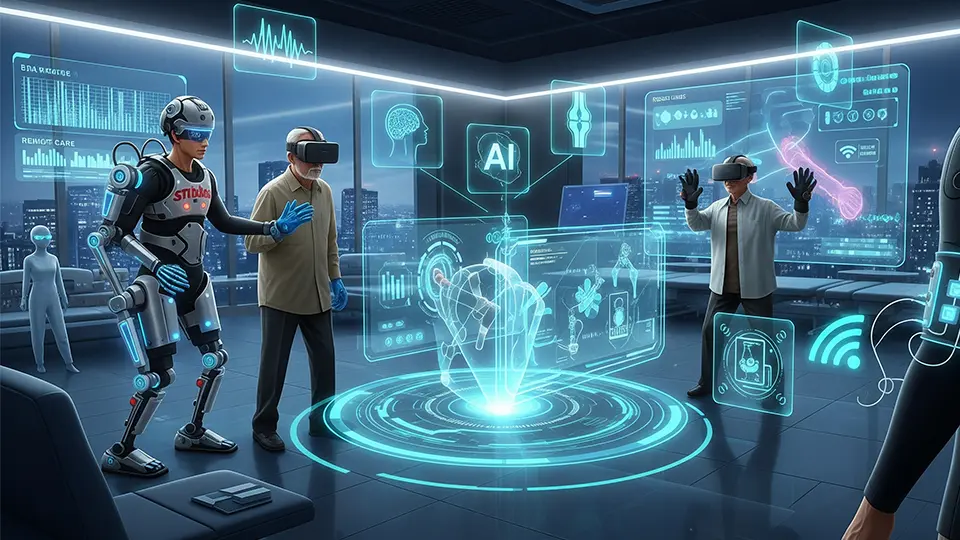
5. Technology That Helps People Walk Again: Korea’s Real-World Rehabilitation Systems
In contemporary physical therapy practices, technology has been misrepresented as a substitute for human therapy. South Korea refutes this common perception of technological therapy. South Korea’s technological innovation aims to supplement physical therapy instead of replacing it, particularly when aiming to revive patients’ walking function.
The rehabilitation system in Korea combines medical scientific knowledge with that of engineers to produce technologies that actively retrain the body compared to just assisting it.The success of rehabilitation in South Korea has been achieved through collaboration between hospitals, universities, and manufacturers of medical robotic devices using clinically proven technology. This allows Korea to incorporate advanced rehabilitation devices into routine practice for Neurorecovery and Geriatric Rehabilitation, rather than remain as an experimental phase as is experienced in many other countries worldwide.
Robotic Exoskeletons & Gait Training Systems
Lokomat® (Hocoma AG, Switzerland – Widely Used in Korea) – Although not made in Korea, Lokomat® robotic gait trainers are commonly found in big hospitals in Korea, including:
- Samsung Medical Center
- Severance Hospital (Yonsei University Health System)
- Asan Medical Center
Lokomat provides:
- Body-weight–supported treadmill walking
- Highly repetitive, symmetrical gait cycles
- Early mobilization after stroke or spinal cord injury
Korean therapists incorporate Lokomat training and active patient participation to ensure neuroplastic stimulation as opposed to passive movement.
WalkON Suit F1 & F2 – Angel Robotics (South Korea) – Angel Robotics, a South Korean company, is one of the world’s largest manufacturers of rehabilitation robotics and the biggest contributions to Rehabilitation Robotics made by Korea.
- Company: Angel Robotics (Seoul, South Korea)
- Origin: Spin-off from KAIST (Korea Advanced Institute of Science and Technology)
- Technology: Wearable lower-limb robotic exoskeleton
The WalkON Suit F1 & F2 can assist with hip and knee movements during walking, is specifically designed for patients after stroke, spinal cord injury patients, and older adults, and can allow users to walk in their environment, rather than just walking on a treadmill.
This represents a significant change in rehabilitation practice to move away from laboratory rehabilitation and to provide functional walking.
Hyundai Medical Exoskeleton (H-MEX) – Hyundai Medical Exoskeleton (H-MEX or X-ble MEX), as its name suggests, is an exoskeleton designed to provide mobility to patients suffering from paralysis in the lower part of their bodies, such as paraplegics, to walk, turn, and walk up stairs. It can perform these functions by reading the intentions expressed through sensors and actuators to give patients support to walk as they would normally walk. Other functions include adjusting gait to suit individual patients.
Key Features & Functionality:
Mobility Support: Facilitates activities such as standing up from a chair, walking on level ground, turning, and going up and down stairs.
Wheelchair Compatible: Compatible with use while in a wheelchair for smooth transition.
Intelligent Control: Employing sensors and algorithms to sense the intended motion of the user and offering personalized support.
Lightweight & Slim: Made with high-quality materials that are both sturdy and light.
Rehabilitation Device: It provides services for gait correction and therapy, with software for tracking progress for experts.
Development & Status:
Prototype to Medical Device: First introduced as a prototype product in CES in 2017, it developed into X-ble MEX and obtained classification as Medical Device Class III in South Korea (as of late 2025).
Large Scale Application: This approval opens the way for its application not only for paralysis but for other ailments that impact the mobility of patients.
In short, H-MEX represents a commitment to an assistive robotic system from Hyundai that would benefit mankind by substantively upgrading human capabilities.
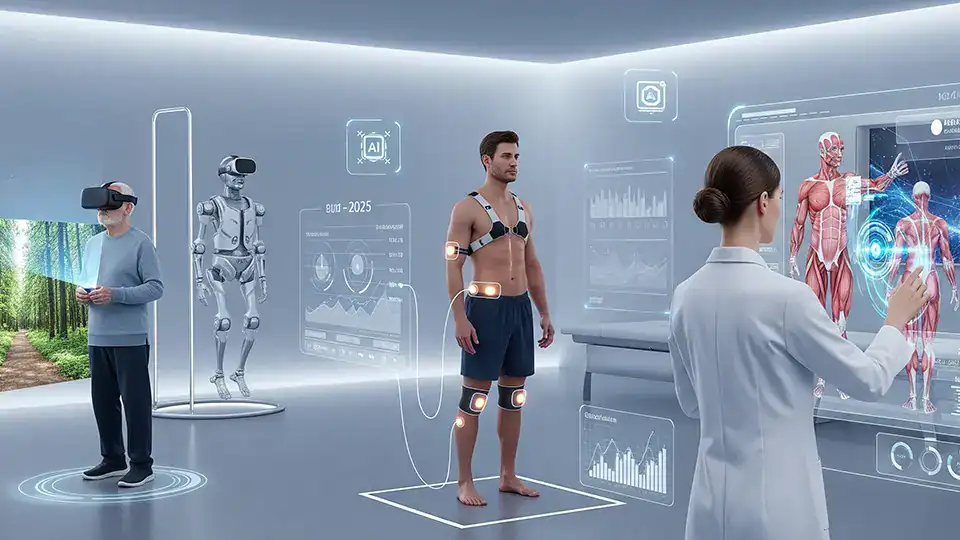
AI Assisted Gait Analysis & Smart Rehabilitation – Korea is at the forefront of using Artificial Intelligence (AI) to analyse medical data and the same applies for rehabilitation as well.
The Samsung Medical Centre has Gait and Motion Analysis Labs that provide
- Motion capture using AI
- Walkways with pressure sensors
- Kinematic analysis in real time

By defining and capturing the patient’s gait in two dimensions, the use of these systems will allow the clinician to both determine the presence of asymmetries in the patient following a stroke and measure how much progress is made from the time of intervention to achieving maximum potential in terms of recovery of function. In addition, these devices allow the physiotherapist to provide individualized walking programmes for each patient. The use of AI in rehabilitation enables therapists in Korea to provide intervention prior to compensatory walking patterns becoming established, which is crucial to ensuring the long-term independence of patients.
Virtual Reality (VR)-Based Gait Training – Rehabilitation clinics across Korea are increasingly using the VR Assisted Walking Environment as an avenue for gait training, particularly for patients who suffer from neurological impairments or the elderly.
Clinical Applications of VR in Korea:
In rehabilitation centres across Korea, VR systems are used to: simulate stairs, streets, and other obstacles, improve one’s spatial orientation and balance, and reduce the fear of falling. Often, VR is combined with other methods of gait training, including treadmill gait training, robotic walking systems, and balance platforms. This multiple approach addresses both the physical aspect of recovery and builds psychological confidence, both of which are critical components of restoring independent walking.
Functional Electrical Stimulation (FES) – Functional Electrical Stimulation is widely applied in Korean neurorehabilitation programs.
Clinical Uses of FES in Korea:
- Through clinical use of FES, the following can be achieved:
- Dorsiflexor activation in patients with foot drop
- Improvement of Gait Timing and Symmetry
- Aid in Reinforcing Neural Re-Education during walking
Korean protocols often use combinations of:
- FES + Task-Specific Gait Training
- FES + Robotic Walking
- FES + Balance Retraining
Use of multimodal approaches significantly enhances functional walking outcomes, especially after stroke.
Hospital–Industry Collaboration: Korea’s True Advantage
The key differentiator of Korea is not one device, but a system of collaborative development. The development of Rehabilitation Technology in Korea involves:
- Teaching Hospitals (Yonsei, Seoul National University, Samsung)
- Engineering Universities (KAIST, POSTECH)
- Medical Robotics Companies (Angel Robotics, Hyundai Robotics, Curexo)
This established ecosystem enables rapid clinical testing, ongoing physiotherapy feedback, and quick transition from prototype to patient care.
The Global Importance of this Development
While many other countries are currently focused on assistive mobility devices, Korean rehabilitation technology is focused on restoration of mobility.
The objective of Korean rehabilitation technology is not only to assist patients in movement, but to rehabilitate them into a state of walking independently, confidently, and with the ability to recover to the greatest degree biologically possible.
As the world’s population ages, and the number of people with neurological disorders increases, Korea’s rehabilitation technology development model provides a scalable and evidence-based template for establishing the future of Mobility Recovery.
6. Global Lessons: What the World Can Learn from Korea
The rehabilitation process used in Korea presents important information to other nations with an aging populace along with those having an increasing number of neurological conditions and are experiencing escalating medical expenses. The key takeaway here is not necessarily that Korea has superior technology, but rather that the success is attributed to the timing, integration of services, and intent of the provider.
Early Rehabilitation Reduces Long-Term Healthcare Burden
The emphasis in Korea is to provide early and intensive rehabilitation services within a few days following the occurrence of a stroke, spinal cord injury, or surgical procedure. The benefits of an early rehabilitation approach include the prevention of secondary complications, such as atrophy and stiffness of the joints, reducing long-term reliance on adaptive equipment, and decreasing lifetime medical and caregiving costs.
Globally, many individuals experience barriers to receiving rehabilitation services timely due to excessive demands on the available systems or to insurance barriers. Korea has established that an early approach to rehabilitation is not a cost but, rather, an investment.
Technology + Physiotherapy = Functional Recovery
Korea does not employ technology alone. Robots, AI gait analysis, and VR are continually integrated within physiotherapist-managed programs.
This collaborative approach produces:
- More intensive therapy without an increase in injuries to the physiotherapist.
- The ability to objectively assess and track progress.
- The ability to develop an individualised retraining program for each patient versus using a standard protocol.
As many developed countries are becoming increasingly populated with an ageing population as in the case in Japan, Europe and India, the model developed by Korea, demonstrates that the best benefit of technology comes through the guidance and expertise of skilled rehabilitation professionals as opposed to using technology as a substitute for skilled professional guidance.
Adaptability for Aging and Resource-Limited Nations
The Korean model can be replicated and expanded upon based on country population demographics and levels of healthcare resources available. Tertiary hospitals utilise more advanced robotic systems while more simplified/task-specific gait training, balance retraining, and neuroplasticity-based rehabilitation are used for community and outpatient rehabilitation.
This layered or integrated approach to service delivery provides:
- Access to more advanced rehabilitation care to those individuals who require it.
- Enables functional rehabilitation for patients in lower-resourced environments.
The majority of countries experiencing rapid ageing populations can follow the philosophy of this model as a means to provide effective rehabilitative services even though they may not be able to replicate or acquire all the technology available at the time of this publication.
7. Future Vision: Walking as a Right, Not a Privilege
The rehabilitation philosophy of South Korea has changed significantly because of its approach to health care.
The future direction of Rehabilitation in Korea reflects the belief that:
“Wheelchair when needed, walking when possible.”
This does not mean that Korea will not support the use of assistive technology, it supports the idea of maximizing the potential of all humans.
Personalized and Data-Driven Rehabilitation
The focus of individualized rehabilitation pathways in Korea moving forward includes:
- AI-based gait analysis
- Biomechanical assessment specific to the patient
- Neuroplasticity-based therapy
The delivery of both the intensity and the delivery method as well as the duration of the therapy is now more personalized based on the ability of each person to recover.
At-Home Robotic and Digital Therapy
As Rehabilitation continues to evolve in Korea, the next step will be outside of the hospital.
This includes:
- Robotic devices to be used in the home
- Tele-Rehabilitative Therapy (by physiotherapists)
- AI-Feedback Systems based on Exercise Performance
These new ways of providing therapy will eliminate hospital overcrowding and allow the continual delivery of therapy and will be especially beneficial for seniors and those who live in rural areas.
Ethical Rehabilitation: Dignity at Every Stage
Rehabilitation is a process of restoring dignity and hope to people with disabilities through ethical rehabilitation practices.
In Korea, rehabilitation is not defined as “if you can walk then you must”. Rehabilitation is based on the patient’s safety, their preference regarding rehabilitation, and their biological limitations.
Walking is pursued::
- To achieve recovery potential;
- To make life a better place through the enhancement of functional capacity; and
- To remove all forms of stigma associated with the need for using a mobility aid.
Korea’s model represents the proper balance of an ethical approach to rehabilitation and therefore has the potential to be a global model.
A Global Rehabilitation Paradigm Shift
In this era of global mobility challenges, South Korea provides a clear vision regarding rehabilitation:
In essence, rehabilitation should no longer focus on managing declines, but rather, should emphasize the restoration of function, maintenance of dignity, and empowerment of independence.
While walking is considered to be an appropriate and reasonable goal when possible, it has also evolved to become more than just a clinical goal; it is now viewed as a right grounded in a person’s autonomy.
Conclusion
South Korea’s rehabilitation model demonstrates that mobility recovery is not a luxury of advanced healthcare systems, but a result of timely intervention, interdisciplinary collaboration, and a commitment to human dignity. By prioritizing early rehabilitation, integrating technology with physiotherapy, and respecting individual recovery potential, Korea offers a globally adaptable framework for restoring independence. As societies age and mobility impairments rise worldwide, the future of rehabilitation will not be defined by how well we support dependence, but by how effectively we enable recovery — walking when possible, assisting when necessary, and preserving dignity at every stage.

WRITTEN BY – ANJALI GUPTA
About the author –
Hi! I’m Anjali Gupta, a healthcare student whose interest in healing and well-being naturally led me toward Korean culture — a place where wellness, balance, and tradition beautifully blend with modern living. I enjoy writing simple, emotional, and meaningful pieces that help readers connect with a culture rather than just learn about it.