
The title being a parody of the famous English proverb “when life gives you lemons, make lemonade,” the hit Korean show When Life Gives You Tangerines (2025) plays on a similar radical optimism of life, a sort of existentialism, wherein we all make meaning ourselves in our lives, or in simple words, “life is what you make it.”

They say you need countless lifetimes of fate to meet even once in this life. If you miss it when it brushes past, that’s the end.
The screenplay, starring IU as Aesun Oh and Geumyeong Yang and Bogum Park as Gwansik Yang is not disparate from any real and common person from the 1960s. The story starts in the post-Korean War era, in the island of Jeju, and centers around the life of a young Aesun and her tribulations throughout life. The experiences of Aesun represent a life that is being lived and was lived by our own parents, and forces the viewer into her perspective into life; and moreover helps create a connect with relatability with its older audience. With the era of the rebuilding of the Korean economy, Aesun story also resonates to a wider backdrop, through the fulfillment of aspirations and hardwork of the humble, into a better life, for themselves and their children; but also tells the story of loss, sadness, fear, death and resistance toward them.
When you’re struggling to breathe in the dark waters, you need to stay close to others to survive. Or fear will grip your heart, and you won’t make it. Go together with others. If you do, 100 miles will feel like ten. No one can live on their own.
As the story of Aesun expands with her children, and midway through the show, the story starts to center around her eldest daughter, Geumyeong. The story then shifts to the perspective of the modern person—the daughter, the son or the child. The story not only puts forth the stories of guilt, but conflict with parents or struggle in the changing era of the 2000s, and juxtaposes them to the stories of the parents. In this way, the show is able to draw in all strata of the audience, tug at their heartstrings, and make them shed tears all the same, throughout the world.
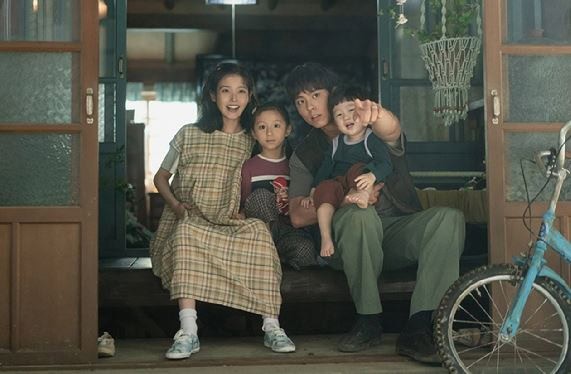
Parents dwell on what they couldn’t give, and children dwell on what they couldn’t get
The original title of the show in Korean, 폭싹 속았수다, refers to roughly, “Thank You For Your Hardwork,” a poignant line which recapitulates the entire story of the show. The story is structured exactly like the seasons of the year, a metaphor for the seasons of one’s life—spring, summer, fall and winter. Each “season” consists 4 episodes. As aforementioned, the show is also divided into two generational storylines, one following Aesun and another Geumyeong. Although, each of these subsections have many common motifs, like social hardships like poverty, illiteracy and loss, discrimination on the basis of class and gender; or the salient hardships of life itself, death, loss, aging, conflict with support systems. The one most overarching theme—as is in real life as well—is love. The theme of love starts from the first episode with Aesun and her mother, and also ends with Aesun and Gwansik in the last episode; enduring throughout the episodes of the show as a main storytelling device.

“This is a silent outcry, a handkerchief of eternal nostalgia, waving toward the blue sea….”
Going back to the English title of the show, “When Life Gives You Tangerines,” it is juxtaposed to the proverb in English. The show makes a strong and powerful proposition that life actually gives us tangerines. Life is not always sour, but can give us surprises at the most unexpected points in our lives—bittersweet surprises. Hence, just like Jejuan tangerines, life itself is bittersweet and in that imperfection, we must find our poise, our resilience in it.
When Life Gives You Tangerines, streaming now on Netflix