
Korea is widely known for its fast-paced culture, like the internet and fast food delivery. As such, Korean text slang has also evolved to fit this lifestyle: short, fast and expressive.
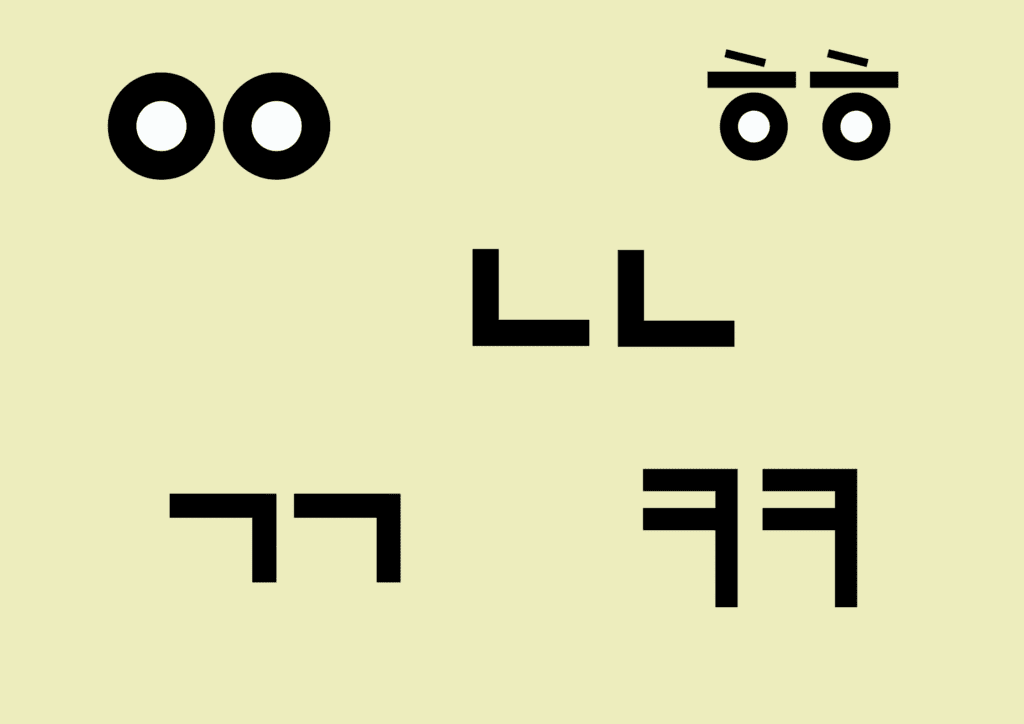
These slangs show up everywhere, whether you’re scrolling through social media or watching Korean dramas. Here’s a guide to understanding the Korean text slang.
Features of Korean Text Slang:
Short and Expressive:
Korean people love to shorten words. They mostly used the first syllable of words and used it together to make conversation quick and understandable. For example:
- 치맥: A popular food combination, short for 치킨 (chicken) and 맥주 (beer).
- 남친 / 여친: Short for 남자 친구 (boyfriend) and 여자 친구 (girlfriend).
Repetition:
As repetition is a common pattern in Korean speech. It is also used in Korean slang and texting by repeating initial consonants to form abbreviations of common phrases or sounds.
- ㅇㅇ: A repetition of the initial consonant of ‘응’ [eung], an informal “yes”.
- ㄷㄷ: Short for ‘덜덜’ [deoldeol], used to express surprise or fear (like “OMG” or “I’m shook”).
Common Text Abbreviations
ㅋㅋ / ㅎㅎ: Used for laughing sounds.
ㄱㄱ: This is used to mean “Let’s go!” or “Go go!”.
ㅇ ㅋ: Short for “okay”.
ㅊㅋ: An abbreviation of ‘축하한다’ [chukahanda], meaning “congratulations”.
Slang for Emotion and Reaction
Korean slang often imitates the feeling of the message rather than the literal meaning.
헐: Used for expressing shock or disbelief (“What!? No way!”).
대박: It means “Awesome!” or “Unbelievable!”.
ㅜㅜ / ㅠㅠ: Used to express crying. The more ㅠ or ㅜ is used, the sadder the person is trying to express.
하…: A sigh, often used dramatically.
Slang which comes from English
셀카: The short abbreviation of self camera, “selca”.
잼: Taken from 재미 (fun), influenced by jam.
캐바캐: Means “case by case”, in Korean 캐스 바이 캐스.
Numeric Slang
Korean numeric slang uses numbers to replace words or phrases based on pronunciation.
8282: Means “quickly”, 8 [팔] read as 빨 and the 2 [이] pronunciation is close to 리 which makes 빨리빨리.
0910: 고고십 means let’s go. Used as an enthusiastic cheer.
Aegyo in Text Form
Koreans often add cuteness to texting, especially among friends or couples.
냠냠: Eating sound.
냐옹 / 냥: Cat-like sounds for cuteness.
옹~: A cute way to say yes (응).
Emoticon
Even with the rise of emojis, these text-style emoticons remain beloved.
^_^: Happy, polite smile.
(TT): Crying face.
Conclusion
Korean text slang relies on abbreviations, creativity and sounds. It abbreviates words or phrases, uses mostly consonants, incorporates English words and adds cute endings to create a specific tone. Korean texting culture is not just full of fun and emotions but also dynamic; new slang appears constantly, and old terms evolve or fade. It truly reflects the culture’s speed, creativity and expressiveness. For learners, it can feel like entering a new world.
Written by – Soni Maurya
About the author –
Hello everyone, I am Soni Maurya. I am a postgraduate student of English Literature and am also learning Korean. My interest in Korean culture began with music and gradually grew into a genuine passion as I explored its language, culture, and traditions. I truly enjoy researching and learning new things, as well as creating my own work.