
Food in Korea is more than just a meal; it is about the people with whom you share that meal, and the traditions and practices that come with it. This is evident when one compares the traditional markets with the new-age supermarkets that have cropped up in Korea.
The Local Markets
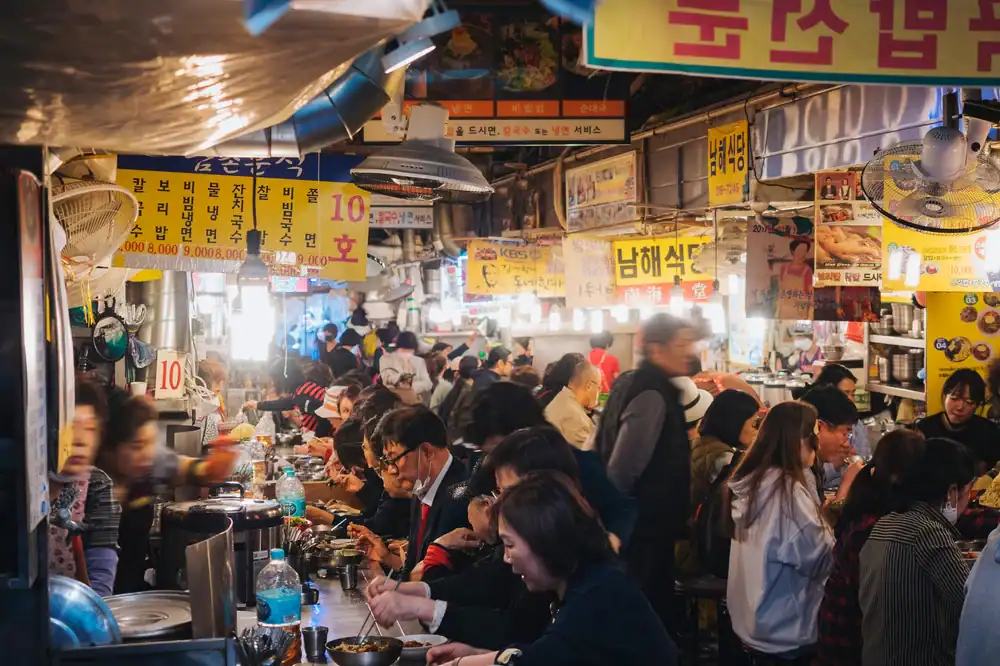
Traditional markets such as Gwangjang Market in Seoul or Jagalchi Market in Busan are more than what we know as just a marketplace. It’s a place where people, locals, can buy food or ingredients even for better prices. This is where the culture of food is, and the traditions are passed down from vendors to visitors. Vendors offering fresh vegetables, seafood that is still moving and alive in tanks, homemade soft tofu, and various kinds of kimchi.
What makes local markets special is the human touch. Vendors tend to focus on one or two products, which have been refined over many years. Grandmas selling tteok, ahjummas making banchan, and food being cooked in front of customers create an environment that is very intimate and nice. Negotiating is normal, free samples are offered, and loyalty is rewarded.
Another characteristic of markets is Korea’s emphasis on seasonal food. Produce is bought in line with the seasons, and it is usually done in small quantities rather than in bulk.
Convenience and Change of Supermarkets
On the other hand, Korean supermarkets are a symbol of modern living, fast and efficient. From foreign snacks to ready-to-eat foods, they can be found at supermarket chains such as E-Mart, Lotte Mart, or Homeplus. For the busy student or office worker, supermarkets are the ideal match for their lifestyle.
Supermarkets are also a symbol of the changing face of Korean food culture. Cut vegetables, packed kimchi, and food that is safe to warm up in the microwave have made traditional foods more convenient. Especially for the younger generation people who have limited time to eat. However, you can still find chili peppers or fermented bean paste. Even though we can now find them easier to buy in convenient packaging in supermarkets, not like traditional ones.
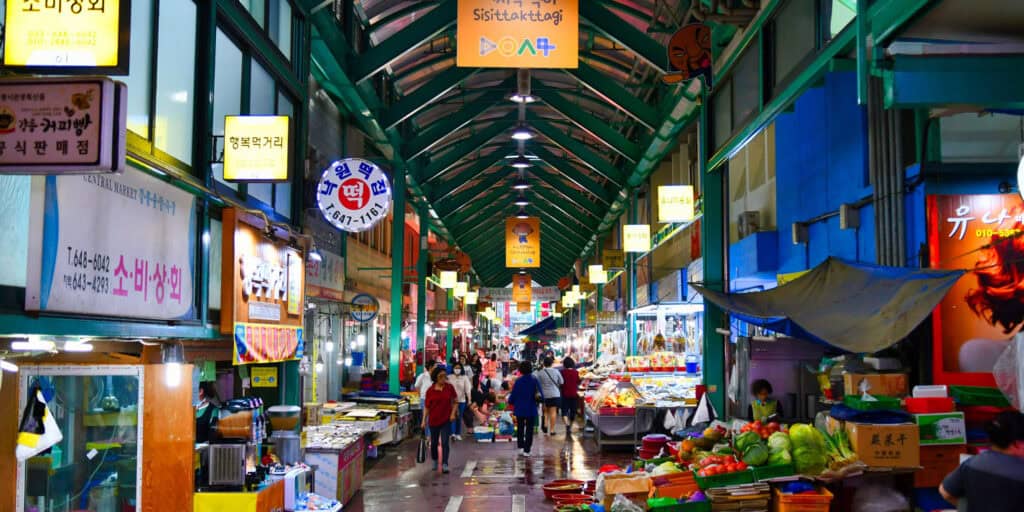
What is interesting is that supermarkets also symbolize the global reach of Korea. Along with Korean food, you will find Western foods, Japanese snacks, and even halal or vegan food. I even found gluten-free food for myself, which is something that is hard to find in traditional markets.
Tradition vs. Modern Life, Or Both?
The markets and supermarkets coexist with each other. The Koreans use more markets for buying vegetables, and supermarkets for convenience. The markets and supermarkets are a perfect example of the balance in Korean food culture, as they respect their traditional culture and innovate.
The markets have the soul of Korean cuisine, and supermarkets have it in a fast world.
In order to understand the food culture of Korea, I believe that is necessary to experience both even the chaos of a traditional market and the convenience of a supermarket. These two places represent two different sides of Korean society. Proving that, despite the change of lifestyle, food still remains a powerful connection between the past and the present.
Written By: Sofia Sliacka
About the author: Hi everyone! I am Sofia. One of my interests is content writing, and I love learning about East Asian culture. From music and history to cuisine, customs, and everyday life, I love uncovering new perspectives on Asian culture. Writing these stories and sharing them is something I find deeply rewarding. I hope to inspire readers, offer fresh perspectives, and connect them with the richness and charm of Asia.