
South Korea is a peninsula, and it shows in your calves. You walk everywhere and during that and somewhere between the start and end of a song, you pass more than one coffee shop. Some quiet, some packed, some have a line spilling into the next block and almost certainly someone is holding an iced americano, no matter the season.
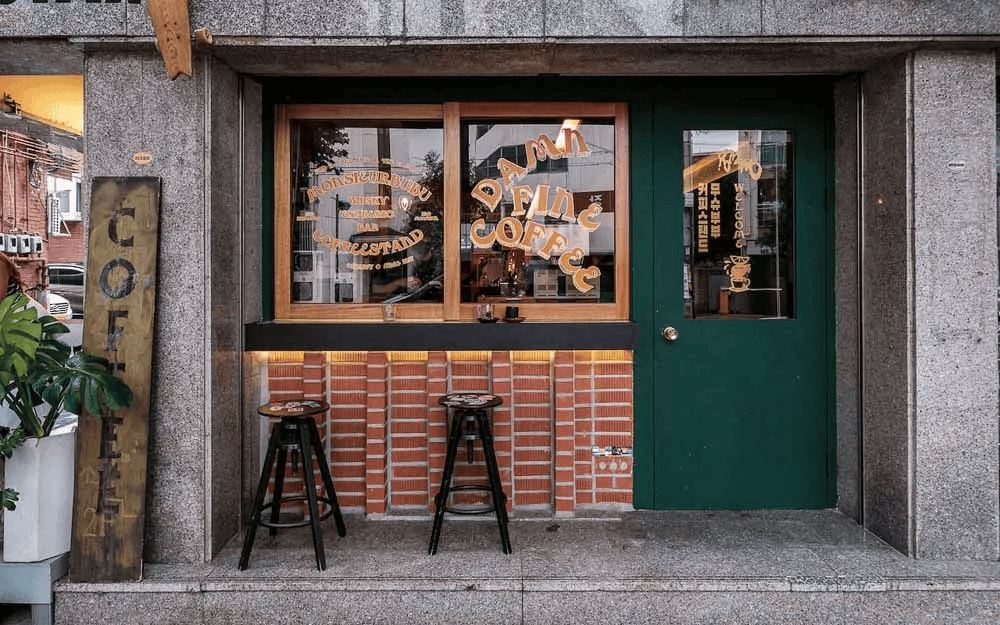
As of 2025, South Korea has about 100,000 coffee shops nationwide, roughly doubled than what it was a few years ago. This puts Korea among the countries with the densest cafe markets in the world. Seoul itself accounts for a large share of the total, with data showing over 24,000 cafes in the city, and people reportedly visiting cafes nearly 12 times a month (Hae-yeon, 2024). And it all works. You most clearly see it in the way people are willing to pay for it.
Coffee here sits in a very specific economic sweet spot. In a routine shaped by long work hours, social pressure and rising rent, coffee becomes one expense people are slow to cut. For some it is essential, but for some, it feels justified. Behavioural economics explains how people tend to allow themselves small rewards more easily than big ones. A coffee priced around $3 to $5 brings a sense of relief without guilt. It feels manageable and because it is so imbibed into daily chores like commuting and walking, it can feel more practical than indulgent. These cafes work because they sell something affordable and reliable even when money is tight.
Korea does not see coffee as just a product. It sells space, time and free will. Breathe through the rush, pause without permission and to exist somewhere between home and life for as long as one needs. A prominent business model across these places is how comfortable they are with people staying. This runs against the usual retail logic of fast turnover. Instead, Korean cafes bank on time spent and not on how many items sold. The longer someone stays, the more like they are to return because that comfort can build loyalty.
Ray Oldenburg talks about “third places” as spaces people return to that are not home or work but still let them feel present and build deeper connections. Korean cafes fit this role when you can come with others, stay quiet or talk, come with a purpose of nothing at all. These spaces are important because modern life leaves very few areas that are not emotionally demanding. Over time, the presence of these spaces builds comfort and trust along with the habit of returning. For businesses, this is powerful. When a place becomes someone’s routine, it stops competing with prices or trends. Korea scaled on this idea hence turning it into a sustainable and successful business model.
In most markets, density is a warning sign. Too many stores mean diminishing margins and competition. In Korea, one does not plan to find a cafe around them, they just assume one exists. This assumption drives behaviour. Cafes become a part of the infrastructure; like sidewalks or crossings, their value lies in availability. Having a place waiting for you without checking maps or searching with effort reduces the mental cost of moving through the city. In consumer behaviour, convenience matters more than things being new or cheap, because it removes the small decisions from probably a crowded day. Korea’s cafe density works the same way. The abundance itself becomes value, because density stops being a problem and starts functioning as the product.
In spite of high closure rates, new cafes continue to open. Short lifespans are accepted and iteration is normal. Low entry barriers with high functioning expectations push these businesses to compete differently. And these cafes survive because they are focused more than being special, but on being useful.
That is usually how you know something has worked. I like to believe I am above it. I am not. I would still stop for a good, iced coffee.
Written by – Samhitha Avvari

About the author –
Samhitha is an avid hobbyist, exploring writing, photography and personal blogging through intention and curiosity. She hopes to build a personal archive that reflects her journey, and the way she sees the world. She believes in romanticising the ordinary, maximising life with every experience, in a world that often feels fast. Her creative practice is rooted in capturing casual magic; like the light on a street corner, ducks in the park, a sentence worth remembering. Samhitha is fascinated by the interplay between language shaping identity, connection, and expression, with a particular interest in Korean language and society.