
Ondol : 온돌; (ondol) or gudeul (구들) in Korean traditional architecture is underfloor heating that uses direct heat transfer from wood smoke to heat the underside of a thick masonry floor. In modern usage, it refers to any type of underfloor heating, or to a hotel or a sleeping room in Korean (as opposed to Western) style.
In many Korean homes,the most important place is not a chair or a bed ,but the floor. People sit on it ,eat on it ,sleep on it, and even gather as families around it.This way of living is deeply connected to Ondol (온돌),Korea’s traditional underfloor heating system. More than an architectural feature ,ondol reflected a philosophy about comfort ,equality ,and harmony with nature.
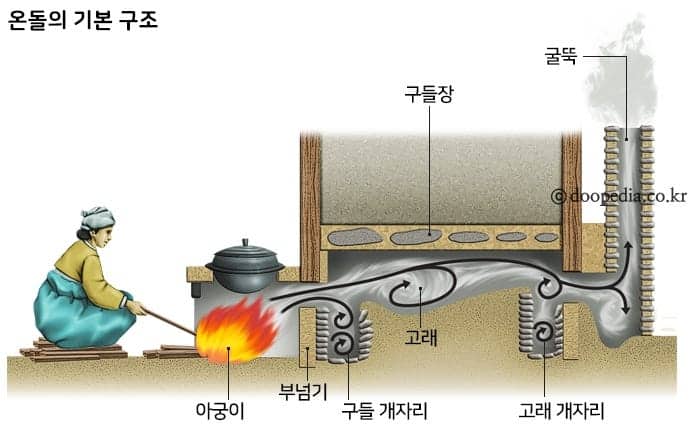
Use:
Ondol had traditionally been used as a living space for sitting, eating, sleeping and other pastimes in most Korean homes before the 1960s. Koreans are accustomed to sitting and sleeping on the floor, and working and eating at low tables instead of raised tables with chairs. The furnace burns mainly rice paddy straws, agricultural crop waste, biomass or any kind of dried firewood. For short-term cooking, rice paddy straws or crop waste was preferred, while long hours of cooking and floor heating needed longer-burning firewood. Unlike modern-day water heaters, the fuel was either sporadically or regularly burned (two to five times a day), depending on frequency of cooking and seasonal weather conditions.With the traditional ondol heating, the floor closer to the furnace was normally warm enough, and the warmest spots reserved for elders and honored guests. Ondol had problems such as environmental pollution and carbon monoxide poisoning resulting from burning coal briquettes.Thus, other technology heats modern Korean homes.
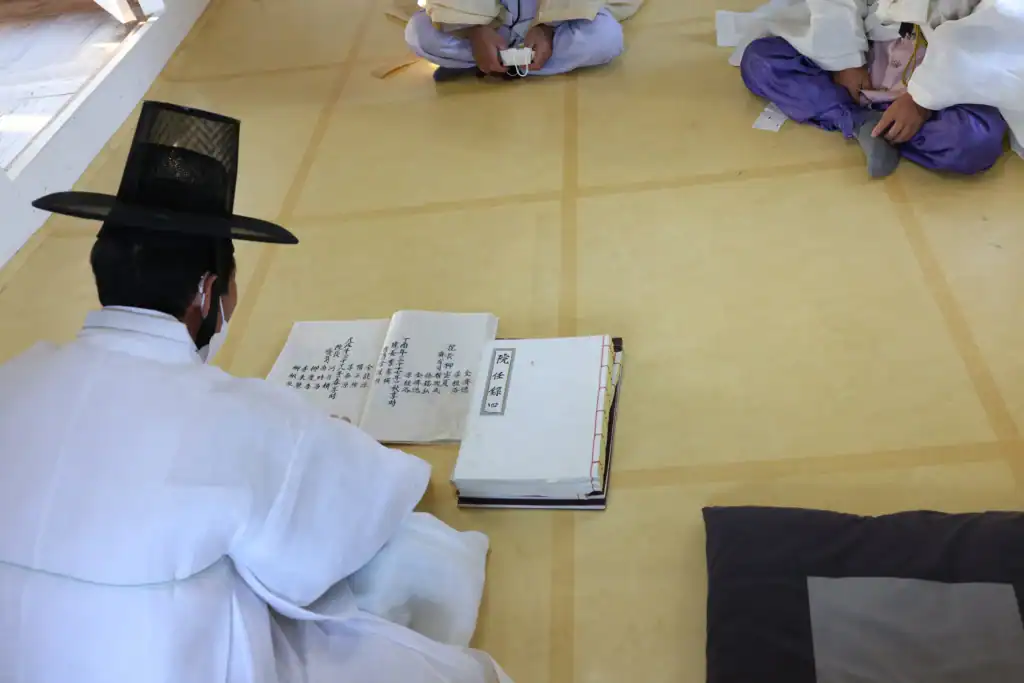
The famous American architect Frank Lloyd Wright was building a hotel in Japan and was invited to a Japanese family’s house. The homeowner had experienced the ondol in Korea, and had built an ondol room in his house. Wright reportedly was so impressed that he invented radiant floor heating which uses hot water as the heating medium. Wright introduced floor heating to American houses in the US in the 1930s. Instead of ondol-hydronic radiant floor heating, modern-day houses such as high-rise apartments have a modernized version of the ondol system. Many architects know the advantages and benefits of ondol, and they are using ondol in modern houses. Since the ondol has been introduced to many countries, it is beginning to be considered as one of the systems of home heating. Modern ondol are not the same as the original version. Almost all Koreans use modern versions, so it is hard to find the traditional ondol system in Korean houses. North Korea still utilizes the basic traditional design of the Ondol that uses mostly coal instead of biomass to survive the harsh winters.
Living Close to the Ground:
Because the floor is warm, Korean homes developed a floor-centered lifestyle. People sit, eat, and sleep on mats rather than on raised furniture. This physical closeness to the ground creates a sense of stability and calm. It also encourages flexibility—rooms are not fixed as “bedrooms” or “living rooms” but can change purpose throughout the day.
A single space can be a dining room at noon and a sleeping area at night.
The Philosophy of Equality:
Ondol subtly removes hierarchy within the home. When everyone sits on the floor, there are no “high” or “low” positions. Family members share the same physical level, reinforcing a sense of equality and togetherness.
Even guests are invited to sit on the same warm floor, symbolizing hospitality and inclusion rather than status.
Harmony with Nature:
Ondol was designed using natural materials—stone, clay, and wood—and relied on fire, one of nature’s basic elements. Heat was reused efficiently, often coming from cooking fires. This system reflects a traditional Korean mindset: nothing should be wasted, and human comfort should coexist with natural rhythms.
The slow, steady warmth of ondol mirrors the Korean preference for balance rather than extremes.
Advantages and disadvantages:
One of the advantages of an ondol is that it can maintain heat for an extended period. In a traditional Korean house, people usually extinguish the fire before going to sleep at night, since it can stay warm until the morning. An ondol conducts heat evenly throughout the whole room, although the part of the room closest to the agungi is much warmer. Comparing the ondol with the Western radiator: the heat from the radiator rises towards the ceiling, but an ondol keeps both the floor and the air in the room warm. The advantage of the ondol is that people do not have to worry about breakdown and repair of the ondol.The Ondol is part of the house, therefore, it is less likely to run into problems. Any combustible materials can be used as fuel for the ondol; there are no special fuel requirements. In contrast to heaters, such as fireplaces or charcoal-based heaters that leave ash in the room, an ondol does not cause pollution in the room leaving it clean and warm.
The ondol has some disadvantages. Mud and stones are the main materials that make up the ondol. Such materials take quite a long time to heat up, therefore the room takes a long time to warm up. In addition, it is difficult to adjust the temperature of the room
Ondol in Modern Korea:
Although modern homes use gas or electric heating, the principle of ondol remains. Heated floors are still standard in Korean apartments, and people often prefer to sit or sleep on the floor even when sofas and beds are available.
Ondol has also influenced global architecture, inspiring underfloor heating systems around the world.
More Than Architecture:
Ondol is not just a heating method—it is a way of life. It shapes how Koreans interact with their space, with each other, and with nature. By building homes around the floor, Korean culture places warmth, equality, and flexibility at the center of daily life.
To understand a Korean home is to understand ondol.
And to understand ondol is to understand how culture can live beneath our feet.
Written by – Divya Kumari

About the author –
My name is Divya Kumari, I recently appeared for the TOPIK I exam which is held on 19 Oct 2025. I have always been deeply passionate about South Korean culture. As BTS’s RM beautifully said, “No matter who you are, where you’re from, your gender identity, or your skin color—just speak to yourself.” These words have always inspired me to be confident in who I am, and my love for South Korea continues to motivate me to follow my passion.That is why I decided to participate in this Internship and gain valuable experience in this field. I am grateful to Learn Korean in India (LKI) for giving me the opportunity to express my love for the Korean language and culture.